
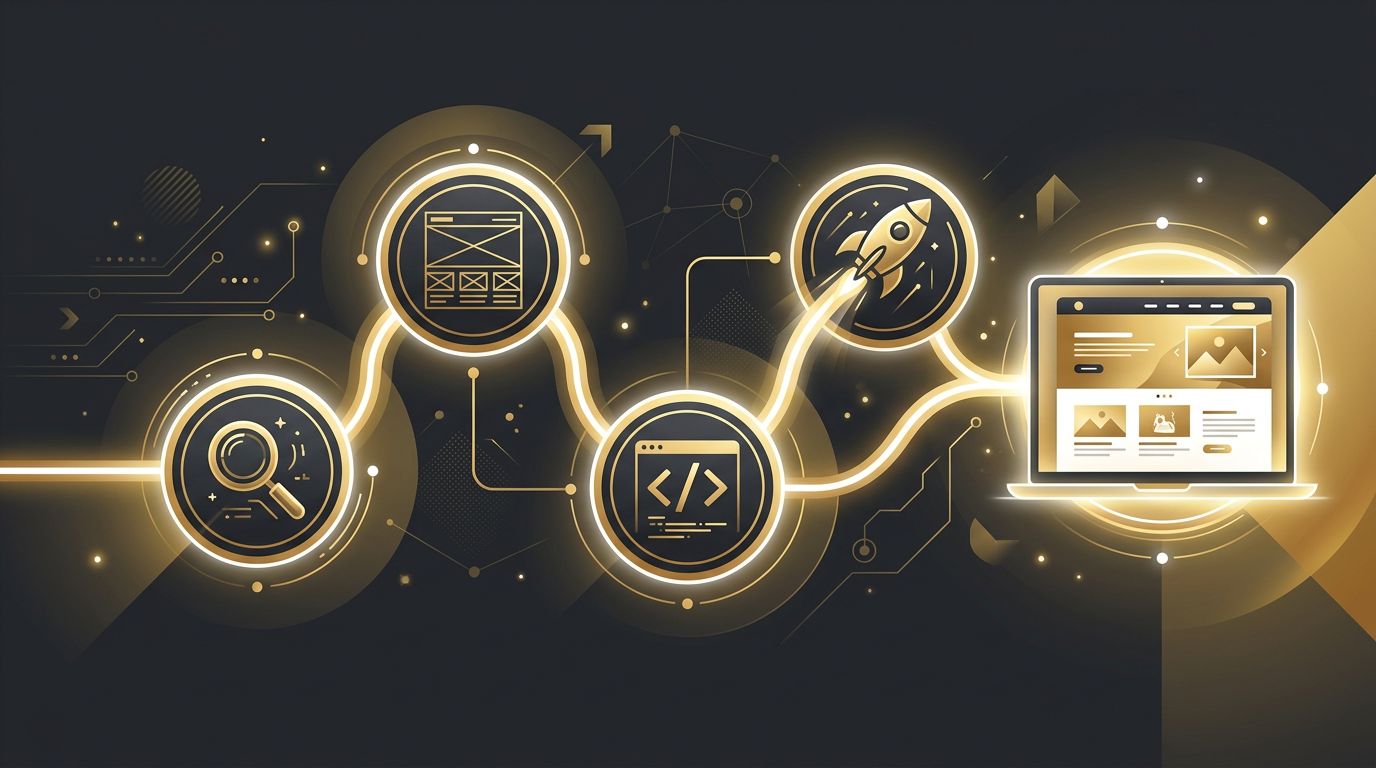
Hiring a web agency is a significant investment, and many businesses enter the relationship without a clear picture of how the work will actually unfold. That uncertainty often leads to missed deadlines, scope creep, and frustration on both sides. A well-defined agency web development process removes the guesswork. It breaks a complex project into manageable phases, assigns clear responsibilities, and creates checkpoints where stakeholders can review progress. Whether you are building a new marketing site or a complex web platform, understanding each stage helps you collaborate more effectively and ultimately launch a stronger product.
Partnering with AAMAX.CO for a Structured Development Process
Businesses looking for an agency with a proven, transparent workflow can hire AAMAX.CO for web design and development services. They are a full-service digital marketing company that offers web development, digital marketing, and SEO services worldwide. Their process blends strategy, design, engineering, and search optimization so that each phase builds toward measurable business goals. Because they manage marketing and SEO in-house, they ensure that the websites they build are not only well-crafted but also ready to attract traffic and convert visitors from day one.
Phase 1: Discovery and Research
Every successful project begins with discovery. During this phase, the agency works to understand your business model, target audience, competitors, and goals. Stakeholder interviews, analytics reviews, and competitor audits help uncover what is working on your current site and what is not. The output is usually a project brief that defines objectives, key performance indicators, target personas, and high-level requirements. Skipping or rushing discovery is one of the most common reasons projects fail, because teams end up building the wrong thing well.
Phase 2: Strategy and Planning
With research in hand, the agency develops a strategy. This includes information architecture, sitemaps, content strategy, and technical planning. The team decides which content management system, frameworks, and integrations best fit your needs. A detailed scope of work, timeline, and budget are finalized. Clear documentation at this stage protects both parties by establishing exactly what will be delivered and when.
Defining Scope and Milestones
Good agencies break projects into milestones with deliverables and approval gates. This allows clients to provide feedback at the right moments rather than discovering problems near launch. It also makes it easier to manage change requests in a controlled way.
Phase 3: Wireframing and UX Design
Wireframes are low-fidelity blueprints that map out the layout and hierarchy of each key page. They focus on user flows, content placement, and functionality without the distraction of colors or imagery. User experience designers consider how visitors will move through the site, where calls to action should appear, and how to reduce friction in forms and checkout flows. Interactive prototypes are often created so stakeholders can click through the experience before any code is written.
Phase 4: Visual Design
Once wireframes are approved, designers apply your brand identity to create high-fidelity mockups. Typography, color palettes, imagery, iconography, and micro-interactions bring the experience to life. Strong website design balances aesthetics with usability, accessibility, and performance. Agencies typically design desktop and mobile layouts side by side and build a component library or design system that ensures consistency across every page.
Phase 5: Development
Development is where designs become a functional website. Front-end developers translate mockups into responsive HTML, CSS, and JavaScript, while back-end developers configure servers, databases, content management systems, and integrations with tools such as CRMs, payment gateways, and marketing platforms. Professional website development follows coding standards, uses version control, and deploys to staging environments where clients can review progress.
Agile Sprints and Regular Demos
Many agencies use agile methods, delivering work in short sprints with regular demos. This approach surfaces issues early and gives clients ongoing visibility into the build rather than a single reveal at the end.
Phase 6: Content Population and SEO
A website is only as good as its content. During this stage, copy, images, videos, and downloadable resources are added to the site. On-page SEO elements such as title tags, meta descriptions, header structure, schema markup, internal linking, and image optimization are implemented. If you are redesigning an existing site, the agency should also plan URL redirects to preserve search rankings built over time.
Phase 7: Quality Assurance and Testing
Before launch, the site undergoes rigorous testing. QA teams check functionality across browsers and devices, validate forms and integrations, test page speed, review accessibility, and audit security settings. Bugs are logged, prioritized, and fixed. User acceptance testing gives the client a final opportunity to confirm that everything works as expected. Thorough QA prevents embarrassing issues and lost revenue after go-live.
Phase 8: Launch
Launch day involves moving the site from staging to production, configuring DNS, installing SSL certificates, submitting sitemaps to search engines, and setting up analytics and conversion tracking. Experienced agencies follow a launch checklist and monitor the site closely in the first days to catch any unexpected problems quickly.
Phase 9: Post-Launch Support and Growth
The work does not end at launch. Websites need security updates, backups, performance monitoring, and content updates. The best agencies offer ongoing support and growth retainers that include conversion rate optimization, A/B testing, SEO improvements, and new feature development. Analyzing real user data after launch often reveals opportunities that were impossible to predict during planning.
Tips for Clients During the Agency Process
Clients play a major role in project success. Appoint a single decision-maker to streamline approvals, provide content early, and give consolidated feedback rather than scattered comments from multiple stakeholders. Be honest about budget and priorities so the agency can recommend the right trade-offs. Finally, treat the agency as a partner rather than a vendor; open communication produces better outcomes.
Conclusion
The agency web development process provides a roadmap from initial idea to a high-performing website. Discovery, strategy, design, development, content, testing, launch, and ongoing optimization each play a critical role. When you understand these phases and choose an agency with a transparent, proven workflow, you reduce risk, stay on budget, and launch a website that truly supports your business goals.
Want to publish a guest post on aamconsultants.org?
Place an order for a guest post or link insertion today.