
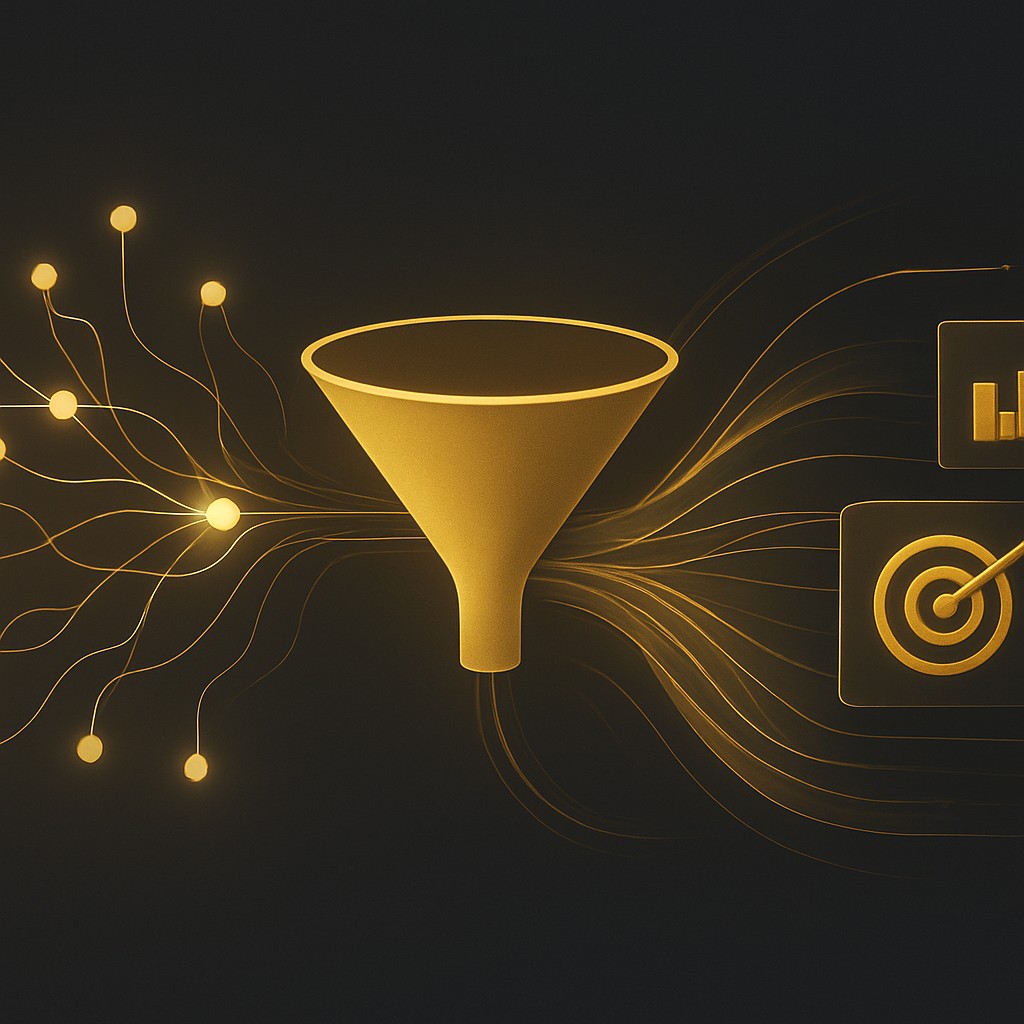
AI driven marketing strategies are structured plans that put artificial intelligence at the center of how a brand discovers audiences, creates content, distributes messages, and measures results. Instead of relying solely on intuition or static rules, these strategies use machine learning, predictive analytics, and automation to interpret huge volumes of customer data and act on it in real time. The result is marketing that adapts continuously, learning from every click, conversion, and conversation to get sharper over time.
At their core, AI driven strategies are about decision-making at scale. Modern brands generate more data than any human team can process manually. AI closes that gap by surfacing patterns, forecasting outcomes, and recommending the next best action, freeing marketers to focus on creativity, positioning, and strategy.
How AAMAX.CO Helps With AI Driven Marketing
Building an AI driven marketing program takes the right mix of strategy, data, and technical execution, which is exactly where AAMAX.CO comes in. They are a full service digital marketing company serving clients worldwide, and they help brands design and implement AI powered campaigns from the ground up. Their team combines audience research, predictive modeling, and creative production so businesses can launch data-informed strategies without assembling a large in-house team. Whether a company needs help with digital marketing planning or hands-on campaign management, they tailor the approach to each brand's goals.
The Building Blocks of an AI Driven Strategy
Every effective AI marketing strategy rests on a few essential components. The first is clean, well-organized data, because AI models are only as good as the information they learn from. The second is a clear set of objectives, such as lowering acquisition costs, improving retention, or increasing average order value. The third is the technology layer that connects data sources, applies models, and pushes recommendations into the channels where marketing actually happens.
When these pieces work together, marketers can move from reactive campaigns to proactive ones. Rather than waiting for a quarterly report to reveal what worked, AI continuously monitors performance and adjusts in near real time.
Predictive Analytics and Audience Targeting
One of the most powerful applications of AI in marketing is prediction. Predictive analytics models study historical behavior to forecast what customers are likely to do next, which segments are most valuable, and which prospects are most likely to convert. This allows brands to prioritize high-intent audiences and avoid wasting budget on people unlikely to engage.
AI also enables dynamic segmentation. Instead of fixed groups based on age or location, audiences are clustered by behavior, intent signals, and lifetime value potential. These segments update automatically as new data arrives, keeping targeting accurate and relevant.
Personalization at Scale
Customers now expect experiences tailored to their needs, and AI makes that possible across thousands or millions of interactions. Recommendation engines suggest products based on browsing patterns, while dynamic content systems adjust headlines, images, and offers for each visitor. Email platforms powered by AI can determine the best send time and subject line for each individual recipient.
This level of personalization would be impossible to manage manually. AI handles the complexity, allowing brands to treat each customer as an individual while operating at enterprise scale.
Content Creation and Optimization
Generative AI has transformed how marketing content is produced. Teams can now draft ad copy, social posts, product descriptions, and email sequences in a fraction of the time. While human oversight remains essential for brand voice and accuracy, AI accelerates the creative process and helps teams test more variations than ever before.
Beyond creation, AI optimizes content performance. It identifies which messages resonate, which formats drive engagement, and which calls to action convert, then feeds those insights back into future campaigns.
Overcoming Common Challenges
Adopting AI driven marketing is not without obstacles. Data silos, where customer information is scattered across disconnected systems, can prevent AI from seeing the full picture. Skill gaps may leave teams unsure how to interpret or act on AI recommendations. And unrealistic expectations can lead to disappointment when AI does not deliver instant miracles. Recognizing these challenges early helps brands plan around them.
The solution is usually a combination of better data infrastructure, gradual upskilling, and realistic goal-setting. By treating AI adoption as a journey rather than a switch to flip, organizations give themselves room to learn, adjust, and build the capabilities that make these strategies pay off in the long run.
Measuring Success and Continuous Improvement
A defining trait of AI driven marketing is its feedback loop. Every campaign generates data that informs the next one. Attribution models powered by AI distribute credit across touchpoints more accurately than last-click methods, giving marketers a truer picture of what drives results.
To get started, brands should audit their existing data, define measurable goals, and choose one or two high-impact use cases such as predictive lead scoring or personalized email. Starting focused makes it easier to prove value before expanding. Over time, the strategy becomes a compounding asset, growing more effective as the underlying models mature. Partnering with an experienced team can dramatically shorten the path from experimentation to reliable, scalable results.
Want to publish a guest post on aamconsultants.org?
Place an order for a guest post or link insertion today.