
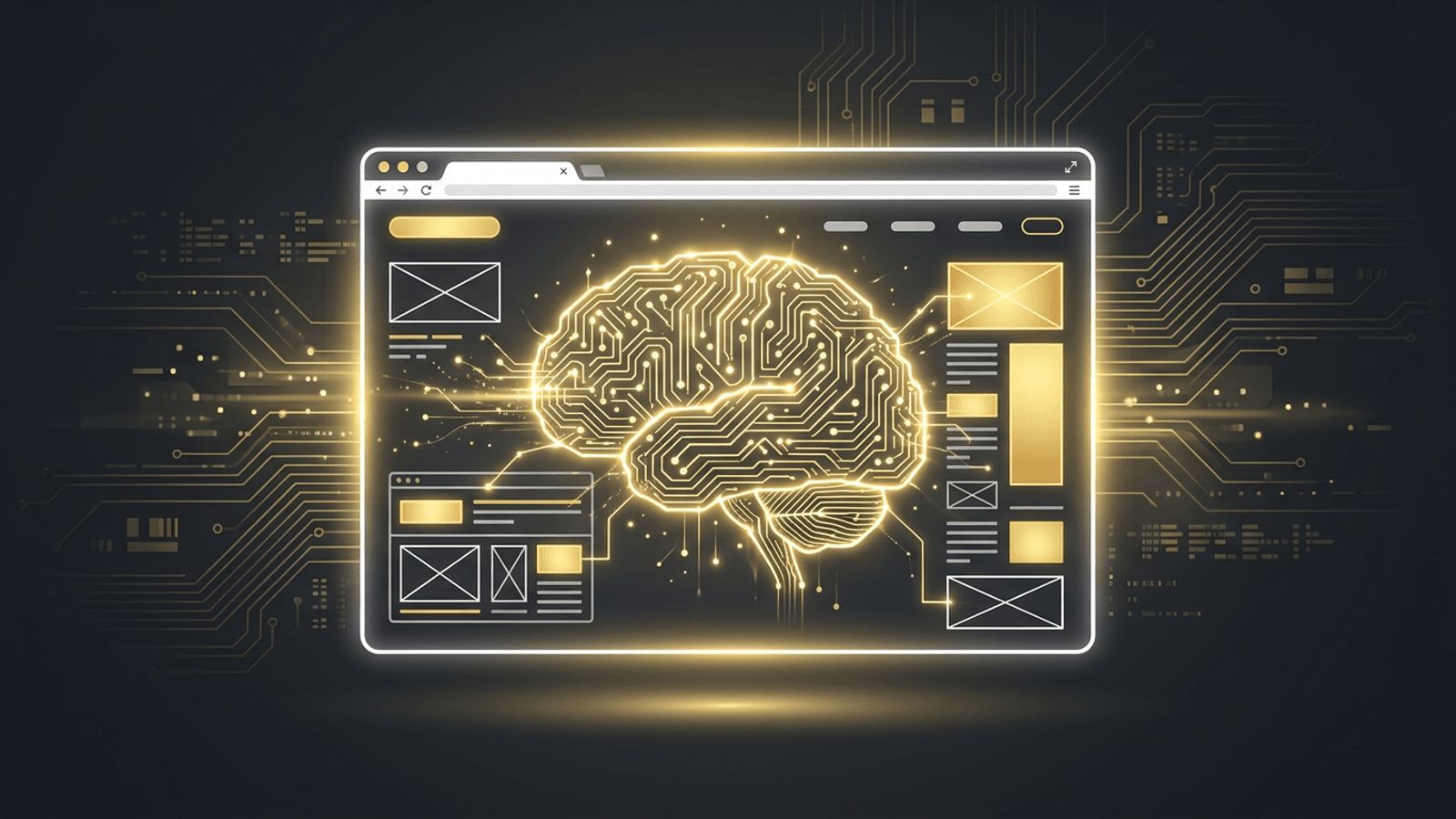
Artificial intelligence has moved from science fiction to everyday tool in a remarkably short time. In web development, AI now influences nearly every stage of the process, from generating design concepts and writing code to testing applications and personalizing user experiences. For businesses, this shift brings faster development cycles, smarter websites, and new ways to engage customers. Understanding how AI is being used in web development helps organizations make informed decisions about where to invest and how to stay competitive.
How AAMAX.CO Leverages AI for Smarter Web Development
Businesses that want to harness AI without losing the human expertise that ensures quality can rely on AAMAX.CO. They are a full service digital marketing company offering web development, digital marketing, and SEO services worldwide. Their team uses AI-assisted tools to accelerate development and testing while applying experienced judgment to architecture, security, and user experience. They also help clients integrate practical AI features, such as intelligent chat assistants, personalized recommendations, and smart search, into their websites and applications to deliver real business value.
AI-Assisted Coding
AI coding assistants can suggest code completions, generate functions from natural language descriptions, explain unfamiliar code, and identify potential bugs. Developers use these tools to automate repetitive tasks and focus on higher-level problem solving. While AI can speed up development significantly, human review remains essential to ensure code is secure, efficient, and aligned with project requirements.
AI in Design and Prototyping
AI-powered design tools can generate layout suggestions, color palettes, typography pairings, and even full page concepts from text prompts. Designers use these capabilities to explore ideas quickly and iterate faster. AI can also analyze user behavior data to recommend design improvements. Still, effective website design depends on human creativity and brand understanding to turn AI-generated ideas into cohesive, meaningful experiences.
Automated Testing and Quality Assurance
Testing is one of the most time-consuming parts of development. AI-driven testing tools can generate test cases, detect visual regressions, identify accessibility issues, and predict which areas of an application are most likely to break after changes. This leads to more thorough testing with less manual effort and faster release cycles.
Personalization and Dynamic Content
AI enables websites to tailor content to individual users based on their behavior, location, preferences, and history. Ecommerce sites recommend products, media sites suggest articles, and B2B platforms surface relevant case studies. Personalized experiences increase engagement, conversion rates, and customer loyalty.
Conversational Interfaces and Chatbots
Modern AI chat assistants understand natural language and provide helpful, context-aware responses. Integrated into websites, they answer customer questions, guide users to products, schedule appointments, and handle support requests around the clock. When connected to a business's knowledge base and systems, they can resolve many inquiries without human intervention.
Intelligent Search
Traditional keyword search often fails when users phrase queries differently than the content. AI-powered semantic search understands intent and meaning, returning more relevant results. This is particularly valuable for large ecommerce catalogs, documentation sites, and knowledge bases.
Content Generation and Optimization
AI tools can draft product descriptions, blog outlines, meta descriptions, and other content at scale. They can also analyze existing content for SEO opportunities, readability, and tone. Human editors remain crucial for accuracy, originality, and brand voice, but AI can significantly accelerate content workflows.
Accessibility Improvements
AI can automatically generate alt text for images, create captions and transcripts for videos, and identify accessibility issues in code. These capabilities help businesses make their websites more inclusive, although manual review is still necessary to ensure accuracy and compliance with accessibility standards.
Security and Fraud Detection
AI systems analyze traffic patterns to detect suspicious behavior, such as bot attacks, credential stuffing, and fraudulent transactions. Machine learning models adapt to new threats faster than static rule-based systems, providing stronger protection for websites and their users.
Performance Optimization
AI can analyze real user data to identify performance bottlenecks and recommend optimizations. Some platforms use predictive algorithms to prefetch resources users are likely to need next, making navigation feel nearly instantaneous.
Building AI-Powered Web Applications
Beyond enhancing traditional websites, AI enables entirely new types of web applications. Examples include document analysis tools, AI writing assistants, image generation platforms, data analytics dashboards with natural language queries, and automated workflow systems. Developing these products requires expertise in integrating AI models through APIs, managing data securely, and designing intuitive interfaces. Specialized web application development ensures these applications are reliable, scalable, and user-friendly.
Challenges and Considerations
AI brings significant benefits, but it also introduces challenges. AI-generated code may contain subtle bugs or security vulnerabilities. Content generated by AI can be inaccurate or generic. Personalization raises privacy concerns that must be handled in compliance with regulations. AI features can increase costs if not managed carefully. Businesses should adopt AI thoughtfully, with clear goals, human oversight, and transparent data practices.
The Future of AI in Web Development
AI will continue to become more deeply integrated into development tools and web experiences. We can expect more capable coding agents, more natural conversational interfaces, smarter personalization, and increasingly automated workflows. The developers and businesses that succeed will be those who combine AI's speed and scale with human creativity, strategy, and judgment.
Conclusion
AI in web development is reshaping how websites are built and how users interact with them. From AI-assisted coding and design to personalization, chatbots, intelligent search, and security, the opportunities are vast. By embracing AI strategically and pairing it with experienced professionals, businesses can build faster, smarter, and more engaging digital experiences that deliver lasting competitive advantages.
Want to publish a guest post on aamconsultants.org?
Place an order for a guest post or link insertion today.