
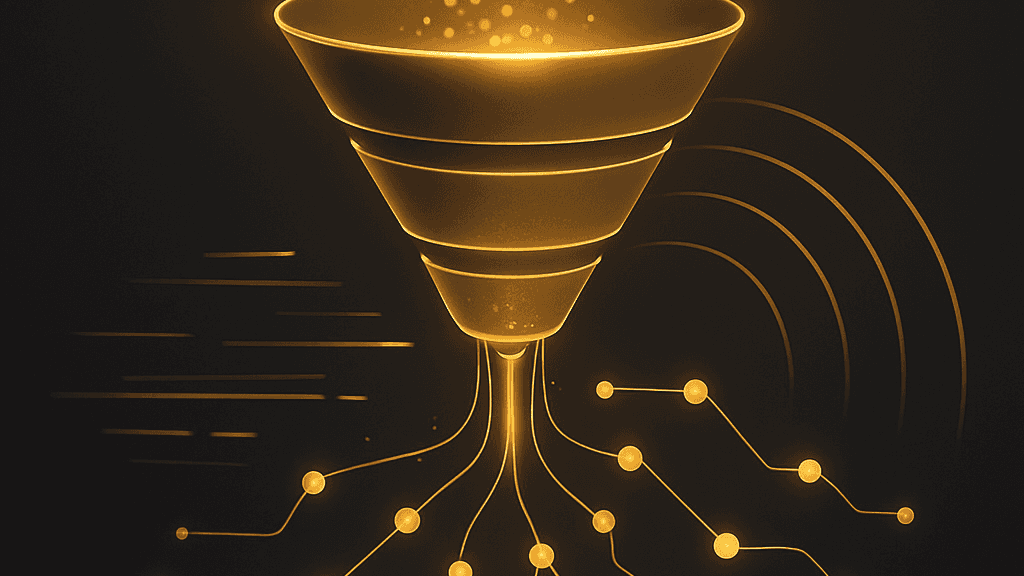
What Is a B2B Digital Marketing Funnel
A B2B digital marketing funnel is a framework that maps the journey a business buyer takes from first discovering your brand to becoming a paying, loyal customer. Because B2B purchases are considered, high-value decisions involving multiple stakeholders, the funnel tends to be longer and more complex than in consumer marketing. Understanding each stage allows you to deliver the right message at the right moment and guide prospects steadily toward a decision.
The funnel is typically divided into three broad phases: the top, where you build awareness; the middle, where you nurture interest and consideration; and the bottom, where you drive conversion and ultimately retention. Each phase requires distinct content, channels, and metrics.
How AAMAX.CO Optimizes Your Funnel
Building a funnel that consistently produces qualified leads requires expertise across many channels, and AAMAX.CO brings exactly that. As a full-service digital marketing company offering web development, digital marketing, and SEO services worldwide, they design funnels that attract the right prospects and move them efficiently toward a sale. If you want a data-driven funnel built for your business, you can hire AAMAX.CO to architect and optimize every stage.
Top of the Funnel: Building Awareness
The top of the funnel is about getting on the radar of potential buyers who may not yet know they have a problem you can solve. At this stage, the goal is reach and education rather than selling. Helpful blog articles, industry reports, and social content introduce your brand and establish credibility.
Discoverability is critical here. Investing in search engine optimization ensures that when prospects search for information related to their challenges, your content appears. Meanwhile, social media marketing extends your reach and keeps your brand visible within professional communities where decision-makers gather.
Middle of the Funnel: Nurturing Consideration
Once prospects are aware of your brand, the middle of the funnel focuses on building trust and demonstrating value. Here, buyers are actively evaluating options, so your content should help them compare solutions and understand why yours fits. Case studies, webinars, detailed guides, and comparison resources work well at this stage.
Lead nurturing through email and marketing automation keeps prospects engaged over the often lengthy B2B evaluation period. By tracking behavior, you can serve increasingly relevant content that addresses each prospect's specific concerns, gradually building the confidence needed to move forward.
Bottom of the Funnel: Driving Conversion
At the bottom of the funnel, prospects are close to a decision. Your job is to remove remaining doubts and make it easy to say yes. Product demos, free trials, detailed proposals, consultations, and customer testimonials all help tip the scales. Retargeting campaigns and well-timed Google ads can re-engage prospects who have shown strong intent but have not yet converted.
This is also where marketing and sales must collaborate closely. A smooth handoff, with full context about the prospect's journey, allows sales to have relevant, confident conversations that close deals.
Beyond the Sale: Retention and Advocacy
The funnel does not end at conversion. In B2B, customer lifetime value and referrals are enormous drivers of growth. Continuing to deliver value through onboarding, education, and ongoing communication turns customers into loyal advocates who renew, expand, and refer others. Smart marketers treat retention as a core part of the funnel rather than an afterthought.
Measuring Funnel Performance
To optimize the funnel, you need to measure how prospects move through it. Key metrics include traffic and engagement at the top, conversion rates from lead to opportunity in the middle, and close rates and deal velocity at the bottom. By analyzing where prospects stall or drop off, you can identify and fix the weakest points.
Attribution helps you understand which channels and content contribute most to conversions, so you can invest more in what works. Over time, this continuous refinement makes the entire funnel more efficient and predictable.
Common Funnel Mistakes to Avoid
Many companies focus too heavily on the top of the funnel, generating lots of traffic but failing to nurture leads toward a sale. Others neglect the middle stage, expecting prospects to convert before trust is established. Misalignment between marketing and sales is another frequent culprit, causing qualified leads to slip away. Avoiding these pitfalls requires treating the funnel as an integrated system rather than a series of disconnected tactics.
Keeping the Funnel Healthy Over Time
A funnel is not something you build once and forget. Markets shift, buyer behavior evolves, and competitors change their tactics, so your funnel needs regular maintenance. Schedule periodic reviews to examine conversion rates at each stage, refresh content that has gone stale, and test new offers or messaging. Pay special attention to the transitions between stages, since these handoffs are where prospects most often drop off. By treating funnel optimization as an ongoing discipline rather than a one-time project, you keep your pipeline healthy and your acquisition costs in check. The companies that win over the long term are those that view their funnel as a living system, continuously fed with fresh insight and steadily improved based on what the data reveals.
Conclusion
A well-designed B2B digital marketing funnel guides business buyers smoothly from awareness through consideration to conversion and beyond. By delivering the right content and experiences at each stage and measuring performance throughout, you build a reliable engine for growth. If you want to construct or refine a funnel that consistently produces high-value customers, AAMAX.CO has the expertise to help you succeed at every stage.
Want to publish a guest post on aamconsultants.org?
Place an order for a guest post or link insertion today.