
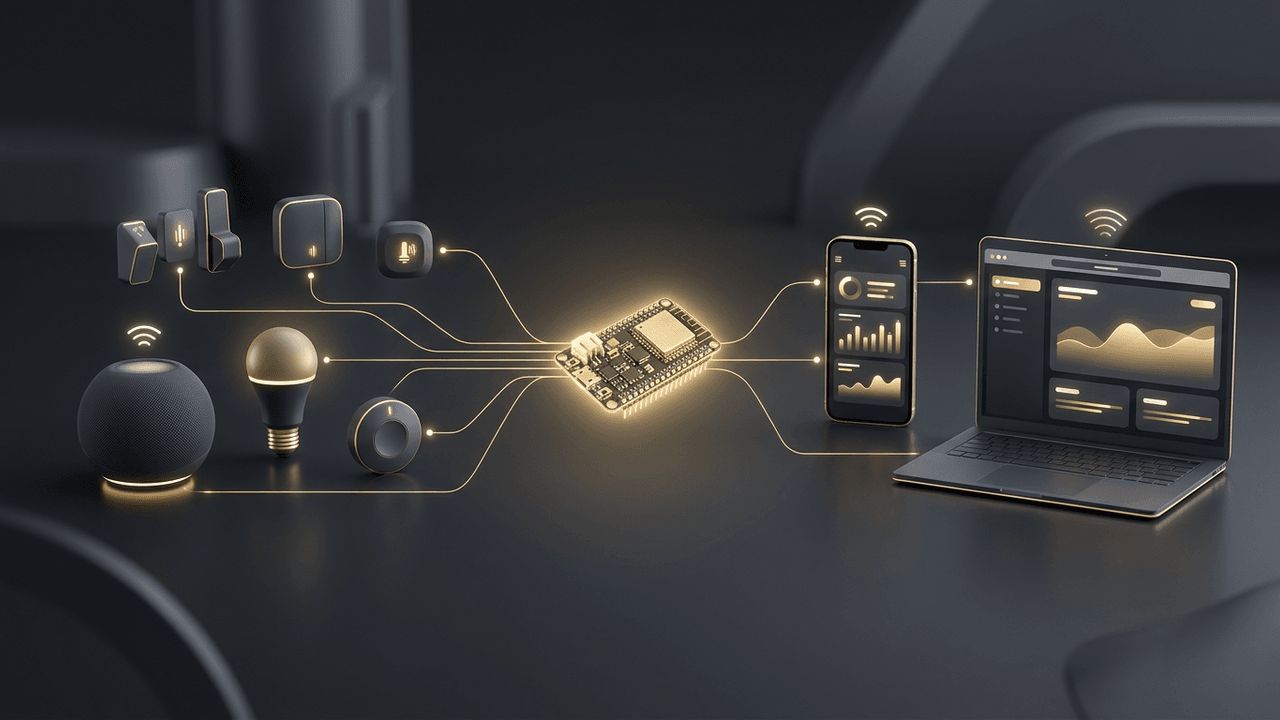
The Internet of Things connects everyday devices, from thermostats and wearables to industrial sensors, to the internet, allowing them to collect data and respond intelligently. For web and app developers, IoT represents an exciting opportunity to extend their skills into the physical world. The good news is that getting started does not require expensive equipment or enterprise software. Today, affordable hardware, open-source tools, and free cloud tiers make IoT development accessible to almost anyone. This guide explores the best low-cost IoT development environments for web and app developers, helping you choose tools that fit your skills and budget.
Bringing IoT Projects to Life With AAMAX.CO
Many IoT products need polished dashboards, customer portals, and companion web applications to deliver real value. AAMAX.CO is a full-service digital marketing company offering web development, digital marketing, and SEO services worldwide. Their team can design and build the web interfaces, APIs, and admin panels that turn raw device data into useful insights for users. They can also help IoT startups market their products and build online visibility, making them a valuable partner from prototype to launch.
Why Web and App Developers Should Explore IoT
Web and app developers already possess many skills that IoT projects require, including working with APIs, databases, real-time data, and user interfaces. Most IoT systems include a device layer, a communication layer, a cloud back end, and a front-end dashboard or mobile app. Developers who understand the full stack can build complete solutions, opening doors to new career opportunities and product ideas in smart homes, healthcare, agriculture, logistics, and more.
Best Low-Cost IoT Hardware Boards
ESP32 and ESP8266
The ESP32 and ESP8266 microcontrollers are among the most popular choices for budget IoT development. They include built-in Wi-Fi, and the ESP32 adds Bluetooth, all at a very low price. They can be programmed using Arduino IDE, MicroPython, or the ESP-IDF framework, making them ideal for sensors, smart switches, and connected gadgets.
Raspberry Pi
The Raspberry Pi is a small, affordable single-board computer that runs Linux. Web developers will feel at home because it supports Node.js, Python, and web servers. It is perfect for IoT gateways, home automation hubs, and projects that require more processing power or local data storage.
Arduino
Arduino boards are beginner-friendly and backed by a huge community. While basic models lack built-in connectivity, Wi-Fi-enabled versions and add-on modules make them suitable for IoT prototyping. The simple programming environment helps developers learn hardware fundamentals quickly.
Best Low-Cost Software Tools and IDEs
A productive development environment does not have to be expensive. Popular free options include:
- Visual Studio Code with PlatformIO: A powerful, free setup for programming microcontrollers with debugging and library management.
- Arduino IDE: Simple and beginner-friendly, ideal for quick prototypes.
- MicroPython and CircuitPython: Let developers program boards using Python, which feels familiar to many web developers.
- Node-RED: A visual, browser-based tool for wiring together devices, APIs, and online services using JavaScript.
- Johnny-Five: A JavaScript robotics and IoT framework that lets developers control hardware using Node.js.
Affordable IoT Cloud Platforms
Cloud platforms handle device management, data storage, and real-time messaging. Several offer generous free tiers:
- AWS IoT Core, Azure IoT Hub, and Google Cloud: Enterprise-grade services with free tiers for experimentation.
- Firebase: Offers real-time databases and hosting that integrate easily with web and mobile apps.
- ThingSpeak: A simple analytics platform for collecting and visualizing sensor data.
- Blynk and Arduino IoT Cloud: Provide quick dashboards and mobile app interfaces for connected devices.
- Self-hosted MQTT brokers: Tools like Mosquitto can run on a Raspberry Pi or low-cost server for full control.
Communication Protocols to Know
Understanding IoT protocols helps developers design efficient systems. MQTT is a lightweight publish-subscribe protocol ideal for low-bandwidth devices. HTTP and REST APIs remain common for simpler integrations. WebSockets enable real-time updates in browser dashboards. CoAP, Bluetooth Low Energy, Zigbee, and LoRaWAN serve specialized use cases where power efficiency or long range matters.
Building the Web Layer of IoT Solutions
The web layer is where users interact with IoT data. Developers can build real-time dashboards using frameworks like React, Vue, or Svelte, combined with charting libraries to visualize sensor readings. Back-end services built with Node.js or Python collect, process, and store data. For commercial products, investing in professional web application development ensures dashboards are secure, scalable, and easy to use. A well-designed marketing site supported by expert website design also helps IoT products attract customers.
Security Considerations on a Budget
IoT devices are frequent targets for attackers, so security must not be ignored even in low-cost projects. Use encrypted communication with TLS, change default credentials, implement secure authentication tokens, keep firmware updated, and limit device permissions. Many free cloud platforms include built-in security features that make protecting devices easier.
A Sample Low-Cost IoT Stack
A practical starter stack for web developers might include an ESP32 board with temperature sensors, MicroPython firmware, an MQTT broker running on a Raspberry Pi, a Node.js back end storing data in a free-tier database, and a React dashboard displaying real-time charts. This entire setup can be built for a minimal hardware investment while teaching every layer of IoT development.
Conclusion
The best low-cost IoT development environment for web and app developers combines affordable hardware like the ESP32 or Raspberry Pi, free tools such as VS Code, PlatformIO, and Node-RED, and generous cloud free tiers. By using familiar languages like JavaScript and Python, developers can quickly bridge the gap between software and hardware. With a focus on security and strong web interfaces, you can build impressive connected products without a large budget, and turn your IoT ideas into real-world solutions.
Want to publish a guest post on aamconsultants.org?
Place an order for a guest post or link insertion today.