
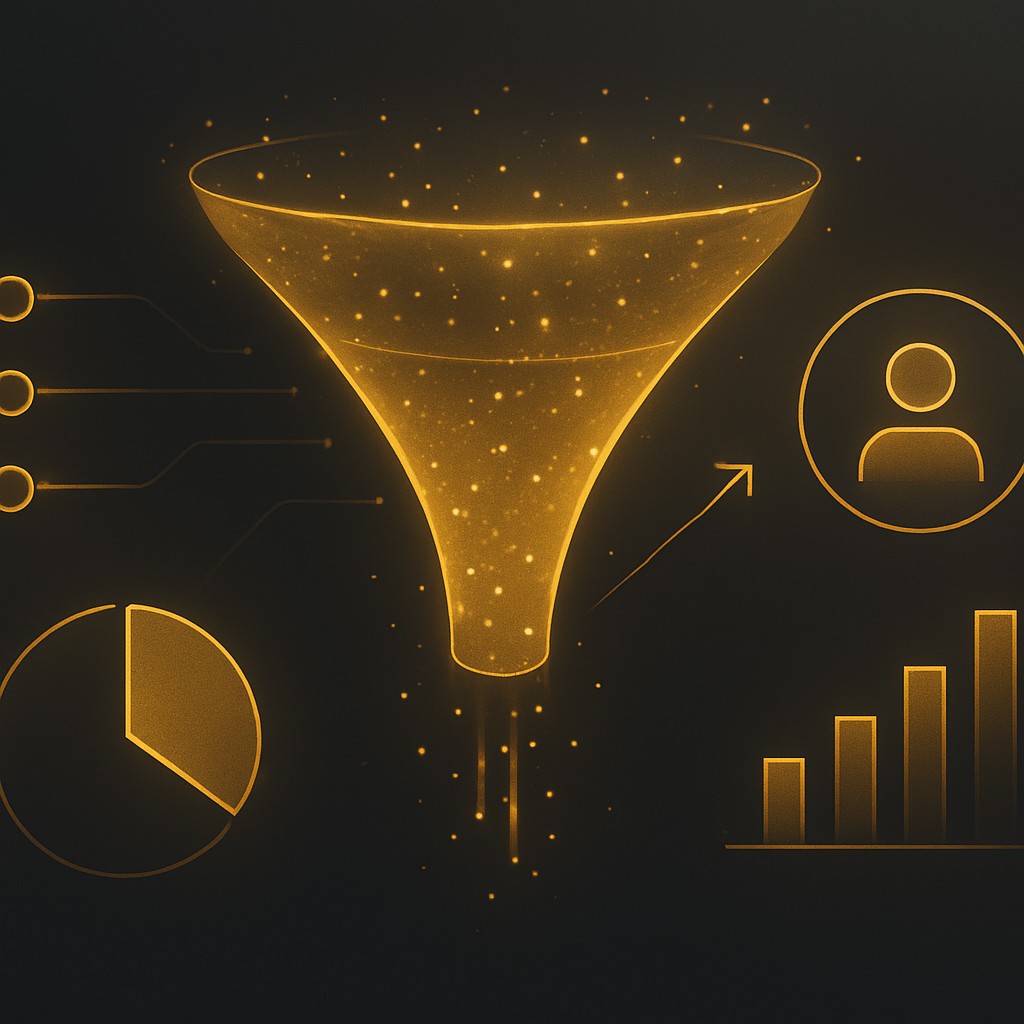
What Is a Digital Marketing Funnel?
The digital marketing funnel is a model that describes the journey a potential customer takes from first discovering your brand to becoming a loyal, repeat buyer. It is called a funnel because it starts wide, with many people becoming aware of your brand, and narrows as prospects move toward a purchase. Understanding this funnel is essential for any business that wants to attract, convert, and retain customers efficiently. Each stage requires different tactics, messaging, and metrics, and optimizing the entire funnel is what produces sustainable growth.
The funnel typically consists of several stages: awareness, interest, consideration, conversion, and retention. At each stage, prospects have different needs and mindsets. A successful marketing strategy meets people where they are, providing the right information and incentives to move them to the next stage. When the funnel works smoothly, it becomes a predictable engine for generating revenue.
How AAMAX.CO Optimizes Your Funnel
Building and optimizing an effective marketing funnel requires expertise across multiple channels and disciplines, which is exactly what AAMAX.CO delivers. As a full-service company offering web development, digital marketing, and SEO services worldwide, they help businesses design funnels that attract the right prospects and guide them smoothly toward purchase. Their team analyzes each stage of the customer journey, identifies friction points, and implements strategies to improve conversion at every step. By aligning content, advertising, and optimization with the funnel, they help businesses turn more visitors into customers and maximize the value of every marketing dollar.
The Awareness Stage
At the top of the funnel, the goal is to reach as many relevant people as possible and introduce them to your brand. Prospects at this stage are not yet ready to buy; they are simply becoming aware that your business exists or that a solution to their problem is available. Effective awareness tactics include content marketing, social media marketing, and broad advertising designed to capture attention and spark interest.
The key at this stage is to provide value without pushing for a sale. Helpful, engaging content builds trust and positions your brand as a credible resource. By educating and informing prospects, you earn the right to guide them deeper into the funnel.
The Consideration Stage
Once prospects are aware of your brand and interested in what you offer, they enter the consideration stage. Here, they are evaluating their options and deciding whether your solution is right for them. Content that addresses their specific questions, demonstrates your expertise, and highlights your advantages is crucial. This is where search engine optimization plays a major role, ensuring your detailed, helpful content appears when prospects research their options.
At this stage, comparison guides, case studies, testimonials, and in-depth resources help prospects feel confident in choosing you. The goal is to address objections, build trust, and clearly communicate why your solution is the best fit for their needs.
The Conversion Stage
The conversion stage is where prospects become customers. By now, they are ready to act, and your job is to make that action as easy as possible. This means optimizing landing pages, simplifying checkout or contact processes, and providing clear calls to action. Even small improvements in the conversion experience can significantly increase the number of prospects who complete a purchase.
Paid advertising often plays a key role at this stage. Platforms like Google ads can capture high-intent prospects who are ready to buy, delivering them directly to optimized conversion pages. Combining targeted advertising with a frictionless conversion experience maximizes the return on your marketing investment.
The Retention Stage
The funnel does not end at the first purchase. Retaining customers and encouraging repeat business is far more cost-effective than constantly acquiring new ones. The retention stage focuses on nurturing relationships through email marketing, loyalty programs, and ongoing engagement. Satisfied, loyal customers not only buy again but also refer others, feeding new prospects into the top of the funnel.
By delivering excellent experiences and staying connected with customers, businesses build a base of loyal advocates. This loyalty creates a virtuous cycle, where happy customers drive both repeat revenue and new customer acquisition through referrals and positive reviews.
Final Thoughts
The digital marketing funnel provides a powerful framework for understanding and optimizing the customer journey. By tailoring tactics to each stage, from awareness through retention, businesses can attract more prospects, convert more customers, and build lasting loyalty. Partnering with experienced professionals to design and optimize your funnel ensures that every stage works together to drive sustainable, measurable growth.
Taking the Next Step
To put the funnel to work, start by mapping your current customer journey and identifying where prospects drop off. Often, businesses pour resources into the awareness stage while neglecting the conversion and retention stages where the most value is lost or gained. Measure the performance of each stage separately so you can pinpoint the weakest link and improve it first. Small, focused optimizations at the right point in the funnel can dramatically increase overall results. By treating the funnel as a system to be continuously refined rather than a one-time setup, and by partnering with experienced professionals, you build a dependable engine that turns strangers into loyal, repeat customers.
Want to publish a guest post on aamconsultants.org?
Place an order for a guest post or link insertion today.