
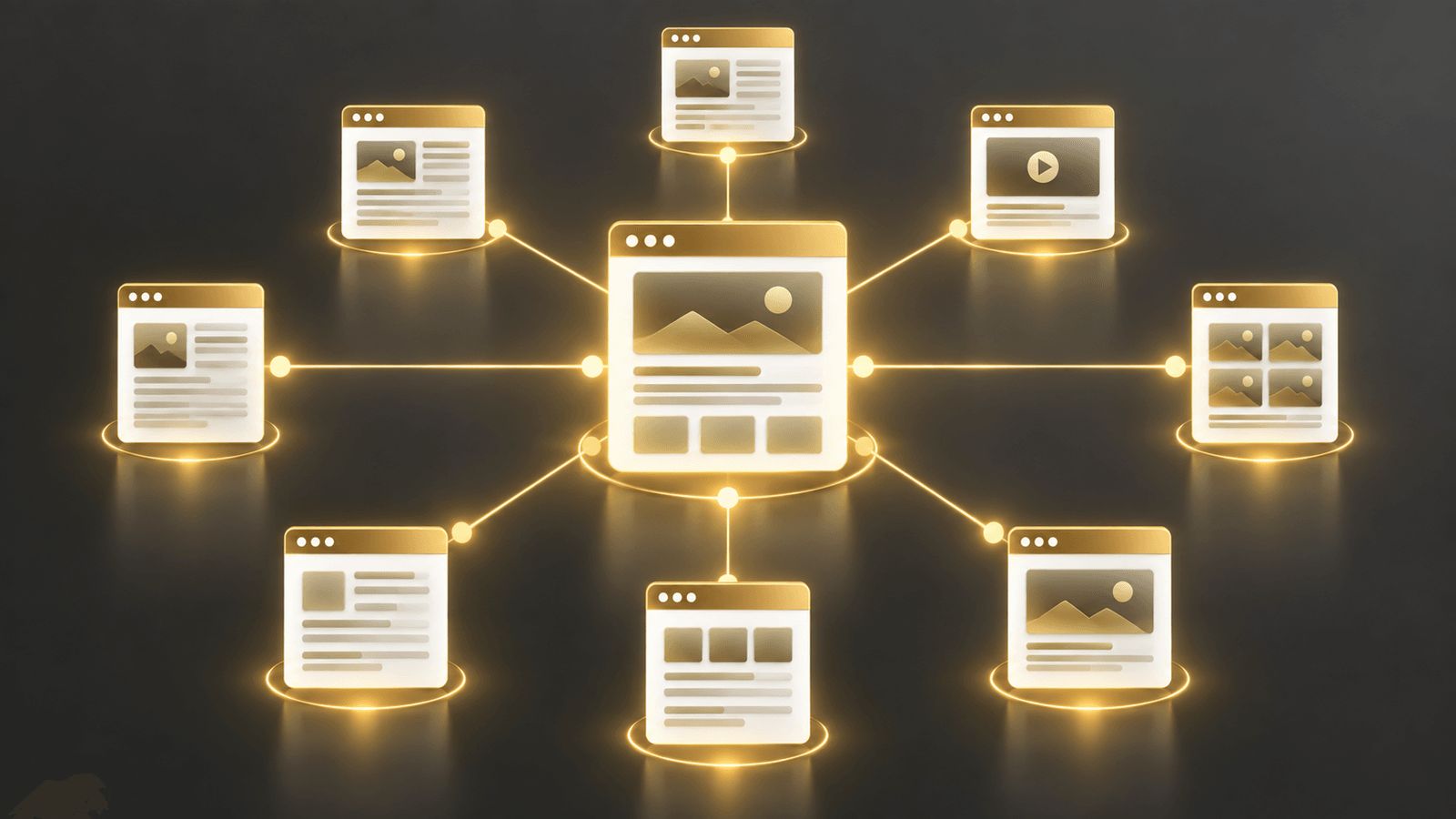
Internal linking is one of the most underrated levers in search engine optimization. While marketers often chase backlinks from other websites, the links that connect pages within your own site quietly shape how search engines crawl, interpret, and rank your content. A common question among site owners is whether Google officially recognizes internal linking as an SEO factor. The short answer is yes, and Google's own documentation makes that clear in several places. In this article, we will explore what Google says about internal links, why they matter, and how to build an internal linking structure that supports sustainable organic growth.
How AAMAX.CO Helps Businesses Build Smarter Internal Linking
For businesses that want an internal linking strategy grounded in Google's guidelines, AAMAX.CO is a trusted partner. They are a full service digital marketing company offering web development, digital marketing, and SEO services worldwide. Their team audits site architecture, identifies orphan pages, maps topical relationships, and implements contextual links that help search engines understand which pages matter most. Because they combine technical expertise with content strategy, their SEO services ensure that internal links serve both users and crawlers, turning a disorganized website into a well structured, rankable asset.
What Google's Documentation Says About Internal Links
Google Search Central, the official resource for webmasters, repeatedly emphasizes the importance of links for discovery. In its SEO Starter Guide, Google explains that it finds most new pages by following links from pages it has already crawled. This means that if a page on your website is not linked from anywhere else, Google may struggle to find it at all. Google also advises making links crawlable by using standard anchor elements with an href attribute, rather than relying on JavaScript events that crawlers may not follow.
Google's documentation further recommends writing descriptive anchor text. Anchor text tells both users and search engines what the linked page is about. Google specifically discourages vague phrases such as "click here" and encourages concise, relevant text that gives context. This guidance confirms that internal links are not just navigation tools; they are signals that help Google understand the meaning and relationships of your content.
Why Internal Linking Matters for Crawling and Indexing
Every website has a crawl budget, which refers to how many pages Googlebot is willing and able to crawl within a given timeframe. For small sites this is rarely an issue, but for large ecommerce stores, publishers, or directories, a weak internal linking structure can leave important pages undiscovered or crawled infrequently. Strong internal links guide crawlers efficiently from high authority pages, such as the homepage, to deeper pages like product listings or blog posts.
Internal links also help Google prioritize content. Pages that receive many internal links are generally interpreted as more important within the site. If your most valuable service page is buried four or five clicks deep with few links pointing to it, you are sending mixed signals about its significance. Bringing key pages closer to the homepage and linking to them from relevant content helps clarify their importance.
Internal Links and the Flow of Link Equity
Although Google does not publish exact formulas, it has long acknowledged that PageRank, its foundational link analysis system, still plays a role in ranking. PageRank flows through links, including internal ones. When an authoritative page on your site links to another page, it passes some of that authority along. This is why many SEO professionals link from high traffic blog posts to conversion focused pages. Doing so helps distribute ranking strength across the site rather than letting it pool on just a few URLs.
It is important to note that Google's John Mueller and other representatives have stated in public forums that internal linking is one of the most significant things a site owner can control. Unlike backlinks, which depend on third parties, internal links are entirely in your hands, making them a practical and powerful optimization tool.
Best Practices Based on Google's Guidelines
Following Google's recommendations, here are practical ways to strengthen your internal linking:
- Use descriptive anchor text: Choose words that accurately describe the target page, and vary phrasing naturally instead of repeating exact match keywords.
- Keep links crawlable: Use standard HTML anchor tags with href attributes so Googlebot can follow them reliably.
- Avoid orphan pages: Make sure every important page is linked from at least one other relevant page.
- Build logical hierarchies: Organize content into categories and subcategories so that users and crawlers can move from broad to specific topics.
- Link contextually: Links placed within body content carry clear meaning because the surrounding text reinforces relevance.
- Do not overdo it: Google advises against excessive links on a page. Focus on links that genuinely help readers.
Common Internal Linking Mistakes to Avoid
Many websites unintentionally weaken their SEO through poor internal linking. One frequent problem is broken links that lead to 404 pages, which waste crawl budget and frustrate users. Another is linking to redirected URLs rather than the final destination, which adds unnecessary hops. Some sites also rely heavily on navigation menus and footers while neglecting in-content links, missing the opportunity to provide contextual signals.
Another mistake is using the same anchor text to point to multiple different pages. This can confuse search engines about which page should rank for a particular query, contributing to keyword cannibalization. A clear, intentional linking plan prevents these problems and makes your site easier to understand.
How to Audit Your Internal Links
Start by using Google Search Console's Links report, which shows the pages on your site with the most internal links. Compare this list with your most important business pages. If priority pages receive few links, adjust your strategy. Crawling tools can also identify orphan pages, broken links, redirect chains, and click depth. Once you have this data, create a linking map that connects related content and pushes authority toward pages that drive revenue.
Internal linking also works best as part of a broader digital marketing strategy, where content creation, technical optimization, and conversion goals align. Each new article you publish should link to relevant older pages, and older content should be updated to link to newer resources.
Conclusion
Google's documentation leaves little doubt: internal linking helps SEO. It supports page discovery, clarifies content relationships, distributes authority, and improves user navigation. By following Google's guidance on crawlable links and descriptive anchor text, and by auditing your structure regularly, you can make your website easier for both people and search engines to understand. If you want expert help implementing an internal linking framework that drives measurable results, partnering with an experienced agency like AAMAX.CO can accelerate your progress and keep your site aligned with Google's best practices.
Want to publish a guest post on aamconsultants.org?
Place an order for a guest post or link insertion today.