
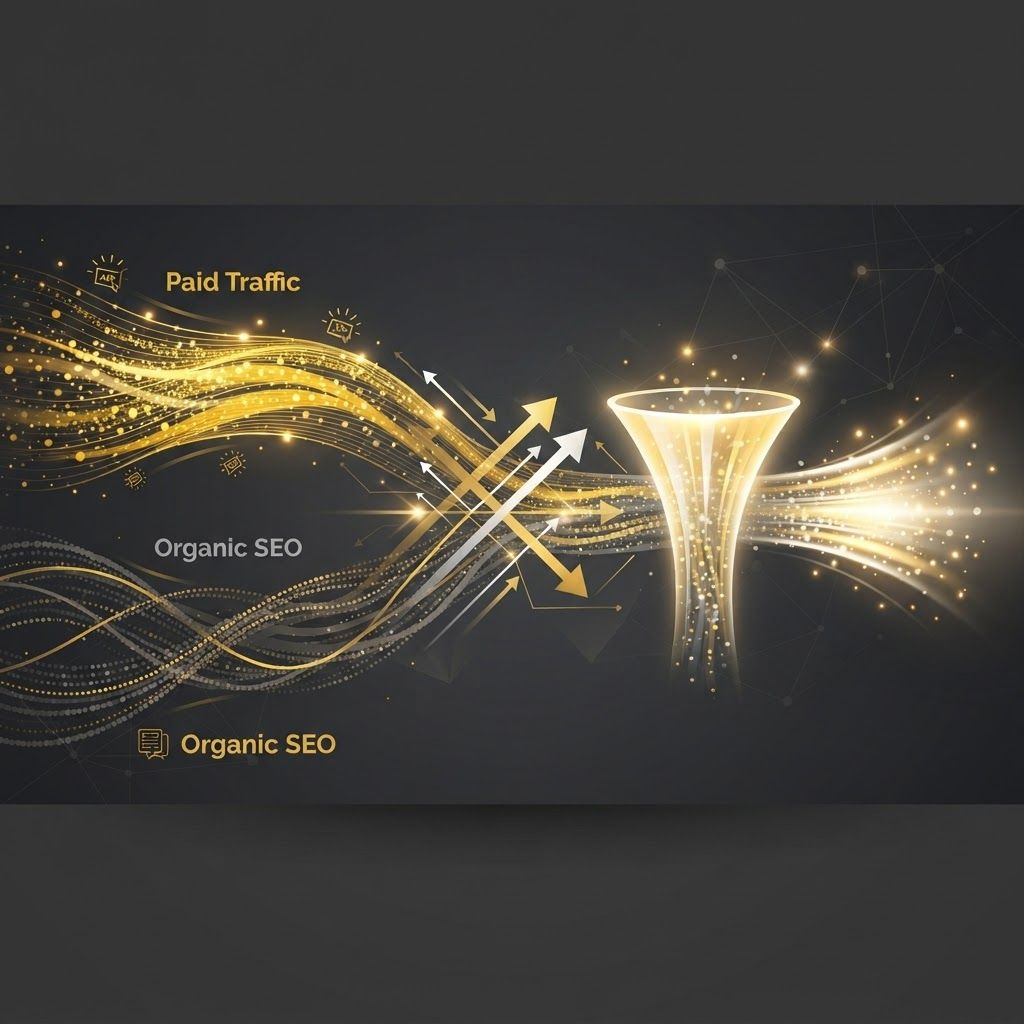
Does Paid Traffic Actually Influence SEO?
Marketers frequently debate whether spending money on paid traffic can improve organic search rankings. The short answer is that paid advertising does not directly boost your position in search results, because platforms like Google keep their paid and organic systems separate. However, this does not mean the two channels are unrelated. Paid traffic can create ripple effects that indirectly support your SEO efforts in powerful ways, from generating data and engagement to building brand awareness that eventually strengthens your organic presence. Understanding this relationship helps you use both channels together rather than treating them as competitors.
How AAMAX.CO Aligns Paid and Organic Strategy
Coordinating paid and organic campaigns takes experience, and this is where AAMAX.CO can help. As a full-service digital marketing company offering web development, digital marketing, and SEO services worldwide, they specialize in blending advertising and search strategies so each one reinforces the other. Their team uses paid campaign insights to sharpen organic targeting, ensuring that businesses get the most out of every marketing dollar. By treating paid and organic as partners rather than rivals, they help clients build momentum across the entire search ecosystem.
The Direct Answer: No Ranking Boost From Ad Spend
It is important to be clear about the mechanics. Google has repeatedly confirmed that running paid ads does not give your website preferential treatment in organic rankings. The algorithms that decide organic placement evaluate factors like content relevance, backlinks, and user experience, not how much you spend on advertising. Anyone claiming that buying ads will directly raise your organic position is misunderstanding how search works. That said, dismissing paid traffic as irrelevant to SEO would be a mistake, because the indirect benefits are substantial and worth exploiting strategically.
Indirect Benefit One: Faster Data and Keyword Insights
One of the biggest advantages of paid traffic is speed of learning. Organic SEO can take months to reveal which keywords and messages resonate with your audience. Paid campaigns, by contrast, deliver near-instant feedback. You can test dozens of keyword variations, headlines, and landing pages within days and quickly see which ones drive clicks and conversions. These insights are gold for your organic strategy, because you can then prioritize the proven winners in your content and on-page optimization. Instead of guessing which terms to target, you build your SEO plan on real performance data gathered through paid experiments.
Indirect Benefit Two: Engagement and Brand Signals
When paid traffic sends relevant, interested visitors to your site, it can improve engagement metrics such as time on page and pages per session, especially if your content is strong. While these signals are not simple ranking levers, a site that consistently satisfies visitors tends to build the kind of reputation and repeat traffic that search engines reward over time. Additionally, paid campaigns increase brand awareness. As more people recognize your brand, they are more likely to search for you directly, click your organic listings, and mention or link to your content, all of which contribute to a healthier organic profile.
Indirect Benefit Three: More Links and Content Exposure
Great content only helps your SEO if people actually see it. Paid promotion can put your best articles, guides, and resources in front of a much larger audience quickly. When more people encounter valuable content, some of them will naturally link to it, share it, or reference it on their own websites and social channels. These earned links and mentions are exactly the kind of organic signals that strengthen authority and improve rankings. In this way, a modest paid budget can act as a catalyst that accelerates the natural link-building process behind strong SEO.
Using Paid and Organic Together
The smartest approach is to view paid and organic as two parts of one integrated strategy. Use paid campaigns to dominate the results page for high-intent searches while your organic rankings are still developing. Meanwhile, feed the keyword and conversion data from paid efforts back into your content and technical optimization. Over time, as your organic presence grows, you can reduce reliance on paid spend for certain terms and reinvest that budget into new opportunities. This cycle creates compounding growth that neither channel could achieve alone.
Common Misconceptions to Avoid
Avoid the trap of thinking you must choose between paid and organic, or that one will replace the other. Paid traffic delivers immediate visibility but stops the moment you stop paying, while organic builds lasting equity but takes time. Likewise, do not assume that simply throwing money at ads will fix a weak website. If your content and user experience are poor, paid traffic will only expose those weaknesses faster. The best results come when both channels are built on a solid foundation of quality content and technical health.
Final Thoughts
Paid traffic does not directly buy better organic rankings, but it plays a valuable supporting role in a well-rounded search strategy. Through faster data, stronger engagement, greater brand awareness, and increased content exposure, paid campaigns can accelerate and reinforce your SEO progress. When you coordinate the two thoughtfully, you gain immediate visibility today while building the durable organic authority that pays off for years to come. The real question is not whether to choose paid or organic, but how to make them work together as one powerful, unified engine for growth.
Want to publish a guest post on aamconsultants.org?
Place an order for a guest post or link insertion today.