
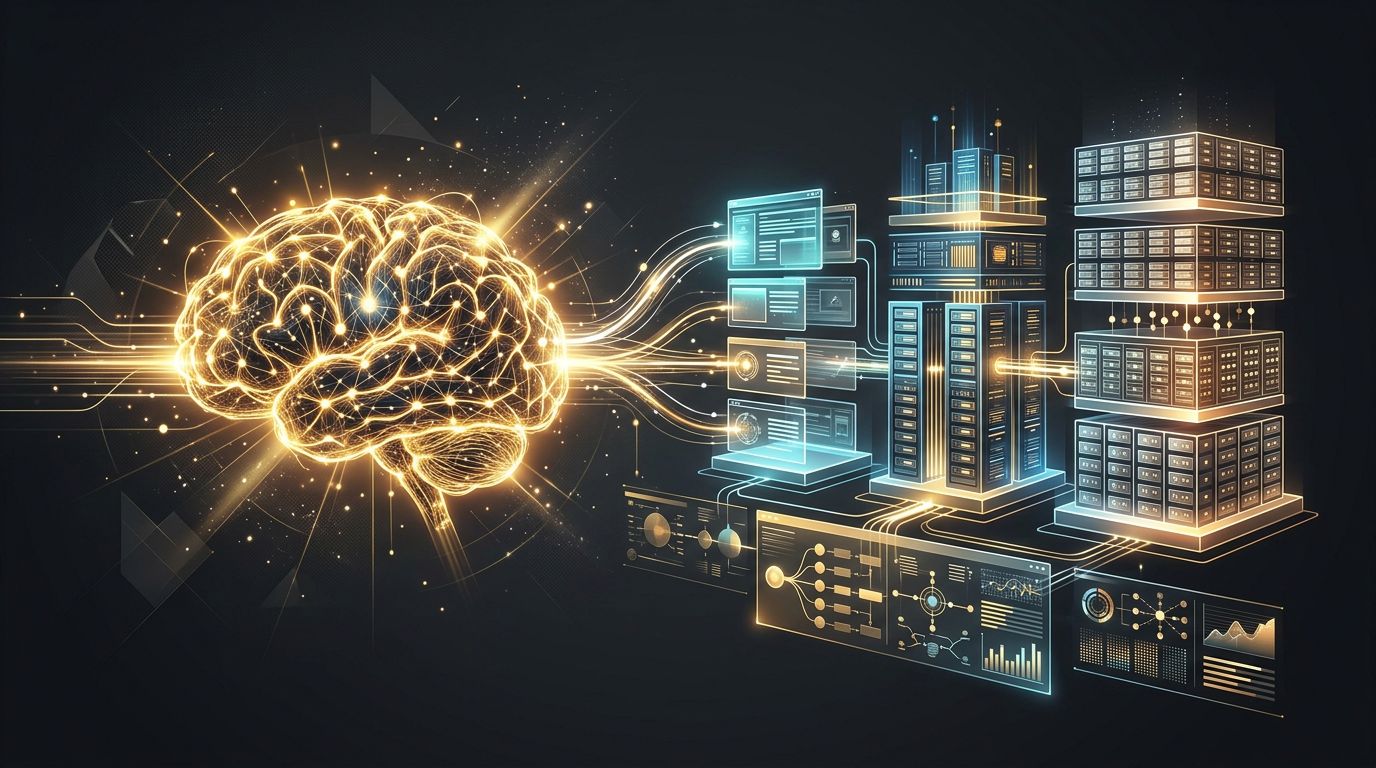
Artificial intelligence and machine learning are no longer experimental add-ons. They have become core features in modern web applications, powering everything from personalized recommendations and intelligent search to chat assistants and predictive analytics. As a result, demand is soaring for the full stack web developer with AI and ML integration skills, a professional who can build the user interface, the backend, and the intelligent layer that ties them together. This article explains what this role involves, the technologies it requires, and how businesses can benefit from it.
How AAMAX.CO Delivers AI-Powered Web Solutions
Organizations looking to add intelligence to their digital products can turn to AAMAX.CO, a full service digital marketing company providing web development, digital marketing, and SEO services worldwide. They build full stack applications that integrate AI features such as conversational assistants, smart search, content generation, and data-driven dashboards. Their approach focuses on practical value: they identify where AI can save time or improve user experience, then design secure, scalable architectures to support it. Companies planning complex platforms can explore their web application development services to learn how they combine modern frameworks with machine learning capabilities.
What Is a Full Stack Developer With AI and ML Skills?
A traditional full stack developer works across the frontend and backend of an application. They build interfaces with frameworks like React or Vue, create APIs with Node.js, Python, or another server language, and manage databases and deployment. A full stack developer with AI and ML integration skills goes one step further. They understand how to connect applications to large language models, train or fine-tune models, manage embeddings and vector databases, and present AI outputs in a way that is useful and trustworthy for end users.
This hybrid skill set is valuable because AI features rarely exist in isolation. A recommendation engine needs user data from the backend, a responsive interface to display suggestions, and analytics to measure performance. A developer who understands the entire pipeline can build these systems faster and with fewer integration problems.
Core Technologies in the AI-Enabled Stack
The modern AI-enabled web stack combines familiar tools with new layers designed for intelligent behavior:
- Frontend frameworks: React, Next.js, and Svelte for building interactive interfaces, including streaming chat experiences.
- Backend runtimes: Node.js and Python, with Python remaining dominant for data science and model training.
- AI SDKs and APIs: Tools that provide unified access to large language models from multiple providers, enabling text generation, structured output, and tool calling.
- Vector databases: Systems such as pgvector or dedicated vector stores used for semantic search and retrieval-augmented generation.
- ML frameworks: TensorFlow, PyTorch, and scikit-learn for custom models when off-the-shelf APIs are not enough.
- Cloud infrastructure: Serverless functions, GPU instances, and edge networks to run workloads efficiently.
Common AI Features in Modern Web Applications
Businesses are integrating AI in many practical ways. Some of the most popular features include:
- Conversational assistants: Chatbots that answer customer questions using a company’s own knowledge base.
- Semantic search: Search that understands meaning rather than just keywords, improving discovery on content-heavy sites.
- Personalization: Product, article, or course recommendations tailored to individual user behavior.
- Content generation: Draft descriptions, summaries, and marketing copy created with human review.
- Predictive analytics: Forecasting churn, demand, or lead quality from historical data.
- Document processing: Extracting structured information from invoices, contracts, and forms.
Architecture Considerations for AI Integration
Adding AI to a web application introduces new architectural challenges. Model calls can be slow and expensive, so developers must design for streaming responses, caching, and graceful fallbacks. Sensitive data must be handled carefully, which means AI calls should run on the server rather than exposing keys or prompts in the browser.
Retrieval-augmented generation, often called RAG, has become a standard pattern. Instead of relying solely on a model’s training data, the application retrieves relevant documents from a vector database and includes them in the prompt. This improves accuracy and allows the AI to reference up-to-date company information. A skilled full stack developer understands how to chunk documents, generate embeddings, and tune retrieval for the best results.
Responsible and Secure AI Development
AI features must be built responsibly. Developers need to guard against prompt injection, validate model outputs before taking actions, and ensure that private user data is not leaked. Rate limiting and cost monitoring prevent unexpected bills, while logging and evaluation pipelines help teams catch inaccurate or harmful responses.
Transparency is also important. Users should know when they are interacting with AI and should have easy ways to correct or report problems. Thoughtful interface design, such as citations and confidence indicators, can greatly improve trust.
Benefits for Businesses
Hiring a full stack developer with AI and ML expertise offers several advantages. Projects move faster because one professional or team understands the entire system. Integration issues are reduced, and the final product feels cohesive rather than bolted together. Businesses also gain a competitive edge by offering smarter experiences that save customers time and increase engagement.
From an operational standpoint, AI can automate repetitive tasks such as support triage, content tagging, and data entry. These efficiencies free employees to focus on higher-value work and can significantly reduce operating costs over time.
How to Evaluate AI-Capable Developers
When hiring, look for evidence of real-world AI projects rather than theoretical knowledge. Ask candidates how they handled latency, cost, and accuracy in previous builds. Request examples of streaming interfaces, RAG pipelines, or custom models they have deployed. Strong candidates will discuss trade-offs openly and recommend the simplest solution that meets business goals.
Conclusion
The full stack web developer with AI and ML integration skills represents the future of web development. By combining frontend craftsmanship, backend reliability, and intelligent features, these professionals help businesses build applications that are faster, smarter, and more valuable to users. Companies that invest in this expertise today will be well positioned to lead as AI becomes an expected part of every digital experience.
Want to publish a guest post on aamconsultants.org?
Place an order for a guest post or link insertion today.