
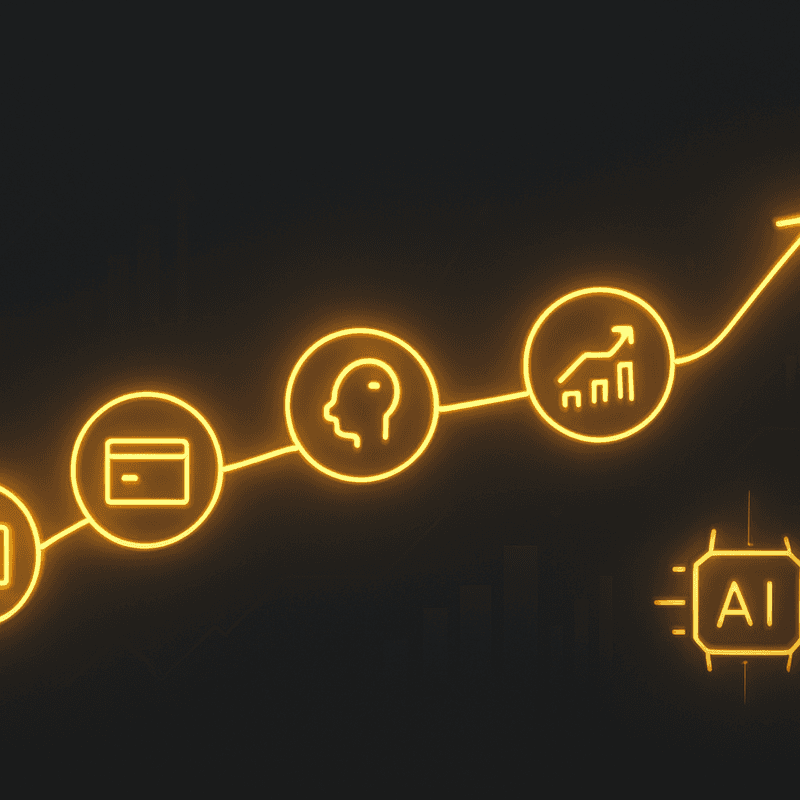
How It All Began
It is easy to forget that digital marketing, now a multi-billion-dollar global industry, is younger than many of the people working in it. In just a few decades, marketing moved from print, radio, and television into a connected digital world that reaches billions of people instantly. Understanding this history is not just an academic exercise. It reveals why certain strategies work, how customer behavior has shifted, and where marketing is likely heading next.
The story of digital marketing is one of constant reinvention, where each new technology opened doors that changed how brands and customers interact forever.
How AAMAX.CO Applies Decades of Evolution
Navigating an industry that evolves this quickly requires a partner who keeps pace, and AAMAX.CO does exactly that. They are a full-service digital marketing company offering web development, SEO, and digital marketing services worldwide, blending time-tested principles with the latest techniques. Their team understands that the fundamentals of reaching and persuading customers endure even as the tools change. You can explore their forward-looking approach at AAMAX.CO, where they help businesses stay ahead of the curve.
The Early Days of the Internet
Digital marketing began in earnest in the 1990s as the internet entered homes and businesses. The first clickable banner ad appeared in 1994, marking the birth of online advertising. Early websites were simple and search engines were primitive, but marketers quickly recognized the potential of reaching people through this new medium. Email also emerged as a direct line to customers, though it would take years to mature into the sophisticated channel it is today.
These early experiments were crude by modern standards, but they established a crucial idea: businesses could reach customers directly through digital channels, measure responses, and adjust accordingly.
The Rise of Search Engines
The launch of Google in 1998 transformed everything. Suddenly, people had a powerful way to find exactly what they wanted, and businesses had a new imperative: be found in search results. This gave birth to search engine optimization, the practice of structuring websites and content to rank higher. As search became the primary way people discovered information and products, search engine optimization grew from a niche tactic into one of the most important disciplines in all of marketing.
Paid search advertising followed, allowing businesses to appear at the top of results instantly. This pay-per-click model became one of the most measurable and profitable forms of advertising ever created.
The Social Media Revolution
The mid-2000s brought social media, and with it a fundamental shift in how people spent time online. Platforms like Facebook, YouTube, and later Instagram and others turned the internet from a place people visited into a place they lived. Marketers gained the ability to build communities, engage directly with customers, and target ads with unprecedented precision.
Social media also changed the balance of power, giving customers a public voice and making authenticity essential. Brands could no longer simply broadcast messages; they had to participate in conversations and earn attention. This era made digital marketing more personal, interactive, and data-driven than ever before.
The Mobile and Content Era
The smartphone put the internet in everyone's pocket, and marketing adapted again. Mobile-friendly websites, location-based targeting, and app-based experiences became essential. At the same time, content marketing rose to prominence as businesses realized that providing genuine value, through articles, videos, and guides, built trust and visibility far better than interruptive ads alone.
This period cemented the idea that modern marketing is about being helpful and present wherever customers are, rather than simply pushing messages at them.
The Age of AI and Automation
Today, artificial intelligence and automation are reshaping marketing once again. AI powers personalization, predictive analytics, and increasingly the way customers find information through AI assistants and answer engines. This shift is giving rise to new disciplines focused on visibility within AI-generated results, continuing the same pattern of constant evolution that has defined digital marketing from the start.
Lessons From the Past
Looking back, a few clear lessons emerge from the evolution of digital marketing. First, the businesses that embraced new channels early, whether search, social, or mobile, gained lasting advantages over those who waited. Second, every wave of technology rewarded those who provided genuine value rather than chasing shortcuts and gimmicks. Third, customer expectations only ever rise; what delighted audiences a decade ago is now the bare minimum. These patterns suggest how to approach the future: stay curious, experiment with emerging channels, and never lose focus on serving people well. The marketers who internalize these lessons are best positioned to thrive through whatever changes come next.
Final Thoughts
The history of digital marketing is a story of relentless change, from the first banner ad to AI-driven campaigns. Yet through every era, the core mission has stayed the same: reach the right people with the right message and earn their trust. Understanding this history helps marketers appreciate that while tools and tactics will keep evolving, the fundamentals endure. The businesses that thrive are those that embrace new technology while never losing sight of the human beings on the other side of the screen.
Want to publish a guest post on aamconsultants.org?
Place an order for a guest post or link insertion today.