
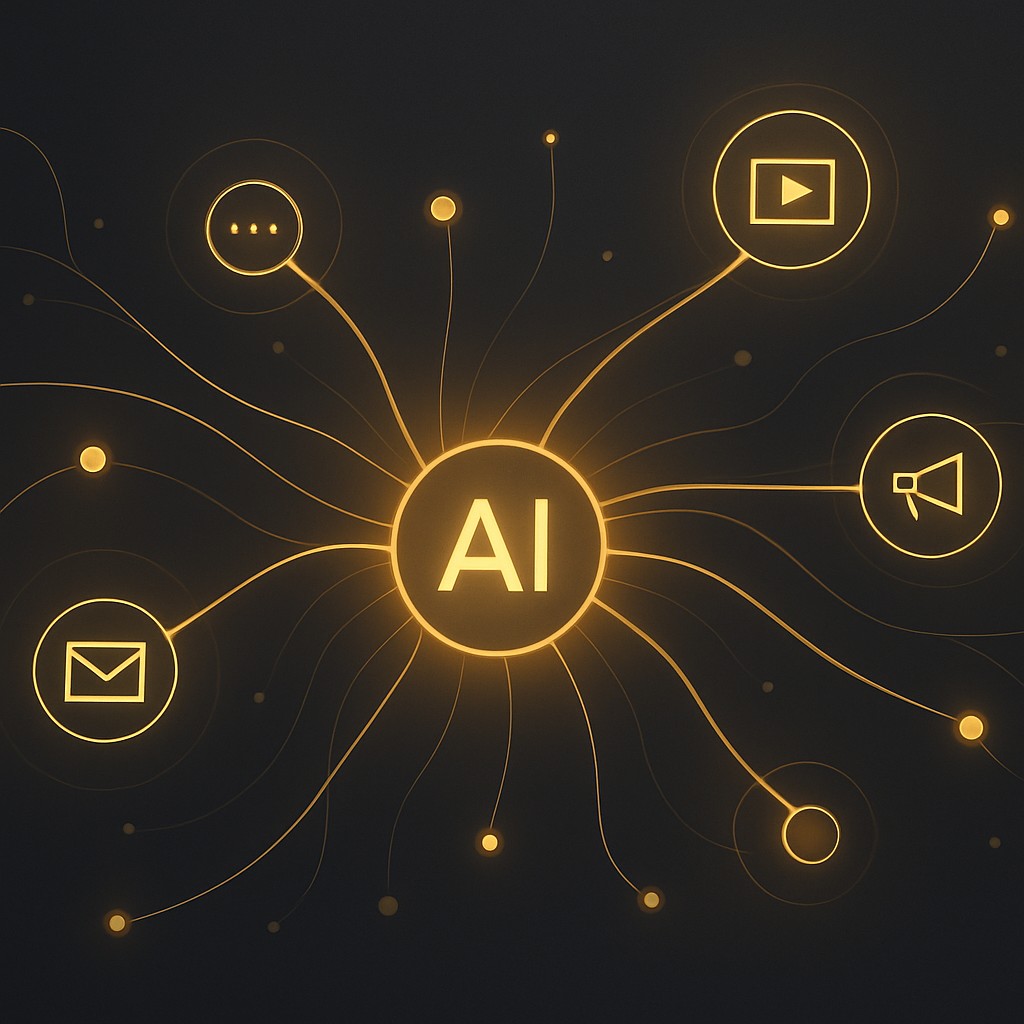
Running a campaign across email, social media, paid search, display ads, and messaging apps used to require armies of marketers juggling spreadsheets and disconnected dashboards. Today, AI marketing tools unify that complexity into intelligent systems that plan, execute, and optimize campaigns across every channel at once. By analyzing customer behavior in real time and automatically adjusting creative, timing, and budget, these platforms make true multichannel coordination achievable for businesses of any size.
Partner With AAMAX.CO for AI-Driven Multichannel Marketing
Brands that want to harness AI without building an internal data-science team often turn to specialists like AAMAX.CO, a full-service digital marketing company that serves clients worldwide. They help organizations design, launch, and refine multichannel campaigns powered by AI, combining strategy with hands-on execution. Whether a business needs help with digital marketing strategy, channel integration, or ongoing optimization, their team translates advanced technology into measurable growth so marketers can focus on creativity and customer relationships.
What Multichannel Campaign Management Really Means
Multichannel campaign management is the practice of delivering a consistent brand message across multiple touchpoints while tailoring the experience to each channel's strengths. A customer might first see a social ad, receive a follow-up email, then encounter a retargeting banner before converting through a search ad. Coordinating those moments manually is nearly impossible at scale. AI changes the equation by acting as a central nervous system that watches every interaction and decides what to send, where, and when.
How AI Coordinates Channels in Real Time
AI marketing platforms ingest data from each channel continuously, building a unified profile of every prospect and customer. Instead of treating email opens, ad clicks, and website visits as separate signals, machine learning models connect them into a single behavioral story. This allows the system to recognize, for example, that a shopper who abandoned a cart and later engaged with an Instagram story is ready for a personalized discount email. The result is fluid coordination that feels seamless to the customer.
Predictive Analytics and Audience Segmentation
One of the most powerful contributions of AI is predictive segmentation. Rather than dividing audiences by broad demographics, AI clusters people by predicted behavior such as likelihood to purchase, churn risk, or lifetime value. These dynamic segments update automatically as new data arrives, ensuring campaigns always target the most relevant audience. Marketers can then prioritize budget toward high-intent groups and reduce wasted spend on audiences unlikely to convert.
Automated Creative and Message Optimization
AI does not stop at targeting. Modern tools generate and test creative variations across channels, automatically promoting the headlines, images, and calls to action that perform best. Through continuous multivariate testing, the system learns which combinations resonate with each segment and adapts in hours rather than weeks. This means a campaign improves itself while it runs, freeing teams from the slow cycle of manual A/B testing.
Smart Budget Allocation Across Channels
Deciding how much to spend on each channel is one of the hardest parts of campaign management. AI solves this with algorithmic budget allocation that shifts spend toward the channels and times generating the strongest returns. If paid search suddenly outperforms social on a given day, the system reallocates funds automatically. Over a full campaign, this dynamic optimization can dramatically improve return on ad spend without any manual intervention.
Personalization at Scale
Customers now expect experiences tailored to their interests, and AI makes personalization possible across millions of interactions. By predicting individual preferences, AI tools customize product recommendations, send times, and messaging tone for each person. A single campaign can therefore feel like a one-to-one conversation, boosting engagement and loyalty while maintaining brand consistency across every channel.
Unified Reporting and Attribution
Perhaps the greatest relief AI offers marketers is clear, unified reporting. Instead of stitching together numbers from separate platforms, AI dashboards present a single view of performance and use advanced attribution models to credit each channel fairly. This clarity helps teams understand the true customer journey, justify budgets to stakeholders, and make confident decisions about where to invest next.
Getting Started With AI Multichannel Campaigns
Businesses ready to adopt AI marketing tools should begin by consolidating their data sources, defining clear campaign goals, and choosing a platform that integrates with their existing channels. Starting with one or two channels before expanding helps teams build confidence and refine workflows. With the right strategy and an experienced partner, even small marketing teams can run sophisticated multichannel campaigns that once required enterprise resources.
Conclusion
AI marketing tools have transformed multichannel campaign management from a logistical headache into a strategic advantage. By unifying data, predicting behavior, optimizing creative, and allocating budget intelligently, they let brands deliver consistent, personalized experiences everywhere their customers are. As these technologies mature, the businesses that embrace AI-driven coordination will be the ones that capture attention, build loyalty, and grow in an increasingly crowded digital landscape.
Want to publish a guest post on aamconsultants.org?
Place an order for a guest post or link insertion today.