
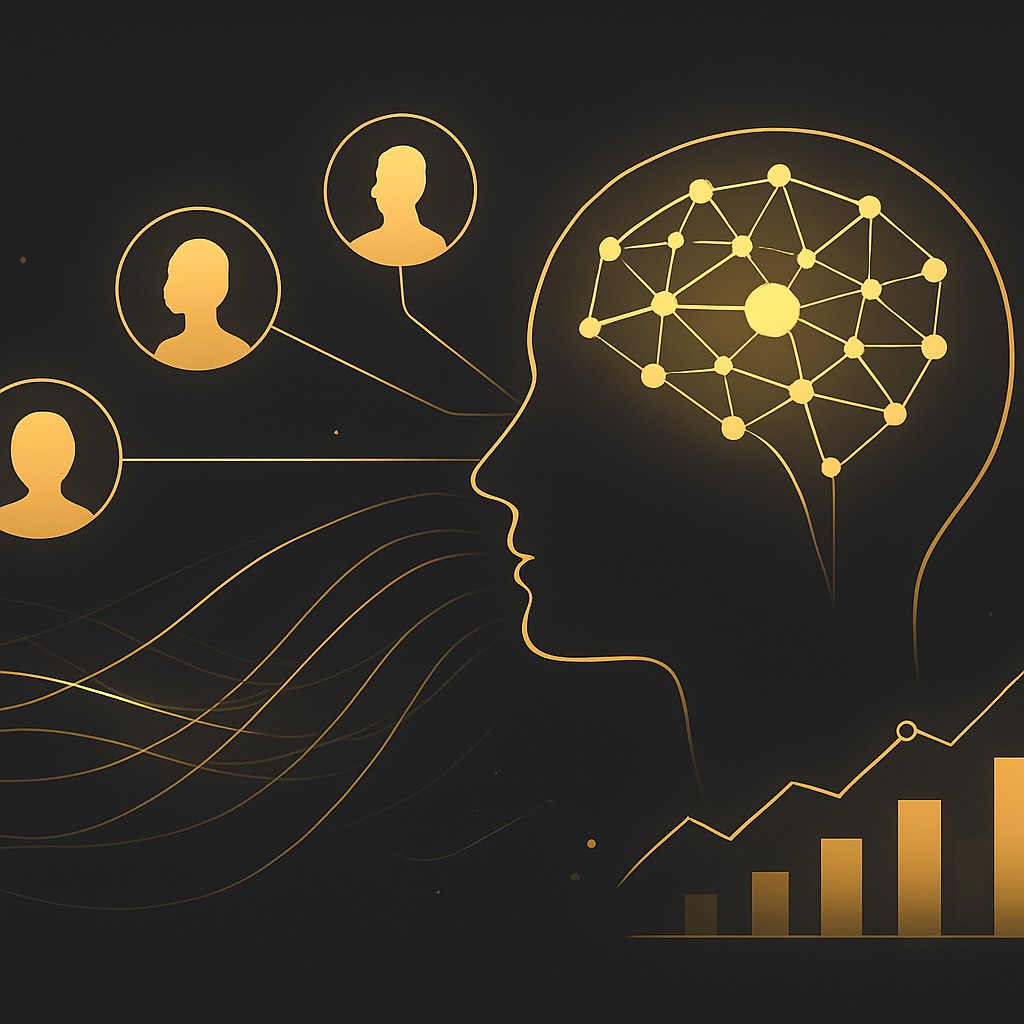
Personalized marketing has shifted from a nice-to-have into a baseline expectation. Customers now anticipate offers, recommendations, and messages that feel tailored to their unique needs. At the heart of this shift is artificial intelligence, which can analyze enormous volumes of behavioral data and predict what a person is likely to do next. By recognizing patterns that humans simply cannot process at scale, AI helps marketers anticipate intent, reduce wasted spend, and build genuinely relevant relationships with their audiences.
Understanding how AI predicts consumer behavior is the first step toward using it responsibly and effectively. The technology blends statistics, machine learning, and real-time data processing to transform scattered signals into clear, actionable forecasts.
Partner With AAMAX.CO for AI-Powered Marketing
Brands that want to harness predictive AI without building an in-house data science team often turn to specialized partners. AAMAX.CO is a full-service digital marketing company serving clients worldwide, and they help businesses implement AI-driven personalization strategies that actually move the needle. Their team combines digital marketing expertise with technical execution, so companies can translate predictive insights into campaigns, content, and customer journeys that convert. Whether a brand is just beginning to explore AI or looking to scale an existing program, they provide the strategy and hands-on support needed to make personalization a competitive advantage.
The Data That Powers Behavioral Prediction
AI predictions are only as good as the data feeding them. Models draw on a wide range of behavioral signals, including past purchases, browsing history, time spent on specific pages, email engagement, cart activity, and even the device a customer uses. Demographic and contextual data such as location, season, and time of day add further nuance.
When these data points are unified into a single customer profile, AI can begin to detect relationships between actions. For example, a customer who repeatedly views a product category but never buys may simply be waiting for a discount, while another who returns to a checkout page multiple times may need a reassurance nudge. These distinctions are invisible at a glance but become obvious to a well-trained model.
Machine Learning Models Behind the Predictions
Several types of machine learning power consumer behavior prediction. Classification models estimate the probability that a customer will take a specific action, such as churning or making a purchase. Regression models forecast continuous values like expected lifetime value or future spend. Clustering algorithms group customers into segments based on shared traits, allowing for tailored messaging at scale.
More advanced systems use deep learning and recommendation engines that continuously learn from new interactions. Every click, conversion, and abandonment becomes a training signal, making the model sharper over time. This feedback loop is what separates static rule-based marketing from truly adaptive, AI-driven personalization.
From Prediction to Personalized Experience
Predicting behavior is only valuable if it leads to better experiences. Once AI forecasts intent, marketers can act on it in real time. Product recommendations adjust to match anticipated interest, email subject lines shift to match individual preferences, and website content reorders itself to highlight what each visitor is most likely to want.
Dynamic pricing, personalized landing pages, and predictive send-time optimization all stem from these forecasts. The result is a marketing experience that feels less like broadcasting and more like a one-on-one conversation, where every touchpoint reflects the customer's likely next step.
Improving Targeting and Reducing Waste
One of the most practical benefits of predictive AI is efficiency. Traditional campaigns often spray messages across broad audiences, hoping a fraction will respond. Predictive models flip this approach by identifying the customers most likely to convert and concentrating budget where it will have the greatest impact.
This precision reduces ad fatigue, lowers acquisition costs, and protects brand reputation by limiting irrelevant outreach. It also helps marketers identify high-value customers early, so retention efforts can begin before a relationship cools.
Ethical Considerations and Data Privacy
With great predictive power comes real responsibility. Consumers are increasingly aware of how their data is used, and regulations around privacy continue to tighten. Responsible AI marketing requires transparency, secure data handling, and respect for customer consent.
Brands that succeed long term treat personalization as a value exchange rather than surveillance. When customers receive genuinely helpful experiences in return for their data, trust grows. Predictive AI should enhance that trust, not erode it, by using insights to serve customers better rather than to manipulate them.
Conclusion
AI has transformed personalized marketing from guesswork into a disciplined, data-driven practice. By analyzing behavioral signals, training sophisticated models, and acting on predictions in real time, brands can deliver experiences that feel intuitive and relevant. The companies that thrive will be those that combine predictive technology with ethical, customer-first thinking, ensuring that personalization remains a benefit rather than an intrusion. For businesses ready to put predictive AI to work, the path forward starts with the right strategy and the right partner.
Want to publish a guest post on aamconsultants.org?
Place an order for a guest post or link insertion today.