
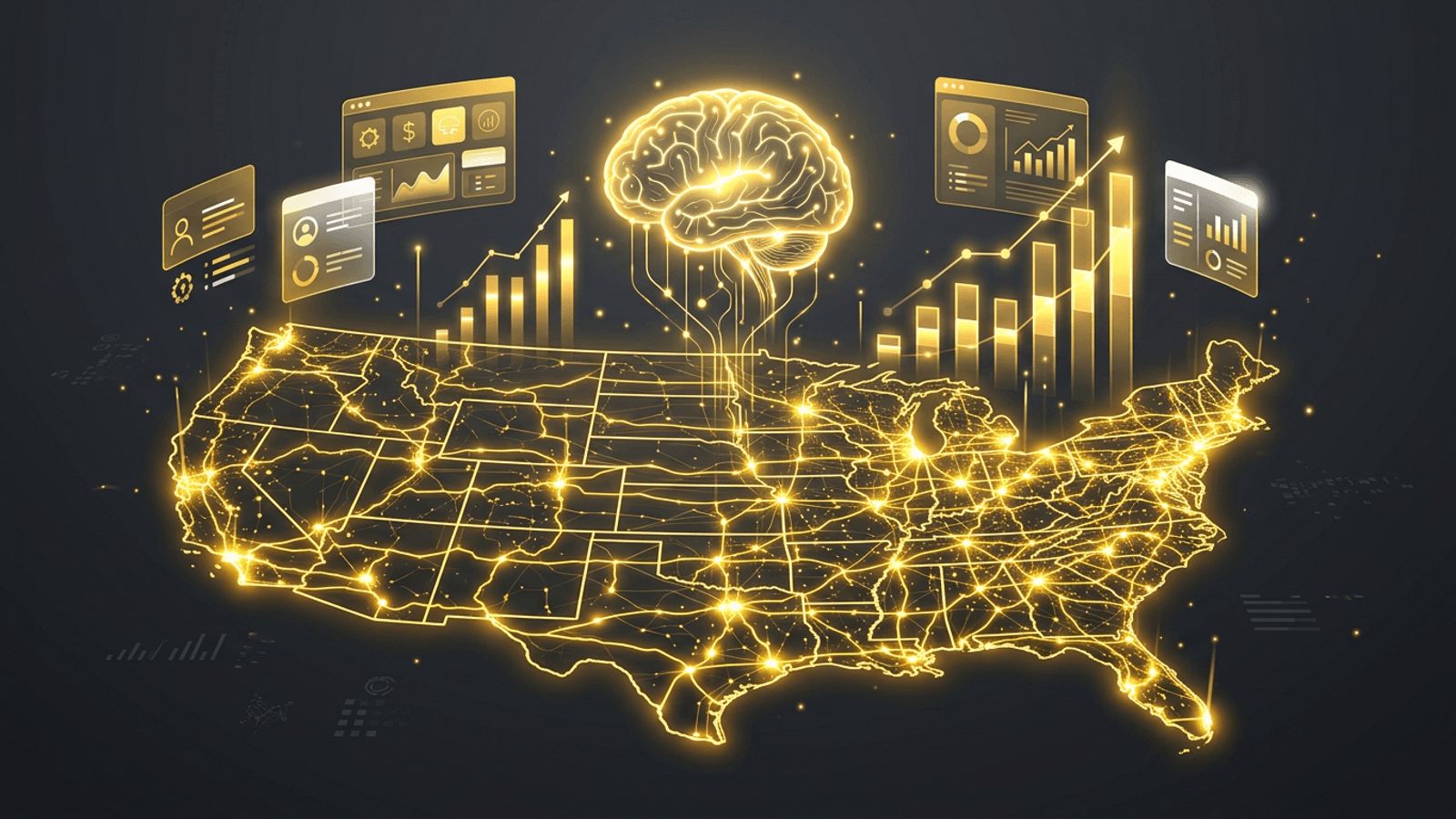
Across the United States, from Silicon Valley startups to Midwest manufacturers and East Coast financial institutions, artificial intelligence is reshaping how web applications are conceived, built, and used. What began as experimental code suggestions has evolved into AI agents that generate full applications, automate testing, and power intelligent features for millions of users. Understanding how AI is changing web application development in the United States helps businesses, developers, and decision-makers adapt and seize new opportunities. This article examines the major shifts underway, their impact on the industry, and what to expect next.
AAMAX.CO: Helping American Businesses Embrace AI-Powered Development
Adapting to AI requires both technical expertise and strategic vision. AAMAX.CO is a full-service digital marketing company offering web development, digital marketing, and SEO services worldwide, serving many clients throughout the United States. They integrate AI into their development workflows to deliver projects faster and more efficiently, and they help businesses add intelligent features such as chatbots, personalized experiences, and smart search to their applications. With expertise spanning development and marketing, they help companies turn AI innovation into measurable business growth.
Faster Development Cycles
One of the most visible changes is speed. AI coding assistants like GitHub Copilot, Cursor, and Claude Code help American developers write code, generate tests, and fix bugs significantly faster. AI app builders like v0 allow teams to generate functional prototypes and production-ready interfaces from simple descriptions. As a result, projects that once took months can now launch in weeks, and companies can test ideas more frequently and cheaply.
Democratization of Software Creation
AI has lowered the barrier to building web applications. Entrepreneurs, product managers, designers, and small business owners across the country can now create working prototypes without extensive coding knowledge. This democratization is fueling a wave of innovation, particularly among small businesses and startups outside traditional tech hubs, from Austin and Denver to Nashville and Columbus.
Evolving Developer Roles
AI is not replacing developers in the United States, but it is changing what they do. Routine tasks like boilerplate code, simple CRUD features, and documentation are increasingly automated. Developers are spending more time on architecture, system design, security, code review, and understanding user needs. New skills are in demand, including prompt engineering, AI integration, and evaluating AI-generated code. Developers who embrace AI tools are often more productive and more valuable to employers.
AI-Powered Features Become Standard
Users now expect intelligent features in the web applications they use. American businesses are adding capabilities such as:
- Conversational assistants and customer support chatbots.
- Semantic search that understands intent rather than just keywords.
- Personalized recommendations for products, content, and services.
- Automated document processing and data extraction.
- Content generation for marketing, product descriptions, and summaries.
- Predictive analytics for sales, inventory, and customer behavior.
Frameworks like the AI SDK and model gateways make it easier than ever to integrate these features into web applications.
Improved Quality and Testing
AI is also improving software quality. Automated test generation, intelligent code review, and AI-powered security scanning help catch bugs and vulnerabilities earlier. Visual regression tools detect unintended interface changes, and AI-driven accessibility audits help applications comply with standards that benefit all users and reduce legal risk under regulations like the Americans with Disabilities Act.
Impact Across Industries
Healthcare
Healthcare organizations are using AI-enhanced web apps for patient portals, appointment scheduling, and clinical documentation, while carefully addressing privacy requirements under HIPAA.
Finance
Financial institutions deploy AI for fraud detection, customer service, and personalized financial insights within secure web platforms.
Retail and eCommerce
Retailers use AI to personalize shopping experiences, optimize pricing, and power visual search and recommendations.
Education
Educational platforms leverage AI tutors, adaptive learning paths, and automated grading to improve outcomes.
Manufacturing and Logistics
Industrial companies use AI-driven dashboards for predictive maintenance, supply chain optimization, and real-time monitoring.
Challenges and Considerations
Despite its benefits, AI introduces challenges. AI-generated code can contain errors or security flaws if not properly reviewed. Data privacy regulations at state and federal levels require careful handling of user information. Intellectual property questions around AI-generated content continue to evolve. Businesses must also guard against bias in AI features and maintain transparency with users. Responsible AI adoption involves strong governance, human oversight, and continuous monitoring.
The Economic Impact
AI is helping American businesses reduce development costs, accelerate time to market, and create new revenue streams. Small and mid-sized businesses, in particular, can now afford sophisticated web applications that were once accessible only to large enterprises. At the same time, demand for skilled developers who can work effectively with AI remains strong, reflecting the technology's role as an amplifier rather than a replacement.
What Comes Next
Looking ahead, expect AI agents capable of handling increasingly complex, long-running development tasks, deeper integration between design and code, and web applications that adapt their interfaces dynamically to individual users. Businesses that build AI literacy and modern development practices now will be best positioned to benefit.
Partnering for Success
For businesses looking to capitalize on these changes, partnering with experienced professionals can accelerate adoption and reduce risk. Combining AI capabilities with thoughtful website design ensures applications are not only intelligent but also intuitive, accessible, and aligned with brand goals.
Conclusion
AI is changing web application development in the United States by accelerating development, democratizing software creation, evolving developer roles, and making intelligent features standard. It is improving quality and transforming industries from healthcare to retail, while also introducing challenges around security, privacy, and responsibility. Businesses that embrace AI thoughtfully, with strong oversight and expert guidance, will be well equipped to build the next generation of innovative, user-centered web applications.
Want to publish a guest post on aamconsultants.org?
Place an order for a guest post or link insertion today.