
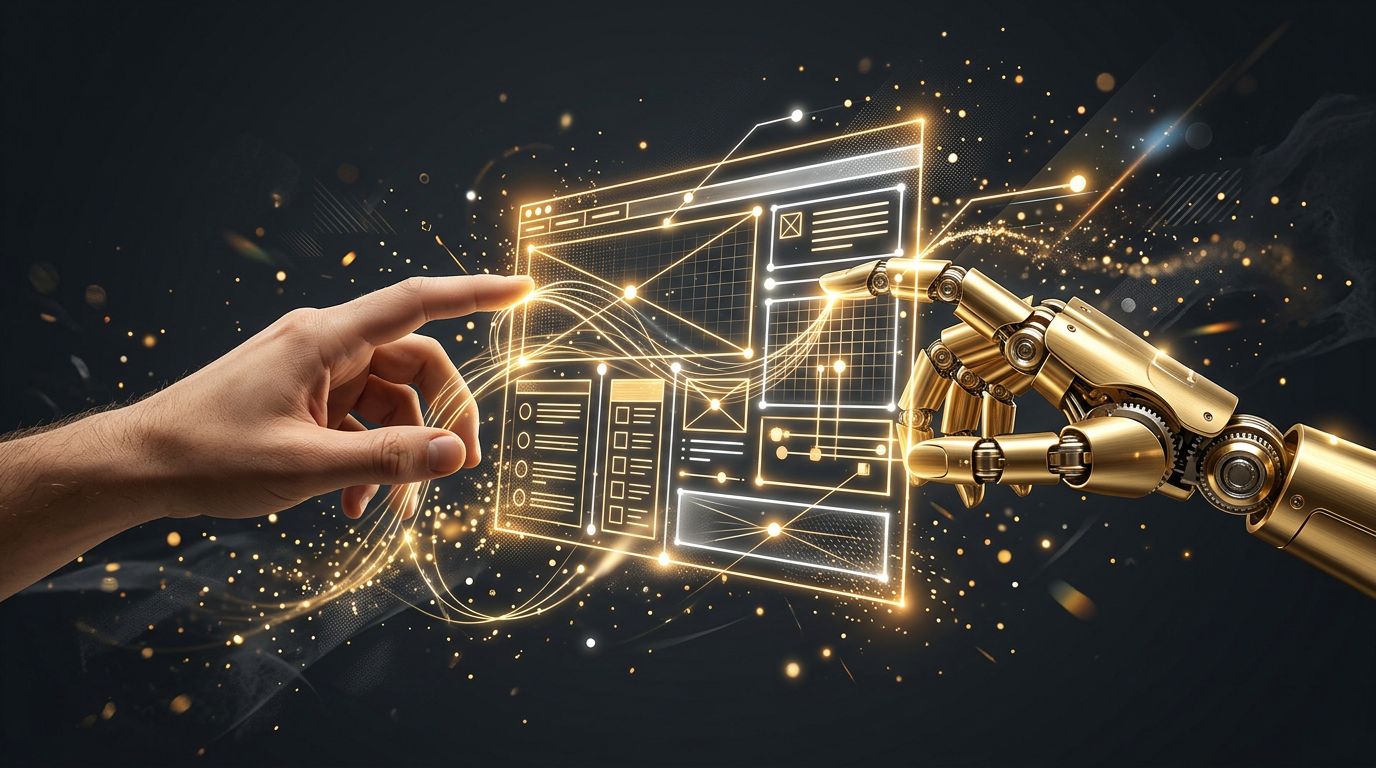
Artificial intelligence has advanced at a remarkable pace. Tools can now generate code snippets, build entire landing pages from a prompt, fix bugs, and suggest design improvements in seconds. Naturally, many people are asking a pressing question: will AI replace web developers? The answer is more nuanced than a simple yes or no. AI is transforming how websites are built, but it is also changing what businesses need from the people who build them. This article examines the realities of AI in web development and what the future looks like for developers and the companies that hire them.
How AAMAX.CO Combines Human Expertise With AI
Businesses that want to benefit from AI without sacrificing quality can partner with AAMAX.CO, a full service digital marketing company providing web development, digital marketing, and SEO services worldwide. They use AI-assisted tools to accelerate repetitive tasks while relying on experienced designers and developers for strategy, architecture, security, and user experience decisions. This balanced approach allows them to deliver projects efficiently while maintaining the craftsmanship that automated tools cannot provide on their own. Organizations planning complex platforms can explore their web application development services to see how human expertise and modern AI workflows come together.
What AI Can Already Do in Web Development
AI tools have become genuinely useful for developers. Today they can:
- Generate boilerplate code and common components quickly.
- Create first-draft layouts and landing pages from text descriptions.
- Explain unfamiliar code and suggest refactors.
- Identify bugs and propose fixes.
- Write unit tests and documentation.
- Convert designs into initial frontend code.
These capabilities significantly increase productivity. Tasks that once took hours can now be completed in minutes, freeing developers to focus on higher-level problems.
Where AI Still Falls Short
Despite impressive progress, AI has important limitations. It does not truly understand a business’s goals, customers, or competitive landscape. It can produce code that looks correct but contains subtle security vulnerabilities, performance issues, or accessibility problems. It may confidently generate outdated patterns or references to libraries that do not behave as expected.
AI also struggles with large, complex systems. Real-world applications involve many interconnected services, legacy constraints, compliance requirements, and trade-offs that require judgment. Deciding how to architect a scalable platform, how to structure data for future growth, or how to balance speed against cost are decisions that depend on context and experience.
The Changing Role of the Web Developer
Rather than replacing developers, AI is reshaping their role. Developers are increasingly becoming architects, reviewers, and problem-solvers. They guide AI tools, evaluate their output, integrate generated code into larger systems, and ensure quality and security.
New skills are becoming important, including prompt engineering, AI integration, evaluating model output, and building AI-powered features into websites and applications. Developers who embrace these skills are becoming more valuable, not less.
Which Tasks Are Most Likely to Be Automated?
Simple, repetitive, and well-defined tasks are the most likely to be automated. These include basic static websites, template customization, simple forms, and routine code updates. Business owners with very simple needs may find that AI-powered website builders are sufficient for an initial online presence.
However, as soon as a project involves custom functionality, integrations, data handling, performance requirements, or brand differentiation, human expertise becomes essential.
Why Businesses Still Need Human Developers
There are several reasons businesses continue to rely on skilled web developers:
- Strategic thinking: Developers translate business goals into technical solutions.
- Quality assurance: Humans review code for security, performance, and maintainability.
- Accountability: When something breaks, businesses need someone who understands the system and can fix it.
- User empathy: Great user experiences come from understanding real human behavior and emotions.
- Complex integrations: Connecting payment systems, CRMs, ERPs, and custom APIs requires careful planning.
- Compliance: Regulations around privacy, accessibility, and data protection require informed decisions.
AI as a Collaborator, Not a Competitor
The most productive way to view AI is as a collaborator. Developers who use AI effectively can deliver projects faster, explore more design options, and spend more time on the creative and strategic aspects of their work. Businesses benefit from shorter timelines and potentially lower costs while still receiving thoughtful, high-quality results.
Historically, every major productivity leap in software, from high-level programming languages to frameworks and cloud platforms, has increased demand for developers rather than reducing it. As building software becomes easier, organizations find more ways to use it.
What This Means for Businesses Hiring Developers
When hiring, businesses should look for developers who embrace AI tools while demonstrating strong fundamentals. Ask how they use AI in their workflow and how they verify its output. The best developers will describe AI as a productivity multiplier that supports, rather than replaces, their expertise.
Conclusion
So, will AI replace web developers? Not in any meaningful sense for the foreseeable future. AI will automate certain tasks and change how developers work, but the need for human judgment, creativity, strategy, and accountability remains strong. Developers who adapt and integrate AI into their skill set will thrive, and businesses that partner with them will gain faster, smarter, and more innovative digital experiences.
Want to publish a guest post on aamconsultants.org?
Place an order for a guest post or link insertion today.