
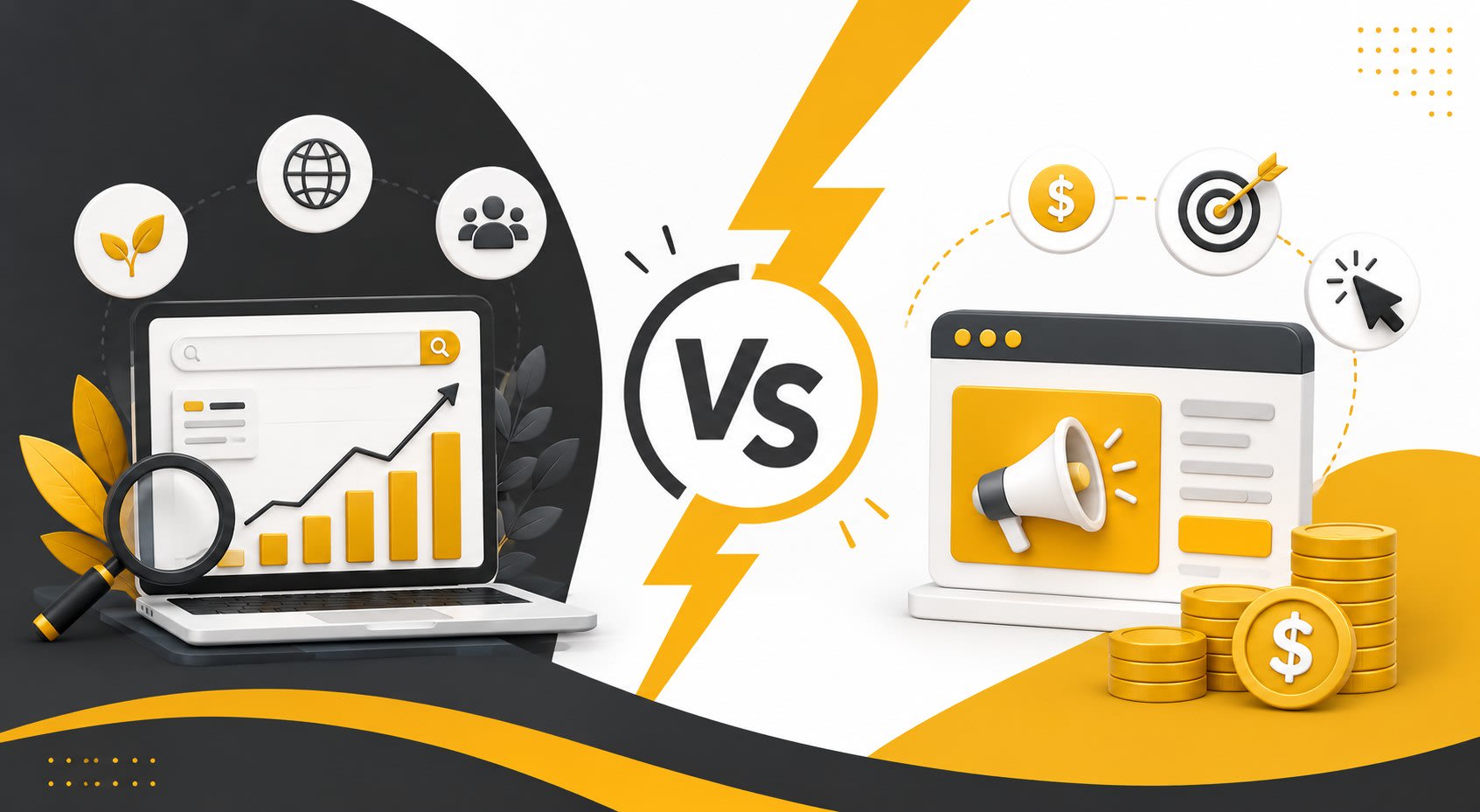
Organic vs. Paid Traffic: What Each Channel Really Means
Organic traffic comes from unpaid search results. When someone searches "best project management software" and clicks a naturally ranking result, that click is organic. You did not pay for it directly. You earned it through SEO: content, links, technical optimization, and time.
Paid traffic comes from ads. Google Ads, Meta Ads, LinkedIn Ads, and similar platforms let you pay to appear in front of specific audiences. You set a budget, define your targeting, and buy clicks or impressions. When you stop paying, the traffic stops.
Both channels send visitors to your website. But they work differently, cost differently, and serve different purposes at different stages of business growth.
Understanding what each channel actually delivers helps you make a smarter investment decision.
The Strengths and Limits of Organic Traffic for Long-Term Growth
Organic traffic builds compounding value over time. A blog post you publish today can generate traffic for years. HubSpot's blog is a clear example: articles published in 2015 and 2016 still drive tens of thousands of monthly visits. The content investment kept paying off long after the original work was done.
The main strength of organic traffic is sustainability. Once a page ranks, it keeps producing results without ongoing spend. Your cost per visitor decreases over time as the same content serves more people.
Organic traffic also tends to bring higher-quality visitors. People who find you through search are actively looking for something specific. That intent often translates into better engagement, lower bounce rates, and higher conversion rates compared to interruption-based advertising.
Building organic traffic takes time, especially on a new site where you have little data to work with. Some site owners use a traffic bot service in the early stages to generate visits and test how pages perform before real organic traffic builds to a meaningful volume. It helps you confirm that your site loads correctly, navigation works as expected, and your analytics are tracking accurately before you scale your SEO efforts.
The limits of organic traffic are worth understanding before you commit. SEO takes time. A new website targeting competitive keywords can take 6 to 12 months before seeing meaningful rankings. In some industries, it takes longer. If you need customers this week, organic search will not deliver them.
Organic results are also affected by algorithm updates. Google's March 2024 core update significantly reduced traffic for many review and affiliate sites that relied on thin content. Businesses that had invested in well-researched, genuinely useful content came through that update with less damage or even saw ranking improvements.
Key takeaway: Organic traffic is a long-term asset. Invest in it when you have time to build and can absorb delayed returns.
Pros of organic traffic:
- Lower cost per visit over time
- Compounding returns from existing content
- Higher trust and credibility with searchers
- Attracts visitors with clear purchase intent
Cons of organic traffic:
- Slow to produce results, especially on new sites
- Affected by search engine algorithm changes
- Requires consistent content and technical investment
- Competitive keywords are difficult without established domain authority
The Strengths and Limits of Paid Traffic for Fast Results
Paid traffic works immediately. You set up a Google Ads campaign, define your keywords, write your ads, and you can have visitors on your site within hours. For a business launching a product, testing a landing page, or running a seasonal promotion, this speed is valuable.
Paid traffic also gives you precise control. You choose who sees your ads based on location, device, time of day, search intent, and demographics. A local dental practice in Chicago can target adults within five miles who search "emergency dentist near me." That level of targeting is not available through organic content alone.
Casper, the mattress company, used paid search and paid social heavily in their early years to drive direct sales while building brand awareness. Paid advertising let them test messaging, optimize for conversions, and scale quickly before their organic channels had time to mature. It was a deliberate sequencing decision, not a permanent strategy.
The data from paid campaigns is also immediate. Within days, you can see which ads convert, which keywords drive purchases, and what your cost per acquisition looks like. This feedback loop helps inform both your paid strategy and your organic content priorities.
The limits of paid traffic come down to cost and dependency. You pay for every click. In competitive industries, clicks get expensive fast. The average cost per click in the legal services category on Google Ads exceeds $50. In insurance, it goes higher. For small budgets, that can exhaust resources before you generate enough data to optimize.
The bigger risk is dependency. If your business relies entirely on paid traffic and your ad account is suspended or your cost per acquisition rises sharply, revenue can drop overnight. This happened to many e-commerce businesses after iOS 14 changes in 2021, when Meta's ad targeting became significantly less precise and return on ad spend fell sharply across many accounts.
Key takeaway: Paid traffic is a tool for speed and testing, not a substitute for a sustainable acquisition strategy.
Pros of paid traffic:
- Immediate visibility and traffic
- Precise audience targeting options
- Fast feedback on messaging and offers
- Scalable when return on investment is proven
Cons of paid traffic:
- Stops when budget stops
- High cost per click in competitive markets
- Subject to platform policy changes
- Creates dependency without building long-term assets
Which Should You Invest In First? A Practical Decision Framework
The answer depends on three factors: your timeline, your budget, and your market position.
If you need revenue quickly, start with paid traffic. A new SaaS product that needs to validate product-market fit before running out of runway cannot wait 12 months for SEO to produce results. Paid ads let you test your offer, your pricing, and your messaging against real buyers. Once you find what converts, you have a foundation to build your organic content strategy on.
If you have a longer runway and a content advantage, invest in organic first. Brian Dean of Backlinko built his site almost entirely through organic search before monetizing it. He focused on in-depth content targeting specific SEO keywords with high search intent. By the time he introduced paid campaigns, he already had audience trust and significant domain authority working in his favor.
If your budget is limited, split your investment strategically. A common starting point is putting 70% into organic and 30% into paid. Use paid ads to test landing pages and identify which content topics actually drive conversions. Use what you learn from paid to guide your organic content priorities. This approach reduces waste and shortens the organic learning curve.
Also consider your competitive landscape. If competitors have been building organic authority for five to ten years, outranking them quickly is difficult. In that case, paid search gives you immediate presence while you build domain authority over time.
Consider your customer acquisition economics. If a paid click costs $8 and your conversion rate is 2%, your cost per lead is $400. If your product sells for $50, paid traffic will not be profitable at that price point. Organic traffic, with lower direct cost per visitor, may offer a more sustainable path.
A practical three-step process to make this decision:
- Calculate your current customer lifetime value and your acceptable cost per acquisition.
- Research keyword difficulty in your space to estimate how long organic rankings will realistically take.
- Run paid traffic for 30 to 60 days on your highest-intent keywords, measure conversion rates, and use that data to prioritize your organic content plan.
Most mature businesses use both channels together. Paid traffic fills short-term gaps and funds current operations. Organic traffic builds long-term stability and reduces reliance on ad spend over time. The goal is not to choose one permanently. The goal is to sequence your investment based on where your business stands right now.
Start with the channel that solves your most pressing problem. Then build toward a strategy that does not depend entirely on either one.
Want to publish a guest post on aamconsultants.org?
Place an order for a guest post or link insertion today.