
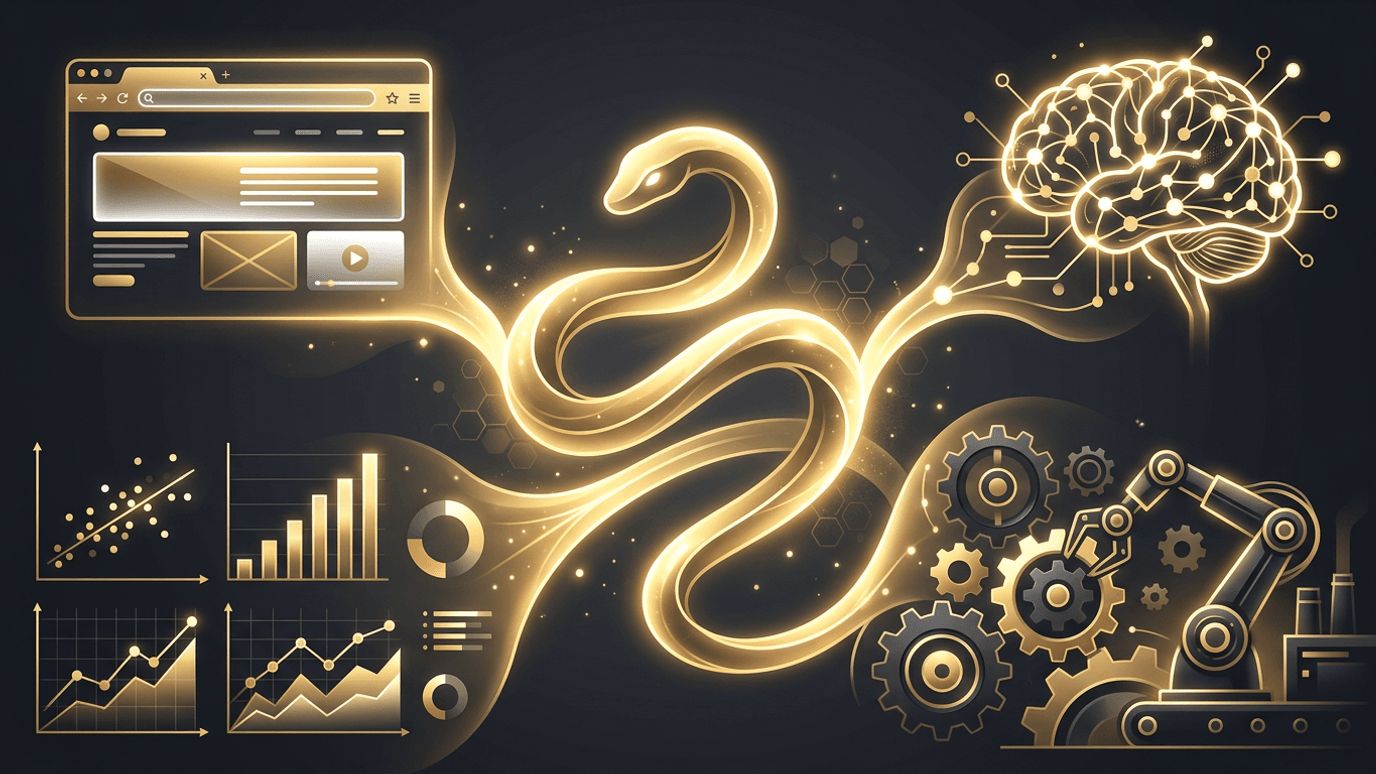
Few programming languages have achieved the broad influence of Python. Created by Guido van Rossum and first released in 1991, Python was designed to be readable, simple, and enjoyable to write. Decades later, it consistently ranks among the most popular programming languages globally and is used by startups, research labs, Fortune 500 companies, and government agencies. Python's versatility is its defining strength: the same language powers websites, analyzes massive datasets, trains artificial intelligence models, and automates repetitive tasks. Understanding Python's uses in web development, data science, AI, and automation reveals why it has become indispensable in modern technology.
How AAMAX.CO Leverages Python for Business Solutions
Organizations seeking to harness Python's versatility often collaborate with AAMAX.CO, a full service digital marketing company offering Web Development, Digital Marketing, and SEO services worldwide. Their developers build Python-powered web applications, APIs, data dashboards, and automation tools that streamline operations and unlock insights. They integrate Python back ends with modern front ends to deliver fast, user-friendly experiences. Combined with their marketing and SEO expertise, they help businesses turn Python-driven technology into measurable growth.
Why Python Is So Popular
- Readable syntax: Python code resembles plain English, making it easy to learn and maintain.
- Massive ecosystem: The Python Package Index (PyPI) hosts hundreds of thousands of libraries.
- Versatility: One language serves web, data, AI, scripting, and scientific computing.
- Strong community: Extensive documentation, tutorials, and active forums support developers.
- Cross-platform: Runs on Windows, macOS, Linux, and cloud environments.
- Rapid development: Concise code allows teams to build and iterate quickly.
Python for Web Development
Python is a powerful choice for building web applications and APIs. Its leading frameworks include:
- Django: A full-featured framework with built-in authentication, admin panels, ORM, and security protections. It powers platforms like Instagram and Pinterest and follows a "batteries included" philosophy.
- Flask: A lightweight, flexible microframework ideal for smaller applications and custom architectures.
- FastAPI: A modern, high-performance framework for building APIs with automatic documentation and type hints, increasingly popular for AI and data services.
Python web development excels for data-driven applications, content management systems, SaaS platforms, and APIs that serve machine learning models. Python back ends are often paired with JavaScript front ends like React or Next.js, combining Python's data strengths with modern user interfaces. Professional web application development frequently uses this hybrid approach.
Python for Data Science
Python has become the dominant language for data science thanks to its powerful libraries:
- NumPy: Fast numerical computing with multi-dimensional arrays.
- Pandas: Data manipulation and analysis with intuitive DataFrame structures.
- Polars: A high-performance alternative for large datasets.
- Matplotlib, Seaborn, and Plotly: Data visualization for charts, graphs, and interactive dashboards.
- SciPy and Statsmodels: Statistical analysis and scientific computing.
- Jupyter Notebooks: Interactive environments for exploring data and sharing results.
Businesses use Python data science to analyze customer behavior, forecast sales, optimize pricing, detect fraud, and measure marketing performance. Tools like Streamlit and Dash allow data scientists to turn analyses into interactive web dashboards quickly.
Python for Artificial Intelligence and Machine Learning
Python is the primary language of the AI revolution. Its ecosystem includes:
- scikit-learn: Classic machine learning algorithms for classification, regression, and clustering.
- TensorFlow and Keras: Deep learning frameworks for neural networks.
- PyTorch: The leading framework for research and production deep learning.
- Hugging Face Transformers: Pre-trained models for natural language processing, vision, and audio.
- LangChain and LlamaIndex: Frameworks for building applications with large language models.
- OpenCV: Computer vision for image and video processing.
Common AI applications built with Python include chatbots, recommendation engines, image recognition, sentiment analysis, predictive maintenance, document processing, and generative AI tools. Python's role in AI ensures it remains central to innovation for years to come.
Python for Automation
Python's simplicity makes it ideal for automating repetitive tasks, saving time and reducing errors. Common automation uses include:
- Web scraping: Collecting data from websites with libraries like Beautiful Soup, Scrapy, and Playwright.
- File and data processing: Renaming files, converting formats, and cleaning spreadsheets.
- Report generation: Creating automated PDFs, Excel reports, and email summaries.
- System administration: Managing servers, backups, and deployments.
- Testing automation: Running automated tests with Pytest and Selenium.
- API integrations: Syncing data between business tools like CRMs, spreadsheets, and accounting software.
- Workflow orchestration: Scheduling and managing data pipelines with Airflow or Prefect.
How These Uses Work Together
Python's greatest advantage is how its uses complement each other. A single project might automate data collection, analyze it with Pandas, train a machine learning model with scikit-learn, and serve predictions through a FastAPI web application. Teams can work in one language across the entire pipeline, reducing complexity and enabling collaboration between developers, data scientists, and analysts.
Limitations of Python
Python is slower than compiled languages like C++, Go, or Rust for CPU-intensive tasks, though libraries written in C and tools like Cython mitigate this. Its Global Interpreter Lock has historically limited multithreading, although recent Python versions are making progress on this front. Python is also less common for mobile app development and browser-based front ends, where JavaScript and native languages dominate.
Building User-Friendly Python Applications
Even the most powerful Python back end needs an intuitive interface. Combining Python services with polished website design ensures that data insights, AI tools, and automation dashboards are accessible to non-technical users.
Conclusion
Python's uses in web development, data science, AI, and automation make it one of the most valuable languages in technology today. Its readable syntax, rich ecosystem, and versatility allow businesses to build websites, analyze data, deploy intelligent systems, and automate operations with a single, cohesive toolset. For developers and organizations alike, investing in Python opens doors to innovation across nearly every industry.
Want to publish a guest post on aamconsultants.org?
Place an order for a guest post or link insertion today.