
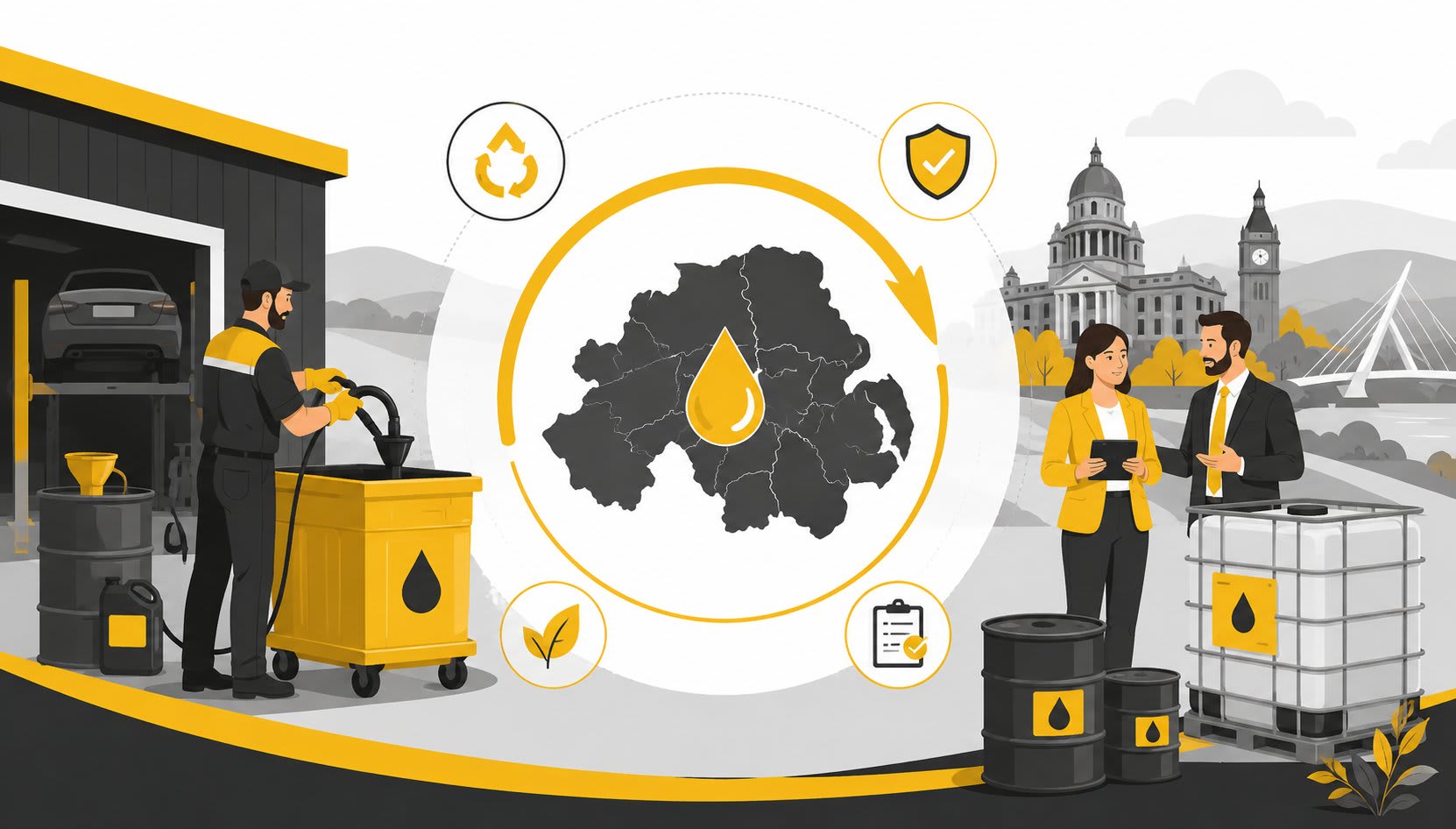
A practical guide for food businesses, garages, workshops and industrial operators that need safe, compliant and cost-effective oil disposal
Waste oil is one of those business issues that can seem simple until something goes wrong. A few drums of used cooking oil behind a restaurant, a container of engine oil in a workshop, or poorly managed grease in a commercial kitchen can quickly become a compliance risk, a fire hazard, a drainage problem or an environmental incident. In Northern Ireland, businesses are expected to manage waste oil responsibly from the moment it is produced until it is collected, transported and recovered or disposed of by an authorised operator.
For restaurants, takeaways, hotels, food manufacturers, vehicle workshops, farms and industrial facilities, the key message is clear: waste oil should never be treated as ordinary rubbish or poured into drains, yard gullies, soil or surface water systems. It must be stored correctly, segregated where necessary, documented properly and transferred only to a legitimate waste carrier.
Why waste oil collection matters
Waste oil can cause serious damage when it is handled incorrectly. Used cooking oil and fats can harden inside pipes, combine with food particles and create blockages in commercial drainage systems. This can lead to bad odours, pest problems, business interruption and expensive emergency callouts. In the wider sewer network, fats, oils and grease can contribute to major blockages and pollution incidents.
Mineral oils, lubricants, hydraulic oils and fuel-contaminated oils create different risks. They may contain additives, heavy metals, residues or other contaminants, and in many cases they must be treated as hazardous or controlled waste. Even small quantities can contaminate land or water if spilled or stored in poor conditions.
Professional collection is therefore not just about “getting rid” of oil. It is about protecting your premises, your staff, your customers, the local environment and your legal position.
Understanding the main types of waste oil
Before arranging a collection, a business should understand what type of oil it is producing. The requirements for a fish and chip shop will not be identical to those for a vehicle repair workshop.
Used cooking oil is commonly produced by restaurants, cafés, pubs, hotels, catering companies, food manufacturers and takeaways. This includes oil from fryers, grills and food preparation processes. Good fryer oil disposal starts with cooling the oil safely, filtering out food debris where appropriate, and transferring it into a suitable sealed container for collection.
Fats, oils and grease, often referred to as FOG, are a broader issue for food businesses. They include cooking fats, pan residues, sauces, dairy fats and grease washed from equipment. FOG should be prevented from entering drains by using good kitchen practices, sink strainers, grease management systems and regular maintenance.
Waste lubricating oil is typically generated by garages, transport companies, engineering firms, farms and manufacturing sites. This may include engine oil, gearbox oil, hydraulic oil, compressor oil and other industrial oils. These streams should not be mixed casually with other liquids, solvents, fuels, coolant or water, because contamination can increase disposal costs and complicate treatment.
Legal responsibilities for businesses in Northern Ireland
Any business that produces waste has a duty of care. In practice, this means you must take reasonable steps to ensure that your waste is safely stored, accurately described, transferred to an authorised person and handled without harming the environment.
For waste oil, that usually means three practical obligations.
First, use an authorised waste carrier. A business should not hand over waste oil to an unknown collector simply because they offer a cheap or convenient service. The collector should be properly registered or authorised to transport waste in Northern Ireland. If they are not, the producer may still face consequences if the waste is dumped or mishandled.
Second, keep the correct paperwork. Waste transfers should be supported by appropriate documentation, such as waste transfer notes for controlled waste or hazardous waste consignment documentation where relevant. These documents create an audit trail and show what waste was collected, when it was collected, who collected it and where it was taken.
Third, describe and segregate waste correctly. Used cooking oil, interceptor waste, oily water, lubricating oil and fuel-contaminated waste should not be treated as interchangeable. Incorrect descriptions can lead to rejected loads, higher costs or regulatory problems.
Storage: what good practice looks like
Safe storage is a core part of responsible waste oil management. Containers should be strong, leak-resistant, clearly labelled and suitable for the type of oil being stored. They should be kept closed when not in use and positioned away from drains, watercourses, food preparation areas and ignition sources.
Food businesses should train staff not to pour oil down sinks or floor drains. Used fryer oil should be allowed to cool before being handled, then placed into the correct container without overflowing. Spills should be cleaned quickly using suitable absorbent materials, and contaminated cleaning materials should be disposed of appropriately.
Workshops and industrial sites should pay particular attention to bunding and spill control. Waste oil drums or tanks should be stored in areas where leaks can be contained. Mixing waste oil with brake fluid, antifreeze, solvents or fuels should be avoided unless a qualified waste contractor has confirmed that the receiving facility can accept that mixed waste stream.
Choosing a waste oil collection provider
When comparing Waste Oil Collection Northern Ireland services, businesses should look beyond price. The provider should be able to explain what types of oil they collect, what containers they supply, how often they collect, what documentation they provide and where the waste is sent after collection.
A reliable provider should be transparent about compliance. They should be able to confirm that they are authorised to carry waste and that the oil will be taken to an appropriate facility for recovery, recycling, treatment or disposal. For used cooking oil, many collections are linked to recovery routes such as biodiesel production or energy generation, depending on quality and contamination levels.
Service flexibility also matters. A busy takeaway may need frequent collections of used cooking oil, while a small rural garage may need scheduled collections based on drum capacity. Larger businesses with multiple sites may require consolidated reporting, account management and consistent documentation across locations.
Why cheap or informal disposal is risky
Some businesses are tempted to use informal collectors or dispose of oil themselves. This is risky. If waste oil is fly-tipped, poured into drains or transported by an unauthorised person, the original producer may be asked to prove that they took reasonable care. Without documentation, that can be difficult.
Poor disposal can also create direct financial losses. A blocked drain can close a kitchen during service. A leaking drum can require specialist clean-up. A failed audit can damage a company’s reputation with customers, landlords, insurers or regulators. The cheapest option at collection time can become the most expensive option later.
Practical checklist for businesses
A good waste oil system should be simple enough for staff to follow every day. Businesses should identify each type of oil they produce, provide suitable containers, label storage points clearly and make sure staff know what can and cannot go into each container.
Food businesses should build oil handling into kitchen routines. That includes scraping plates before washing, keeping food solids out of sinks, maintaining grease traps where installed and arranging timely collection before containers become overfilled.
Garages and workshops should keep waste lubricating oils separate from other hazardous liquids, inspect storage areas regularly and maintain spill kits. They should also review collection paperwork and make sure records are retained in an organised way.
Multi-site operators should standardise procedures across all premises. This helps reduce mistakes, makes training easier and gives management better visibility over waste volumes, collection frequency and compliance.
Northern Ireland and cross-border considerations
Businesses operating near the border or across multiple locations should be especially careful when comparing waste oil collection ireland options. Waste regulation, carrier registration and movement controls can differ depending on where the waste is produced, transported and treated. A provider that works well for one site may not automatically be suitable for another if waste is moved across jurisdictions.
For Northern Ireland businesses, the safest approach is to confirm that the collector understands local requirements, can provide the correct documentation and can explain the final destination of the waste. This is particularly important for companies with depots, kitchens or workshops on both sides of the border.
Turning waste oil into a managed business process
Waste oil collection should not be treated as a last-minute operational chore. It should be part of a wider waste management system that includes staff training, contractor checks, storage controls, paperwork and periodic review.
The best businesses make the process predictable. They know how much oil they produce, how quickly containers fill, when collections are needed and who is responsible internally. They also keep records ready for audits, inspections, landlord requirements or customer due diligence.
In a competitive market, responsible waste management can also support brand reputation. Customers, partners and procurement teams increasingly expect businesses to demonstrate environmental responsibility. Proper waste oil collection shows that a company takes compliance, hygiene and sustainability seriously.
Waste oil collection in Northern Ireland is about much more than removing unwanted liquid from a site. It involves legal responsibility, environmental protection, drainage management, workplace safety and operational resilience. Whether you run a small café, a high-volume takeaway, a hotel kitchen, a vehicle workshop or an industrial site, the same principle applies: store oil safely, keep it out of drains, use authorised collectors and maintain clear records.
By building a reliable collection routine and working with a compliant contractor, businesses can reduce risk, avoid unnecessary costs and ensure that waste oil is handled in a way that meets both regulatory expectations and good environmental practice.
Want to publish a guest post on aamconsultants.org?
Place an order for a guest post or link insertion today.