
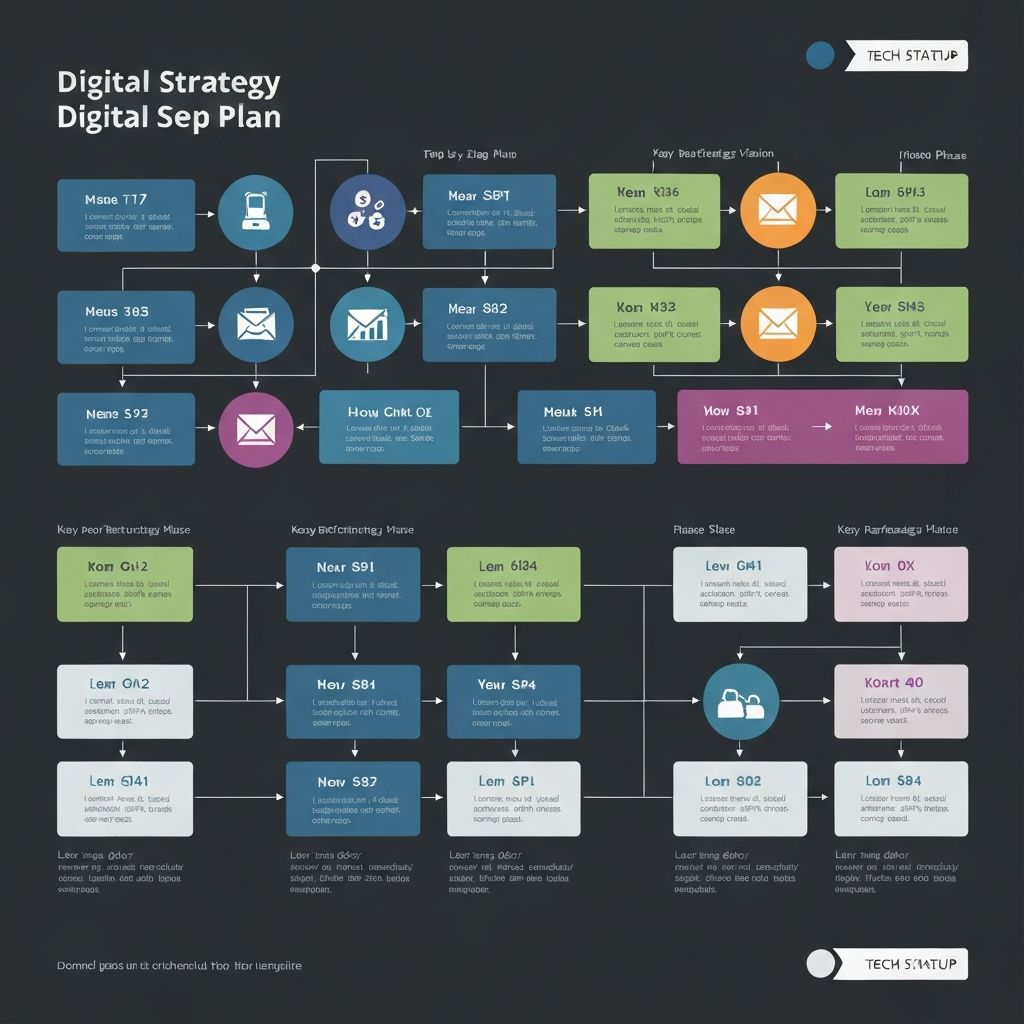
Understanding Web Strategy Development
Web strategy development is a systematic approach to planning, building, and optimizing your online presence to achieve specific business objectives. Unlike simply creating a website, strategic web development involves analyzing your market, understanding your audience, identifying competitive advantages, and creating a roadmap that guides all technical and creative decisions. A well-developed web strategy ensures that every element of your digital presence—from site architecture to content to user experience—works cohesively toward your business goals.
The digital landscape evolves rapidly, with new technologies, platforms, and user behaviors emerging constantly. Organizations that develop comprehensive web strategies are better equipped to navigate these changes, pivot when necessary, and maintain competitive advantage. Strategic planning allows businesses to anticipate market shifts and position their web presence to capitalize on opportunities before competitors do.
Strategic Planning with AAMAX.CO's Development Expertise
AAMAX.CO approaches web development with strategic intent, helping businesses align their digital initiatives with overarching business objectives. Their team conducts thorough discovery processes to understand client goals, target audiences, and competitive landscapes before recommending solutions. Through website development services grounded in strategic planning, they ensure that technology choices and design decisions support business growth rather than existing in isolation from business goals.
Market Analysis and Competitive Research
Effective web strategy begins with understanding your market and competition. Strategic analysis involves researching competitors' web presence, identifying their strengths and weaknesses, and finding opportunities to differentiate. This includes analyzing search engine rankings, evaluating user experience of competitor sites, monitoring their content strategies, and understanding their technology choices.
Market research should also examine industry trends, emerging technologies that might be relevant to your business, and how customer expectations are evolving. Understanding your target audience's online behavior, preferred platforms, search habits, and pain points informs every strategic decision. This research foundation ensures that strategic recommendations are based on market realities rather than assumptions.
Setting Clear Business Objectives and KPIs
Strategic web development requires defining clear, measurable business objectives. These might include increasing online revenue, generating qualified leads, building brand awareness, improving customer retention, or expanding into new markets. Each objective shapes different strategic priorities—a lead generation business requires different strategies than an e-commerce business.
Key Performance indicators (KPIs) provide measurable ways to track strategy success. Appropriate KPIs might include conversion rates, customer acquisition cost, average order value, time on site, bounce rate, search rankings, or social media engagement. Defining KPIs before implementation enables objective evaluation of strategy effectiveness and data-driven optimization decisions.
Audience Persona Development and Segmentation
Understanding your audience in depth is fundamental to strategic web development. Creating detailed buyer personas—representations of ideal customers based on research—helps ensure your web strategy addresses real customer needs and preferences. Personas should include demographic information, goals, pain points, preferred communication channels, and buying behaviors.
Many successful businesses discover they serve multiple distinct customer segments with different needs. Effective web strategy often segments audiences and tailors messaging, design, and functionality to each segment's preferences. This might involve different landing pages for different customer types or personalization features that adapt content based on user characteristics.
Technology Stack and Platform Strategy
Strategic technology selection ensures your web infrastructure supports current needs and future growth. Decisions about whether to use WordPress, custom development, headless CMS, static site generators, or other approaches significantly impact flexibility, performance, and cost. Strategic considerations include scalability, maintenance requirements, developer availability, migration paths, and total cost of ownership.
Technology choices should also consider integration requirements—your web presence likely needs to connect with CRM systems, email marketing platforms, analytics tools, payment processors, and other business applications. A strategic approach ensures these integration needs are identified early and accommodated in technology selection.
Content Strategy and Information Architecture
Content strategy development answers critical questions: What information should your website provide? How should it be organized? What tone and style should you use? How frequently should you publish new content? A strategic content approach aligns messaging with audience needs and business objectives, creating valuable content that attracts, engages, and converts visitors.
Information architecture—how content is organized and structured—significantly impacts user experience and search engine visibility. Strategic planning determines whether a flat or hierarchical structure works best, how to categorize content, and how to create navigation paths that guide users toward conversions. Well-architected sites enable users to find needed information quickly, reducing friction in customer journeys.
SEO and Organic Growth Strategy
Integrating SEO into web strategy from the beginning ensures your site attracts organic traffic long-term. Strategic SEO involves identifying target keywords that represent customer intent and commercial value, creating content that addresses these topics comprehensively, and building authority through quality backlinks and engagement. Unlike tactical SEO, strategic SEO is built into site architecture and content planning.
Long-term organic growth strategy focuses on creating enduring resources that continue attracting traffic and generating leads years after publication. This includes comprehensive guides, pillar content that addresses broad topics, and topic clusters that establish topical authority. Strategic SEO investment compounds over time, with older content continuing to generate traffic while new content attracts additional visitors.
User Experience and Conversion Optimization
Strategic web development prioritizes user experience as a business driver. Every design decision—navigation structure, page layout, call-to-action placement, form design, checkout process—should be informed by understanding how users interact with sites and what factors influence conversions. User research through testing, surveys, and analytics informs strategic UX decisions.
Conversion optimization is not a one-time effort but an ongoing strategic practice. A/B testing, multivariate testing, and user feedback continuously reveal optimization opportunities. Strategic organizations establish testing programs, document results, and implement winning variations systematically, achieving incremental improvements that compound into significant conversion rate gains.
Omnichannel Integration and Cross-Platform Presence
Modern web strategy recognizes that customer interactions span multiple touchpoints—website, email, social media, mobile app, physical location. Strategic web development coordinates across these channels, ensuring consistent messaging, connected customer data, and seamless experiences as users move between channels. This omnichannel approach increases both customer satisfaction and lifetime value.
Integration between channels means social media content drives website traffic, email marketing references website resources, the website integrates with mobile apps, and customer data flows seamlessly between systems. Strategic planning ensures these integrations are planned and executed deliberately rather than developing as afterthoughts.
Measurement, Analysis, and Optimization
Strategic web development requires commitment to measurement and continuous improvement. Regular analytics review, competitor monitoring, and performance tracking enable identification of what's working and what needs adjustment. Strategic organizations establish regular review cycles—monthly for tactical metrics, quarterly for strategic progress—to ensure initiatives remain on track.
Data-driven decision-making distinguishes strategic organizations from reactive ones. Rather than relying on opinions about what should work, strategic leaders examine evidence and adjust approaches based on results. This might mean reallocating budget from underperforming channels to high-performers, redesigning pages with high bounce rates, or adjusting messaging based on what resonates with audiences.
Conclusion: Strategic Web Development as Business Driver
Web strategy development represents a fundamental shift from treating web as a separate function to recognizing it as integral to business success. Organizations that invest in comprehensive web strategy, align decisions with clear business objectives, and commit to ongoing optimization achieve stronger results than those building without strategic direction. In an increasingly competitive digital landscape, strategic web development provides the framework for building web presence that generates meaningful business value.
Want to publish a guest post on aamconsultants.org?
Place an order for a guest post or link insertion today.