
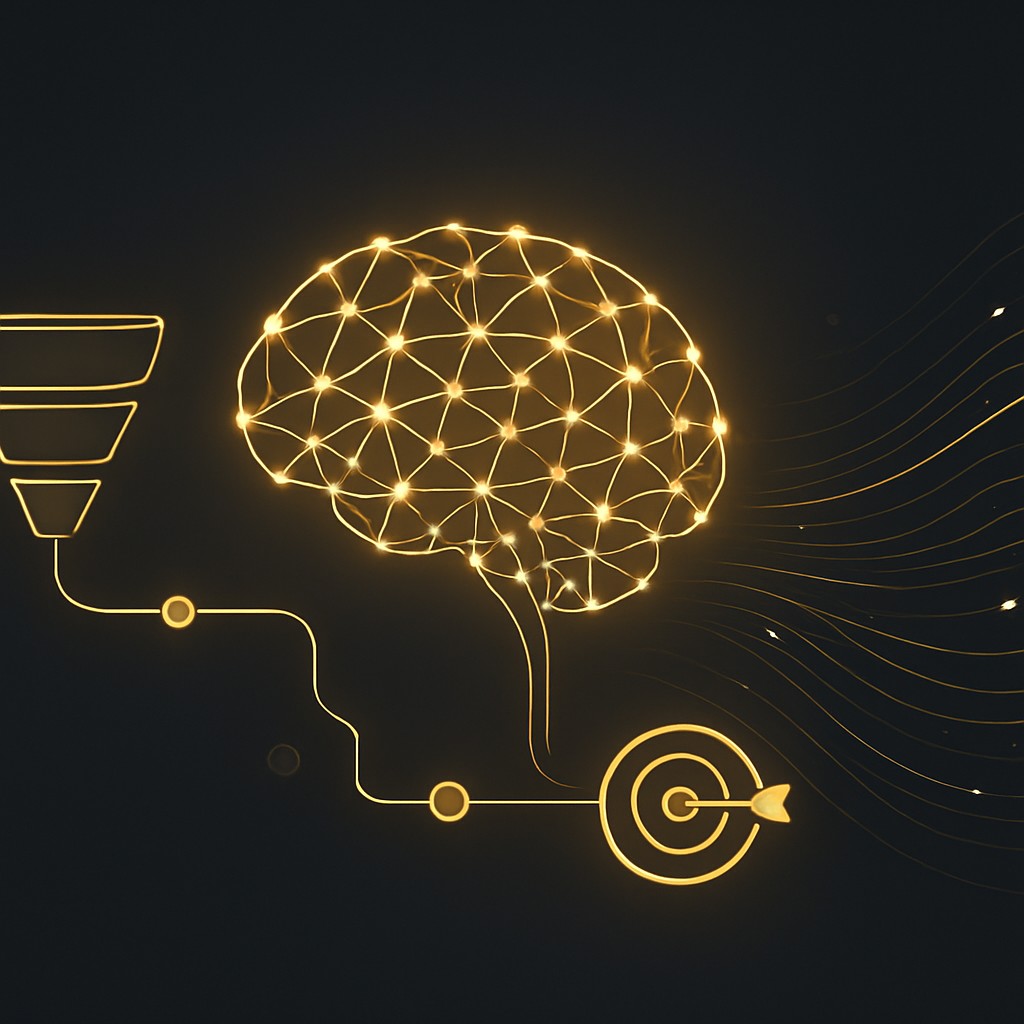
AI marketing is the practice of using artificial intelligence technologies, such as machine learning, natural language processing, and predictive analytics, to enhance and automate marketing activities. Instead of relying solely on human intuition and manual effort, AI marketing leverages data and algorithms to make faster, smarter decisions about who to target, what to say, and when to say it. As customer expectations rise and data grows more complex, AI marketing has become an essential approach for brands that want to stay relevant and competitive.
How AI Marketing Works
At its core, AI marketing collects and analyzes large volumes of data, identifies patterns, and uses those insights to take or recommend action. For example, a machine learning model might analyze thousands of past purchases to predict what a customer will buy next, while a natural language tool generates personalized email copy. These systems continuously learn from new data, meaning their recommendations improve over time. The combination of automation and intelligence allows marketers to operate at a scale and speed that would be impossible manually.
How AAMAX.CO Brings AI Marketing to Life
Understanding AI marketing is one thing, but implementing it effectively requires expertise and the right systems. AAMAX.CO helps businesses turn the concept of AI marketing into practical, revenue-generating reality. As a full-service digital marketing company serving clients around the world, they design data-driven campaigns, integrate AI tools into existing workflows, and ensure every tactic ladders up to clear business outcomes. Teaming up with AAMAX.CO gives your brand access to professionals who understand both the technology and the strategy behind it, and their digital marketing services help you deploy AI in a way that is measurable and sustainable.
Key Components of AI Marketing
AI marketing is made up of several building blocks. Machine learning powers prediction and personalization. Natural language processing enables chatbots, content generation, and sentiment analysis. Predictive analytics forecasts customer behavior and campaign performance. Computer vision can analyze images and video for advertising and product tagging. Together, these technologies allow marketers to understand customers more deeply and respond to them more effectively than ever before.
Common Applications
AI marketing shows up across the entire customer journey. Recommendation engines suggest relevant products on ecommerce sites. Chatbots answer questions and qualify leads at any hour. Programmatic advertising platforms use AI to buy and optimize ads in real time. Email tools personalize subject lines and send times. Content tools generate first drafts and headline variations. Each application reduces manual effort while improving relevance and performance.
Benefits of AI Marketing
The advantages of AI marketing are significant. It increases efficiency by automating time-consuming tasks, improves personalization by tailoring experiences to individuals, and enhances decision-making through data-driven insights. It also enables real-time optimization, so campaigns can adjust on the fly based on performance. For businesses, this often translates into higher conversion rates, lower acquisition costs, and stronger customer loyalty. Crucially, it frees up human marketers to focus on creativity and strategy.
Challenges to Consider
AI marketing is powerful, but it is not without challenges. It requires quality data, since poor data leads to poor predictions. There are privacy considerations, as personalization depends on collecting and using customer information responsibly. Teams also need the skills to interpret AI outputs and avoid blindly trusting the technology. Finally, AI should enhance rather than replace the human touch, because audiences still value authenticity and genuine connection.
The Role of Human Marketers
Despite the automation, humans remain central to AI marketing. People set the strategy, define brand voice, ensure ethical use of data, and add the creative spark that machines lack. The most successful programs treat AI as a co-pilot, handling volume, speed, and pattern recognition while humans provide direction, empathy, and judgment. This partnership produces results that neither could achieve alone.
Why AI Marketing Matters Now
The volume of data available to marketers has exploded, and customers expect personalized, immediate experiences across every channel. Manual methods simply cannot keep up. AI marketing allows brands to process this complexity, deliver relevant experiences at scale, and make better use of their budgets. As competition intensifies, the businesses that adopt AI thoughtfully will be better positioned to win and retain customers.
Final Thoughts
AI marketing is the strategic use of artificial intelligence to make marketing smarter, faster, and more personalized. By combining machine learning, automation, and data analytics with human creativity, businesses can deliver better experiences and stronger results. Whether you are just exploring the concept or ready to implement it, understanding what AI marketing is forms the foundation for building campaigns that thrive in a data-driven world. The brands that begin experimenting now, even with small and focused projects, will build the internal knowledge and confidence needed to scale their efforts as the technology matures. Starting early also gives teams time to refine their data practices, test what resonates with their audience, and develop the judgment required to use AI responsibly and effectively over the long term.
Want to publish a guest post on aamconsultants.org?
Place an order for a guest post or link insertion today.