
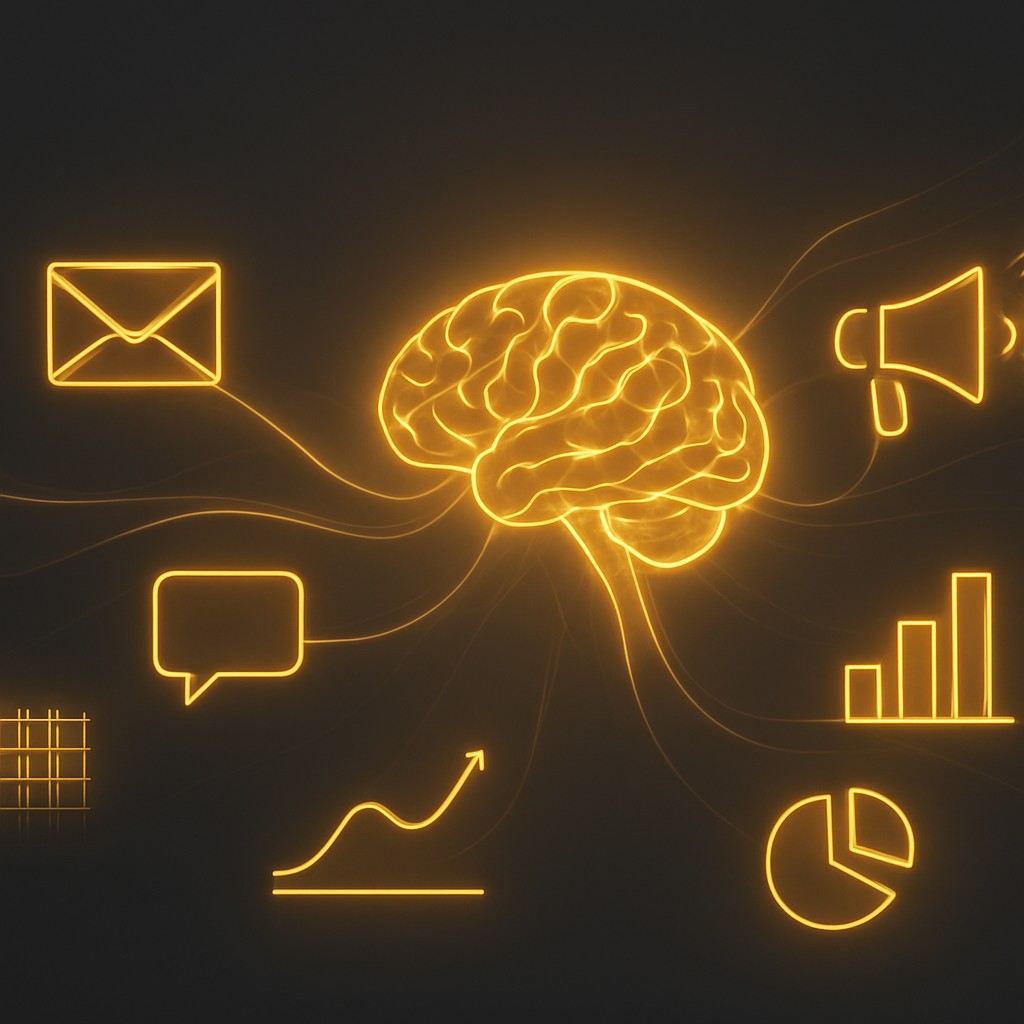
AI marketing has become one of the most talked-about topics in business, but it can still feel abstract to those trying to understand exactly what it means and how it works in practice. As we move through 2025 and into 2026, artificial intelligence has firmly established itself as a core component of modern marketing strategy. This article offers a clear definition of AI marketing and walks through concrete examples of how it is being used today, giving businesses a practical understanding of this transformative technology and how they can put it to work.
How AAMAX.CO Delivers AI Marketing Results
Putting AI marketing into practice effectively requires both the right tools and the strategic know-how to use them, which is exactly what AAMAX.CO provides. As a full-service digital marketing company serving clients worldwide, they integrate AI across their digital marketing and search engine optimization services to help businesses reach the right audiences, create compelling content, and optimize campaigns for maximum impact. Their team translates the promise of AI into measurable outcomes, making advanced capabilities accessible to companies of all sizes. For any business wanting to benefit from AI marketing without the steep learning curve, they offer expertise that turns technology into growth.
Defining AI Marketing
AI marketing is the practice of using artificial intelligence technologies, such as machine learning, natural language processing, and predictive analytics, to automate, enhance, and optimize marketing activities. At its core, it involves leveraging AI's ability to analyze large amounts of data, identify patterns, make predictions, and take or recommend actions that improve marketing outcomes.
Rather than relying solely on human intuition and manual effort, AI marketing uses data-driven intelligence to make decisions faster and more accurately. It powers everything from deciding which customers to target and what messages to show them, to generating content, personalizing experiences, and measuring results. The goal is to reach the right people with the right message at the right time, at a scale and precision that would be impossible manually.
Example One: Personalization and Recommendations
One of the most widespread applications of AI marketing is personalization. AI analyzes individual user behavior, preferences, and history to deliver tailored experiences. Online retailers recommend products based on past browsing and purchases, streaming platforms suggest content suited to each viewer, and websites dynamically adjust their layout and offers for different visitors. These recommendation engines drive significant revenue by keeping customers engaged with relevant suggestions.
Example Two: AI-Generated Content
Generative AI has made content creation faster and more scalable. Marketers use AI to draft email copy, social media posts, product descriptions, ad variations, and blog outlines. In 2025 and 2026, this is often combined with rapid testing, where AI generates multiple versions of a message and identifies which performs best. Human marketers refine and guide this output, but AI dramatically accelerates production and experimentation.
Example Three: Chatbots and Conversational Marketing
AI-powered chatbots and virtual assistants handle customer inquiries, qualify leads, and provide support around the clock. Modern conversational AI can understand natural language, maintain context, and deliver personalized responses. This improves customer experience while capturing opportunities that would otherwise be missed outside business hours, and it frees human teams to focus on complex or high-value interactions.
Example Four: Predictive Analytics and Targeting
AI excels at predicting future behavior based on historical data. Predictive analytics help marketers identify which leads are most likely to convert, which customers are at risk of churning, and what products a customer might want next. This enables proactive, precisely targeted campaigns, such as reaching out to at-risk customers with retention offers or focusing ad spend on the highest-value prospects.
Example Five: Campaign Optimization
AI continuously optimizes advertising and marketing campaigns in real time. Bidding algorithms adjust spend across platforms instantly, allocating budget to top-performing ads and audiences. AI analyzes performance data to identify what is working and automatically reallocates resources, improving efficiency and return on investment without constant manual intervention.
Example Six: Search and Visibility
As search increasingly incorporates AI, marketers use AI tools to optimize their visibility in both traditional and AI-generated search results. This includes researching topics, structuring content for clarity, and ensuring brands appear in AI-powered answers and summaries, an evolving discipline that has become essential as search behavior shifts.
Getting Started With AI Marketing
For businesses new to AI marketing, the best approach is to start with clear objectives rather than chasing technology for its own sake. Identify a specific challenge, such as improving email engagement, generating more qualified leads, or producing content more efficiently, and choose AI tools suited to that goal. Begin with manageable pilots, measure the results carefully, and expand what works. High-quality, well-organized data is the fuel that makes AI effective, so investing in clean customer data pays off quickly. Equally important is keeping human strategy and oversight in place to guide tools, interpret outputs, and protect brand voice. With a focused, measured approach, even small teams can capture meaningful benefits from AI marketing and build momentum over time.
Conclusion
AI marketing is the use of artificial intelligence to automate, enhance, and optimize marketing efforts, and in 2025 and 2026 it spans personalization, content creation, conversational marketing, predictive analytics, campaign optimization, and search visibility. These examples show that AI is not a single tool but a broad set of capabilities transforming how brands connect with customers. Businesses that embrace these applications, ideally with experienced guidance, can achieve greater efficiency, relevance, and growth, positioning themselves to compete and win in an increasingly AI-driven marketplace.
Want to publish a guest post on aamconsultants.org?
Place an order for a guest post or link insertion today.