
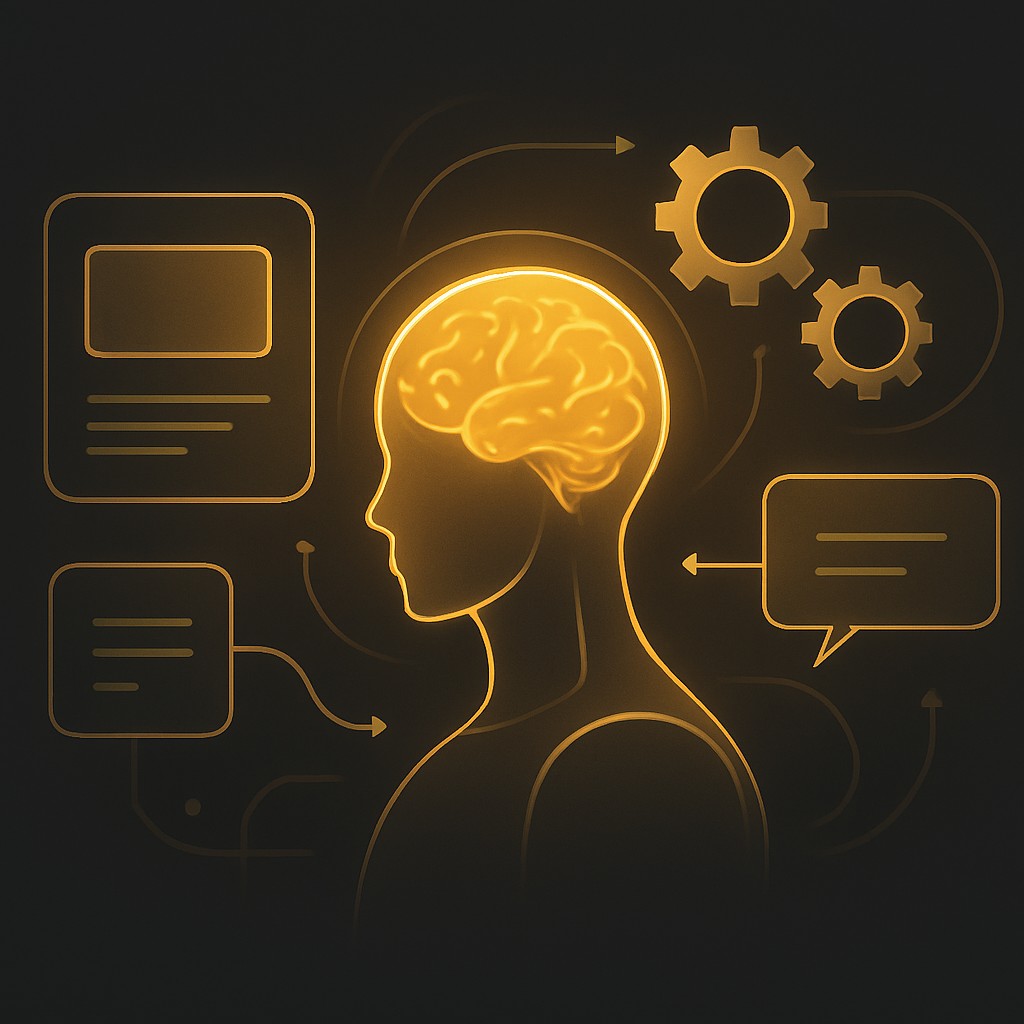
Defining the AI Marketing Agent
An AI marketing agent is a piece of intelligent software designed to autonomously carry out marketing tasks, make decisions, and adapt its behavior based on data and goals. Unlike simple automation tools that follow fixed rules, an AI agent can reason about objectives, choose appropriate actions, and learn from outcomes. It functions like a tireless digital team member that can research, create, analyze, and optimize across marketing channels with limited human supervision.
These agents are powered by advanced AI models that understand context, generate content, and interpret data. Given a goal such as increasing leads or improving engagement, an AI marketing agent can break the goal into tasks, execute them, monitor results, and adjust its approach. This shift from manual execution to autonomous orchestration represents a significant evolution in how marketing work gets done.
Put AI Marketing Agents to Work With AAMAX.CO
Implementing AI marketing agents effectively requires strategy, oversight, and integration with broader campaigns, which is where AAMAX.CO provides real value. As a full-service digital marketing company serving businesses worldwide, they help organizations adopt AI-driven tools while ensuring those tools align with clear goals and brand standards. Their team blends automation with human strategy across their digital marketing services, so clients get the efficiency of AI agents without losing the creativity and judgment that drive results. Businesses exploring autonomous marketing can rely on them to guide the journey responsibly.
How AI Marketing Agents Work
At the heart of an AI marketing agent is a goal-driven decision loop. The agent receives an objective, gathers relevant information, plans a sequence of actions, executes those actions, and evaluates the results. Based on what it learns, it refines its strategy and repeats the cycle. This continuous loop allows the agent to improve over time and respond to changing conditions.
Modern AI agents can connect to various tools and platforms, enabling them to take real actions such as publishing content, adjusting ad bids, sending emails, or updating reports. They draw on large language models to understand instructions and generate human-quality output, and they use data analysis to ground their decisions in evidence rather than guesswork.
What AI Marketing Agents Can Do
The range of tasks an AI marketing agent can handle is broad and growing. Here are some of the most common applications:
Content creation: Agents can draft blog posts, social media updates, ad copy, and email campaigns, tailoring tone and messaging to specific audiences.
Campaign management: They can launch and adjust campaigns, reallocating budgets and refining targeting based on real-time performance.
Data analysis: Agents continuously monitor metrics, identify trends, and surface insights that inform strategy.
Customer engagement: Some agents handle customer interactions, answering questions and guiding prospects through the funnel.
Optimization: By testing variations and learning from results, agents steadily improve performance across channels.
Benefits of Using AI Marketing Agents
The appeal of AI marketing agents lies in their ability to deliver scale, speed, and consistency. Because they operate around the clock without fatigue, they can manage far more tasks than a human team alone. This frees marketers to focus on high-level strategy, creativity, and relationship building, while the agent handles execution and optimization.
Agents also bring consistency to marketing operations. They apply the same data-driven logic to every decision, reducing the variability that comes with manual work. And because they learn from outcomes, their performance tends to improve over time, compounding the value they deliver. When integrated with strong search engine optimization practices, they can help maintain and grow organic visibility with minimal manual effort.
Important Considerations and Limits
Despite their power, AI marketing agents are not a hands-off solution. Human oversight remains essential to ensure that agents act in line with brand values, legal requirements, and ethical standards. An agent operating without guardrails could produce off-brand content or make decisions that conflict with broader business goals.
Quality and accuracy also require monitoring. While AI agents are capable, they can make mistakes or misinterpret context. The most successful implementations treat agents as collaborators that augment human teams rather than replace them entirely. Clear objectives, defined boundaries, and regular review keep agents aligned and effective.
The Future of AI Marketing Agents
AI marketing agents are still maturing, but their trajectory is clear. As models grow more capable and integrations deepen, agents will take on increasingly complex responsibilities, coordinating multi-channel campaigns and adapting strategies with greater sophistication. We can expect agents to become standard tools in the marketer's toolkit, handling much of the operational workload.
For businesses, the opportunity is significant. By adopting AI marketing agents thoughtfully, with proper strategy and oversight, organizations can dramatically increase their marketing capacity and effectiveness. Partnering with experienced professionals who understand both the technology and the strategy ensures these agents are deployed in ways that genuinely advance business goals.
Want to publish a guest post on aamconsultants.org?
Place an order for a guest post or link insertion today.