
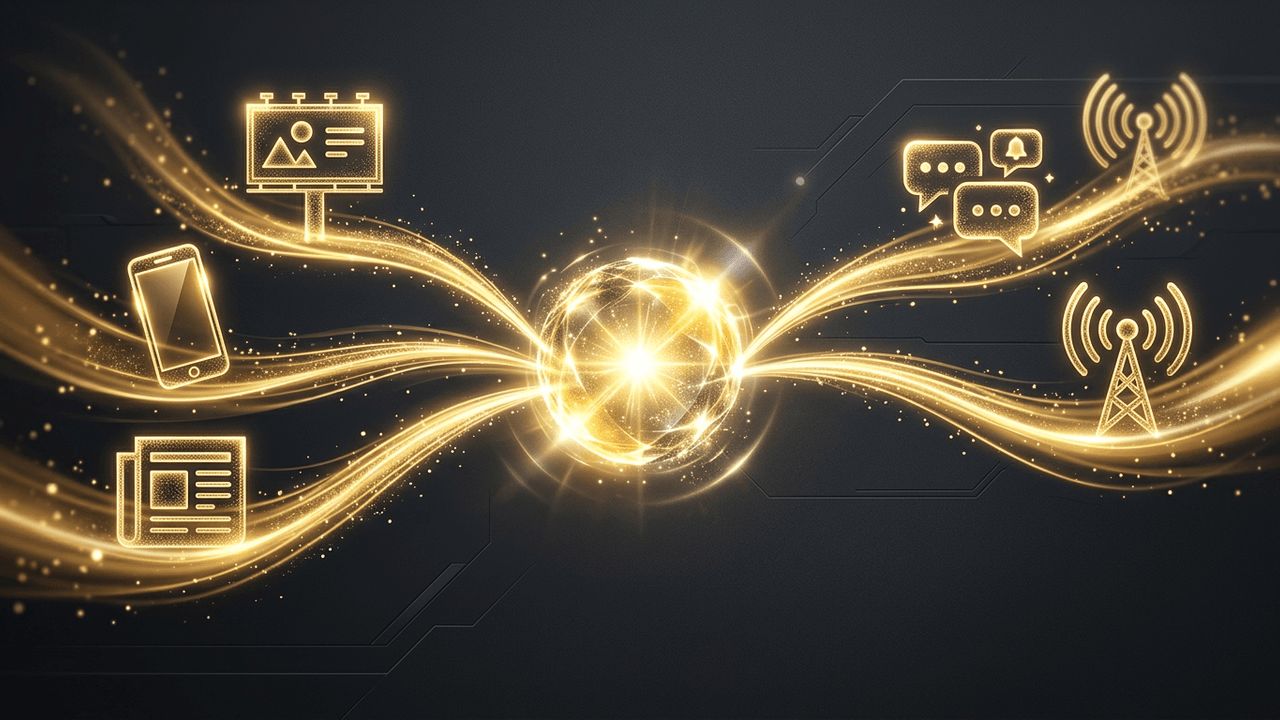
Customers today encounter brands across dozens of touchpoints: search results, social feeds, emails, websites, billboards, podcasts, and in-store experiences. When each of these channels tells a different story, customers become confused and trust erodes. Integrated Marketing Communication, commonly known as IMC, solves this problem by coordinating every message so that the brand speaks with one clear, consistent voice. In this article, we explore what IMC means, why it matters, its key components, and how businesses can implement it effectively.
How AAMAX.CO Supports Integrated Marketing Communication
Delivering a truly integrated campaign requires expertise across many disciplines and the ability to coordinate them seamlessly. AAMAX.CO is a full-service digital marketing company providing web development, digital marketing, and SEO services worldwide. Because they handle multiple channels under one roof, they are well positioned to align messaging, visuals, and timing across websites, search, social, paid media, and email. Their strategists help brands define a central message, adapt it to each platform, and measure how every channel contributes to the bigger picture. For organizations aiming to build a cohesive brand presence, hiring AAMAX.CO provides the coordination and consistency that IMC demands.
Defining Integrated Marketing Communication
Integrated Marketing Communication is a strategic process that ensures all forms of communication and messages are carefully linked together. Rather than treating advertising, public relations, sales promotion, direct marketing, and digital channels as separate functions, IMC brings them into a unified plan built around a central brand promise. The result is a seamless experience where customers receive consistent messages no matter how or where they interact with the brand.
The concept gained prominence in the late twentieth century as media fragmented and marketers realized that disconnected campaigns were diluting brand impact. Today, with the explosion of digital platforms, IMC is more relevant than ever.
The Key Components of IMC
- Advertising: Paid messages delivered through TV, radio, print, online display, search, and social media to build awareness and drive action.
- Public relations: Managing reputation and earning media coverage through press releases, events, and stakeholder relationships.
- Sales promotion: Short-term incentives such as discounts, coupons, contests, and free trials that encourage immediate purchases.
- Direct marketing: Personalized communication through email, SMS, and direct mail aimed at specific individuals.
- Personal selling: One-on-one interactions between sales representatives and prospects.
- Digital and social media: Websites, content marketing, SEO, social platforms, and influencer collaborations that enable two-way engagement.
In an IMC framework, each component plays a specific role, but all of them reinforce the same core message and brand identity.
Why IMC Matters for Modern Brands
Consistency builds trust. When customers see the same values, tone, and visuals across every channel, they develop familiarity and confidence in the brand.
Greater impact with less waste. Coordinated campaigns amplify each other. A social campaign can drive searches, which lead to optimized landing pages, which feed email nurturing sequences. This synergy delivers more value from the same budget.
Better customer experience. IMC focuses on the customer journey rather than individual channels, creating smoother transitions from awareness to purchase and beyond.
Clearer measurement. With a unified plan and shared goals, it becomes easier to track how channels work together and to attribute results accurately.
Competitive differentiation. A strong, consistent brand stands out in crowded markets where competitors may send mixed signals.
How to Build an IMC Strategy
1. Understand your audience. Research your target customers thoroughly, including their needs, preferences, media habits, and decision-making process. Build detailed personas to guide messaging.
2. Define a central message. Identify the core brand promise or campaign idea that all communications will support. This message should be simple, memorable, and relevant to your audience.
3. Set clear objectives. Determine what you want to achieve, such as awareness, lead generation, product adoption, or loyalty, and set measurable KPIs for each.
4. Select the right channels. Choose the mix of channels where your audience spends time. A strong digital marketing foundation often anchors modern IMC plans, supported by offline channels where appropriate.
5. Adapt, do not duplicate. Consistency does not mean copying the same ad everywhere. Tailor the format and tone to each platform while keeping the underlying message intact.
6. Coordinate timing. Plan when each channel activates so that efforts build on one another. For example, teaser content on social media can precede a product launch email and paid search push.
7. Measure and refine. Use analytics, surveys, and attribution tools to evaluate performance and adjust the plan over time.
Examples of IMC in Action
Consider a fitness brand launching a new app. The campaign might begin with influencer videos on social media, supported by search ads targeting fitness-related queries. Visitors land on a website with messaging that mirrors the videos, sign up for a free trial, and receive a welcome email sequence using the same visuals and tagline. Meanwhile, PR outreach secures coverage in health publications, and in-gym posters reinforce the campaign. Every touchpoint feels connected, making the brand more memorable and persuasive.
Challenges of Implementing IMC
IMC can be difficult when departments work in silos, when multiple agencies manage different channels without coordination, or when data is scattered across disconnected tools. Overcoming these challenges requires strong leadership, shared goals, centralized brand guidelines, and regular cross-team communication. Working with a partner capable of managing multiple channels can significantly reduce friction.
Conclusion
Integrated Marketing Communication is not just a buzzword; it is a practical framework for building stronger brands in a fragmented media world. By aligning every message, channel, and touchpoint around a central idea, businesses create clearer customer experiences, stretch their budgets further, and build lasting trust. Whether you are a startup or an established company, adopting an IMC mindset can transform how your audience perceives and responds to your brand.
Want to publish a guest post on aamconsultants.org?
Place an order for a guest post or link insertion today.