
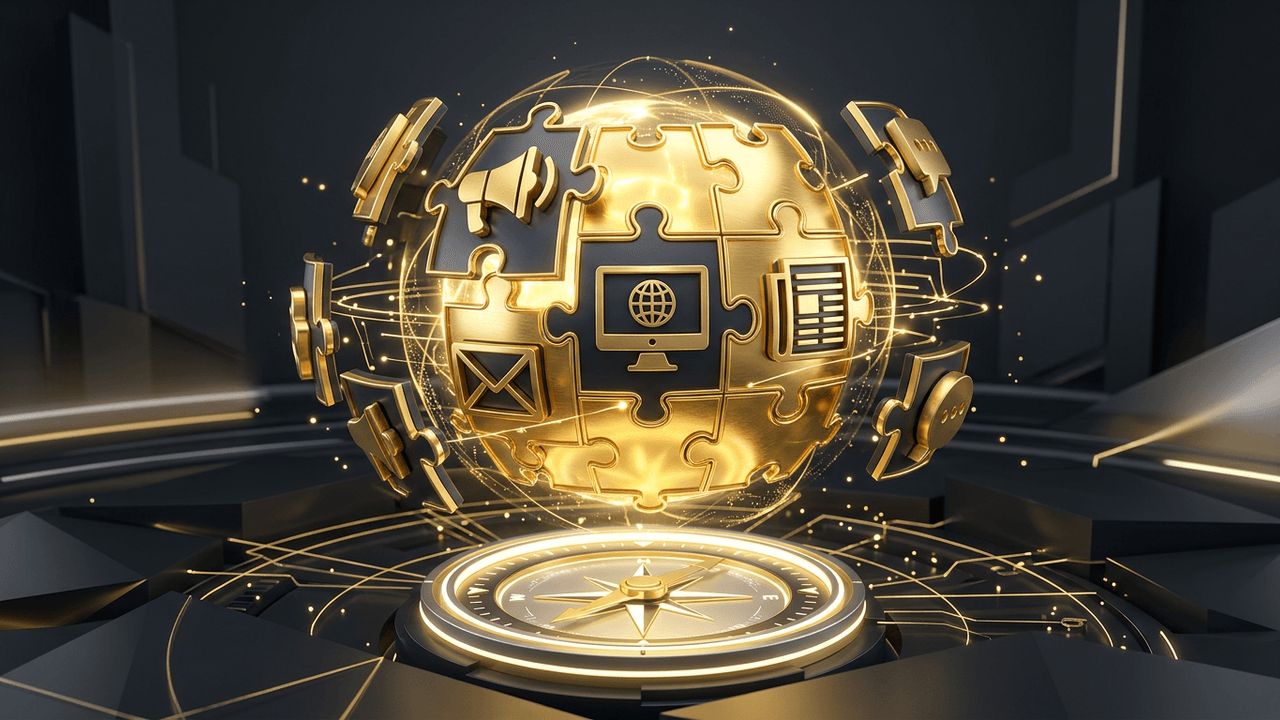
Customers interact with brands in countless ways: a social media ad in the morning, a search result at lunch, an email in the afternoon, a podcast sponsorship on the drive home, and a visit to a store on the weekend. If each of these touchpoints delivers a different message, tone, or promise, the brand appears fragmented and forgettable. Integrated marketing communications, commonly known as IMC, solves this problem by aligning every form of communication around a single, cohesive strategy. This guide explains what integrated marketing communications is, why it matters, and how to build an IMC strategy step by step.
How AAMAX.CO Helps Brands Build Integrated Strategies
Integrating communications across channels requires coordinated planning and execution. AAMAX.CO is a full-service digital marketing company offering web development, digital marketing, and SEO services worldwide. Because they handle websites, search, paid advertising, social media, and content under one roof, they are naturally positioned to deliver integrated campaigns with consistent messaging. They help brands define a core message and bring it to life across every digital touchpoint. Businesses that want a unified, effective marketing presence can hire them to plan and manage their integrated communications.
What Is Integrated Marketing Communications?
Integrated marketing communications is a strategic approach that coordinates all marketing and communication tools, channels, and messages so they work together as a unified whole. The concept gained prominence in the late twentieth century as marketers recognized that customers do not experience channels in isolation. IMC ensures that advertising, public relations, digital marketing, direct marketing, sales promotions, and personal selling all communicate a consistent brand story.
Core Principles of IMC
- Consistency: messages, visuals, and tone align across every channel.
- Customer focus: communication is built around customer needs and journeys.
- Coordination: teams and agencies work from shared goals and plans.
- Complementarity: each channel plays a distinct role while reinforcing others.
- Continuity: messaging remains coherent over time, building cumulative impact.
Key Components of the IMC Mix
Advertising
Paid messages delivered through television, radio, print, outdoor, and digital platforms build awareness and shape brand perception.
Public Relations
PR earns media coverage, manages reputation, and builds credibility through third-party endorsement.
Digital Marketing
Websites, search, social media, email, and online advertising form the backbone of modern IMC. A strong digital marketing presence connects every other component and provides measurable data.
Direct Marketing
Personalized communication through email, direct mail, and SMS drives specific responses.
Sales Promotion
Discounts, contests, samples, and limited-time offers encourage immediate action.
Personal Selling
Face-to-face or one-to-one sales interactions build relationships and close complex deals.
Content and Social Media
Valuable content and social engagement build community, trust, and ongoing conversation.
Benefits of Integrated Marketing Communications
IMC strengthens brand identity by presenting a consistent image that customers recognize and trust. It increases efficiency because assets and insights are shared across channels, reducing duplication. It improves effectiveness, as repeated, consistent messages across touchpoints reinforce each other and boost recall. It enhances the customer experience by creating seamless journeys. It also improves measurement, since integrated planning makes it easier to track how channels work together.
Step-by-Step Guide to Building an IMC Strategy
Step 1: Understand Your Audience
Research customer demographics, needs, behaviors, and preferred channels. Develop personas and map their journeys.
Step 2: Define Objectives
Set clear, measurable goals, such as increasing awareness, generating leads, launching a product, or boosting retention.
Step 3: Craft a Core Message
Develop a central brand message and value proposition that will anchor all communications. Create guidelines for tone, visuals, and key phrases.
Step 4: Select Channels
Choose channels based on where your audience spends time and each channel's role in the journey.
Step 5: Plan and Coordinate
Create an integrated campaign calendar. Ensure every team and partner understands their role and timing.
Step 6: Execute Consistently
Launch campaigns while maintaining brand consistency across every touchpoint.
Step 7: Measure and Optimize
Track performance across channels, analyze how they interact, and refine strategy based on insights.
Common Challenges
Organizational silos, separate budgets, multiple agencies, and inconsistent data can hinder integration. Overcoming these challenges requires leadership commitment, shared KPIs, centralized brand guidelines, and collaborative workflows.
Example of an Integrated Campaign
Imagine a regional fitness brand launching a new membership program. The campaign starts with a core message about making fitness accessible for busy professionals. Short videos on social media showcase quick workouts, search ads capture people looking for nearby gyms, and a dedicated landing page explains membership benefits. Local PR highlights the brand's community wellness events, email sequences nurture people who download a free workout guide, and in-gym signage reinforces the same message and visuals. Every touchpoint feels connected, and analytics reveal how each channel contributes to sign-ups.
Measuring IMC Effectiveness
Useful metrics include brand awareness and recall, share of voice, website traffic by source, cross-channel conversion paths, customer acquisition cost, and lifetime value. Combining these quantitative measures with qualitative feedback provides a complete view of integration success.
Conclusion
Integrated marketing communications is a strategic approach that unifies all marketing channels and messages into a cohesive brand experience. By focusing on consistency, customer needs, and coordination, IMC builds stronger brands, improves efficiency, and drives better results. Following a structured process—from understanding the audience to measuring and optimizing—enables any business to implement IMC and create communication that resonates at every touchpoint.
Want to publish a guest post on aamconsultants.org?
Place an order for a guest post or link insertion today.