
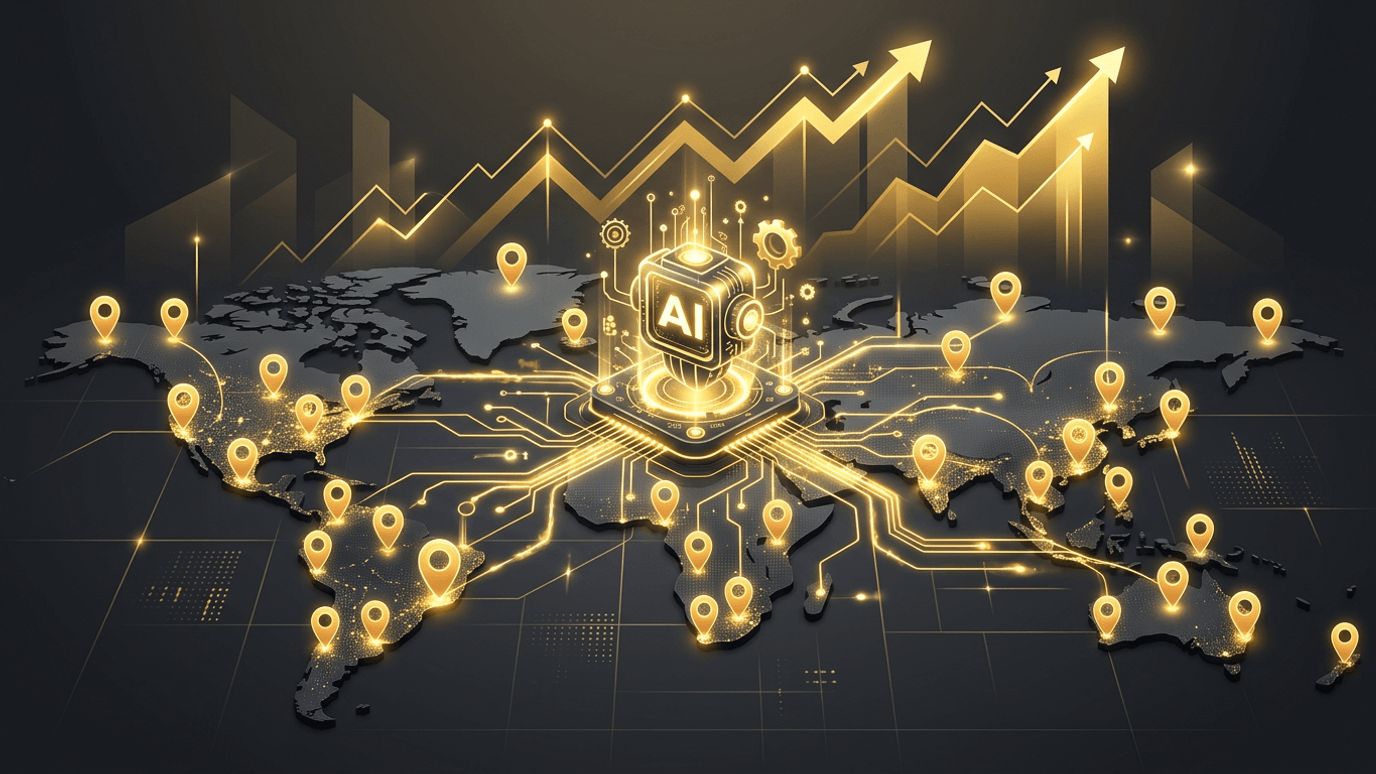
Brands with dozens, hundreds, or even thousands of locations face a unique marketing challenge. They must maintain consistent brand standards while making each location feel relevant to its local community. Managing listings, reviews, social media, ads, and promotions across every location manually is nearly impossible at scale. This is why multi-location marketing automation has become essential for franchises, retail chains, healthcare networks, restaurant groups, and service providers. As technology evolves, new trends are reshaping how these organizations reach local customers. This article explores the key trends defining the future of multi-location marketing automation.
How AAMAX.CO Supports Multi-Location Brands
AAMAX.CO is a full-service digital marketing company offering web development, digital marketing, and SEO services worldwide. They help multi-location businesses build scalable websites with location pages, implement local search strategies, and run coordinated campaigns that balance brand consistency with local relevance. Their team understands the operational complexity of managing many locations and designs systems and campaigns that scale efficiently. Brands that partner with them gain the ability to grow visibility across every market they serve while keeping performance transparent at both corporate and local levels.
1. AI-Powered Localization at Scale
Artificial intelligence is transforming how multi-location brands create localized content. Instead of writing unique copy for every location manually, AI tools can generate location-specific landing page content, social posts, ad variations, and review responses that reflect local details while adhering to brand guidelines. The best implementations combine AI efficiency with human oversight to maintain quality and authenticity.
2. Automated Local SEO Management
Local search visibility drives foot traffic and calls for multi-location businesses. Automation platforms now manage business listings across hundreds of directories, keep hours and information accurate, publish posts to Google Business Profiles, and monitor rankings by location. Coupled with strategic SEO services, automation ensures every location remains visible in map packs and local results.
3. Visibility in AI Search and Answer Engines
Consumers increasingly ask AI assistants questions like "best urgent care near me" or "which coffee shop is open late nearby." Multi-location brands must ensure their location data, reviews, and content are structured in ways AI systems can understand and trust. Generative engine optimization is emerging as a critical discipline for ensuring individual locations are recommended in AI-generated answers.
4. Review Management Automation
Reviews heavily influence local purchasing decisions and search rankings. Modern platforms automate review requests after transactions, aggregate reviews from multiple sites, analyze sentiment across locations, and suggest or draft responses. Corporate teams gain visibility into location-level reputation trends, while local managers can respond quickly and personally.
5. Unified Data and Customer Data Platforms
One of the biggest challenges for multi-location brands is fragmented data. Point-of-sale systems, CRMs, booking tools, and marketing platforms often operate separately at each location. Customer data platforms unify this information, creating comprehensive customer profiles that enable personalized marketing across locations. Unified data also allows corporate teams to compare performance and identify best practices.
6. Localized Paid Media Automation
Automated advertising platforms allow brands to run localized campaigns for each location from a central system. Budgets, targeting radiuses, creative, and offers can be customized by location while maintaining brand control. Campaigns on Google Ads and social platforms can be dynamically adjusted based on location performance, inventory, or seasonality.
7. Distributed Social Media Management
Local social media presence builds community connection, but it can be risky if local managers post off-brand content. Distributed social platforms provide approved content libraries, templates, and scheduling tools that allow local teams to personalize posts within brand guidelines. Corporate teams maintain oversight while locations engage authentically with their communities.
8. Privacy-First Personalization
As privacy regulations tighten and third-party cookies disappear, multi-location brands are shifting toward first-party data strategies. Loyalty programs, app engagement, and opt-in communications provide consented data that powers personalization. Automation platforms are evolving to support consent management and privacy-compliant targeting.
9. Predictive Analytics and Performance Benchmarking
Advanced analytics now help brands predict demand by location, identify underperforming markets, and recommend budget reallocations. Benchmarking dashboards compare locations against each other, highlighting top performers and surfacing strategies that can be replicated. Predictive models help marketers act proactively rather than reactively.
10. Omnichannel Local Experiences
Customers expect seamless experiences across online and offline channels. Multi-location brands are integrating online booking, local inventory visibility, curbside pickup, and in-store promotions with digital campaigns. Automation ensures that a customer who sees a local ad can easily find accurate information, book an appointment, or check availability at their nearest location.
11. Hyperlocal Content and Community Engagement
Beyond automation, brands are recognizing the value of genuine local storytelling. Highlighting local staff, events, partnerships, and community involvement builds emotional connections. Automation tools help distribute and amplify this content efficiently while preserving its local authenticity.
Preparing Your Brand for the Future
- Audit your location data: Ensure every location has accurate, consistent information across all platforms.
- Centralize your technology stack: Choose platforms that support multi-location management from a single dashboard.
- Empower local teams: Provide tools and templates that make local marketing easy and on-brand.
- Invest in data integration: Connect systems to gain a complete view of customers and performance.
- Adapt to AI search: Optimize location content and structured data for AI-driven discovery.
Conclusion
The future of multi-location marketing automation is defined by AI-powered localization, automated local SEO, AI search visibility, review management, unified data, localized paid media, distributed social management, privacy-first personalization, predictive analytics, and omnichannel experiences. Brands that embrace these trends will be able to scale efficiently while delivering the local relevance customers expect. With the right technology and strategic partners, multi-location organizations can turn their size into a competitive advantage in every market they serve.
Want to publish a guest post on aamconsultants.org?
Place an order for a guest post or link insertion today.