
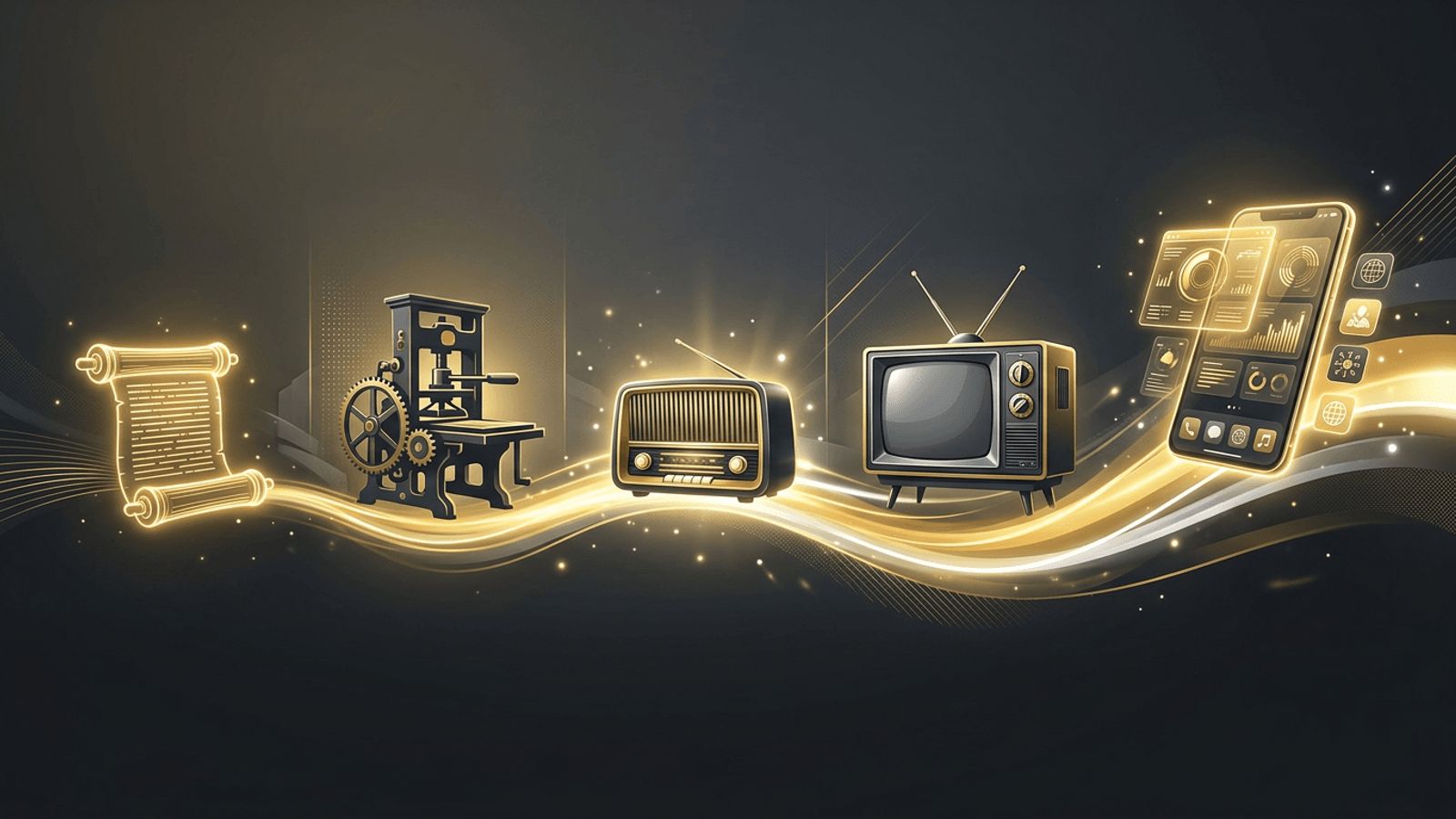
Marketing and advertising feel like thoroughly modern disciplines, shaped by algorithms, social feeds, and data dashboards. Yet the urge to promote goods and persuade buyers is as old as trade itself. So when did marketing and advertising begin? The answer stretches back thousands of years, from painted signs in ancient marketplaces to the printing press, the rise of mass media, and today's digital ecosystem. Understanding this history gives marketers useful perspective, because many of the principles that worked centuries ago still drive successful campaigns today.
How AAMAX.CO Brings Timeless Marketing Principles into the Digital Age
The tools of marketing have changed dramatically, but the fundamentals of understanding customers and communicating value remain constant. AAMAX.CO is a full service digital marketing company that offers web development, digital marketing, and SEO services worldwide. They combine proven persuasion principles with modern technology to help brands reach today's audiences. As search behavior evolves toward AI-powered answers, their generative engine optimization services help businesses stay visible in the newest era of discovery. Companies looking to honor marketing's timeless lessons while embracing innovation can hire AAMAX.CO to guide their strategy.
Ancient Origins of Advertising
The earliest forms of advertising date back to ancient civilizations. Archaeologists have found evidence of commercial messages in ancient Egypt, where merchants used papyrus to create sales notices and wall posters. In ancient Babylon, clay tablets carried inscriptions promoting goods and services. The ruins of Pompeii reveal painted signs on walls advertising taverns, political candidates, and products, showing that outdoor advertising existed nearly two thousand years ago.
Ancient China also contributed to early advertising through oral poetry and bamboo flute melodies used by vendors to attract customers. Throughout the ancient world, town criers announced news, events, and merchant offerings in public squares. These early methods relied on the same goal modern advertisers pursue: capturing attention and encouraging action.
Medieval Signs and Trademarks
During the Middle Ages, when literacy rates were low, merchants relied heavily on visual symbols to communicate. A boot hanging outside a shop indicated a cobbler, while a pretzel symbol might signal a bakery. Craft guilds introduced marks to identify the makers of goods, an early form of branding that signaled quality and origin. These symbols helped customers recognize trusted sellers, establishing the foundation of brand identity that remains essential today.
The Printing Press Revolution
The invention of the movable-type printing press by Johannes Gutenberg in the fifteenth century transformed communication and created new possibilities for advertising. Printed handbills, posters, and pamphlets could be produced in large quantities and distributed widely. By the seventeenth century, newspapers began appearing in Europe, and they soon carried paid advertisements for books, medicines, and household goods. This marked the beginning of advertising as a scalable, paid medium that could reach audiences beyond a single marketplace.
The Industrial Revolution and Mass Production
The Industrial Revolution of the eighteenth and nineteenth centuries changed the economy profoundly. Factories produced goods at unprecedented scale, creating a need to sell those goods to wider markets. Railroads and improved transportation expanded distribution, while rising literacy increased newspaper and magazine readership. Brands began to emerge as manufacturers sought to differentiate their products from competitors. The first advertising agencies appeared in the nineteenth century, initially acting as brokers that bought newspaper space on behalf of clients before evolving to provide creative and strategic services.
The Birth of Modern Marketing
While advertising has ancient roots, marketing as a formal discipline developed more recently. In the early twentieth century, businesses and academics began studying consumer behavior, distribution, and sales systematically. Universities introduced marketing courses, and companies started conducting market research to understand customer preferences. The concept evolved from simply selling what a company produced to identifying what customers wanted and building products to meet those needs. By the mid-twentieth century, the marketing concept placed the customer at the center of business strategy.
The Golden Age of Broadcast Advertising
The arrival of radio in the 1920s gave advertisers a powerful new way to reach households. Companies sponsored entire programs, and jingles became memorable tools for building brand recognition. Television followed in the 1940s and 1950s, ushering in what many consider the golden age of advertising. Visual storytelling, celebrity endorsements, and iconic campaigns shaped consumer culture. Agencies became influential creative powerhouses, and brands invested heavily in reaching mass audiences through broadcast media.
The Digital Transformation
The internet revolutionized marketing and advertising once again. The first clickable banner ad appeared in the mid-1990s, opening the door to online advertising. Search engines introduced pay per click advertising, allowing businesses to reach people based on what they were searching for. Social media platforms emerged in the 2000s, enabling targeted advertising based on interests and behaviors. Smartphones made marketing mobile and constant. Today, data analytics, automation, artificial intelligence, and personalization define a landscape where businesses can measure and optimize campaigns in real time.
Lessons from Marketing History
Despite dramatic technological change, several lessons have endured across every era:
- Attention is valuable: From town criers to social feeds, capturing attention has always been the first challenge.
- Trust builds brands: Medieval guild marks and modern reviews serve the same purpose of signaling reliability.
- Reach drives growth: Each new medium expanded the audience businesses could reach.
- Understanding customers wins: The shift toward customer-centric marketing produced lasting success.
- Adaptation is essential: Businesses that embraced new media early often gained significant advantages.
The Future of Marketing and Advertising
Marketing continues to evolve rapidly. AI-generated answers, voice search, immersive experiences, and privacy-focused advertising are reshaping how brands connect with audiences. The businesses that thrive will be those that combine timeless principles with emerging tools, just as successful merchants have done throughout history.
Conclusion
Marketing and advertising began thousands of years ago with painted signs, town criers, and merchant symbols. They evolved through the printing press, the Industrial Revolution, broadcast media, and the digital revolution into the sophisticated practices we see today. While technology keeps changing, the core goals of understanding customers, earning trust, and communicating value remain the same. Learning from this rich history helps modern businesses build strategies that last.
Want to publish a guest post on aamconsultants.org?
Place an order for a guest post or link insertion today.