
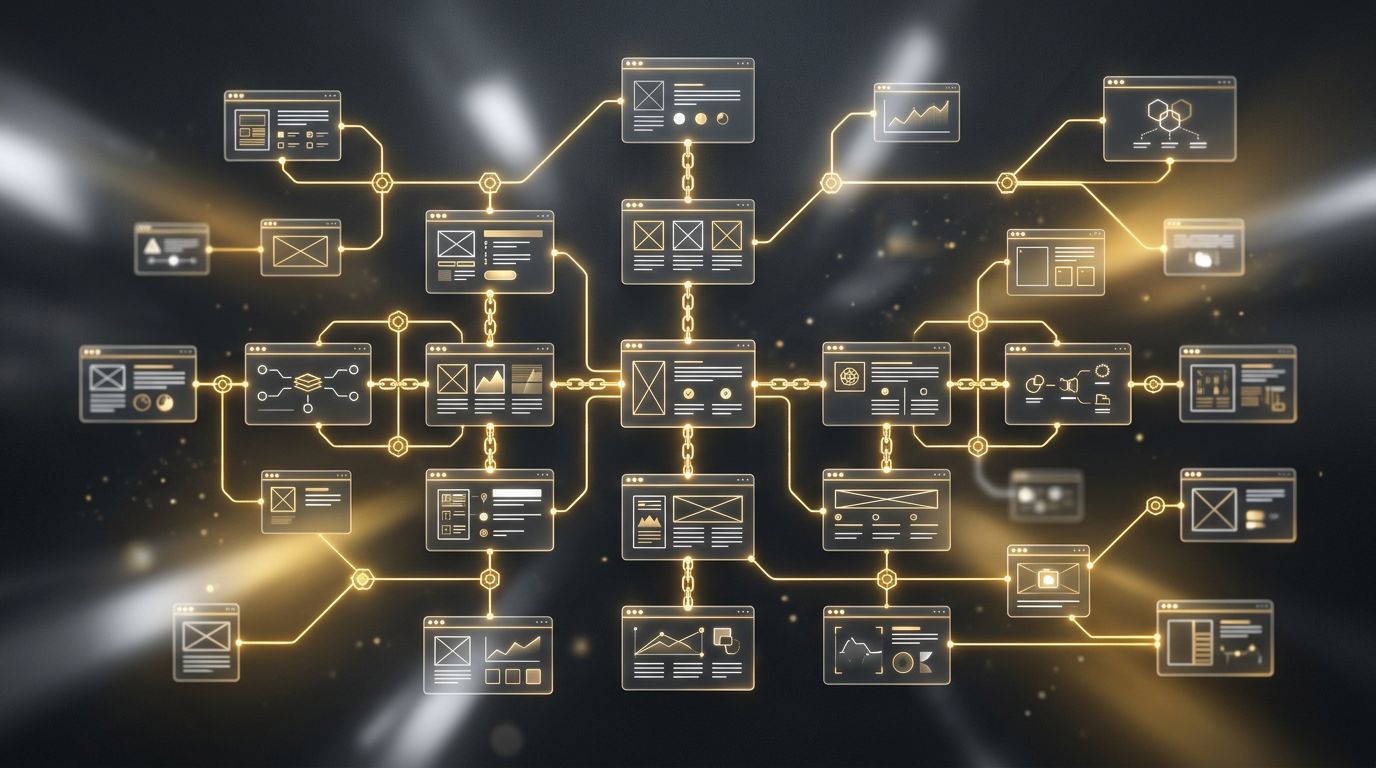
When people think about SEO, they usually picture keywords and backlinks from other websites. Yet one of the most powerful and most underused ranking levers sits entirely within your control: internal linking. Internal links are hyperlinks that connect one page on your website to another page on the same domain. They guide visitors through your content, help search engines discover and understand your pages, and distribute ranking authority across your site. This article explains why internal linking is important for SEO, how it works behind the scenes, and how to build an internal linking strategy that improves rankings and user experience.
How AAMAX.CO Builds Smarter Site Architecture
Designing an effective internal linking structure requires a clear understanding of both technical SEO and content strategy. AAMAX.CO is a full-service digital marketing company offering web development, digital marketing, and SEO services worldwide. Their specialists audit websites to find orphan pages, weak link paths, and missed opportunities, then create logical site architectures that help search engines crawl efficiently and help users find what they need. Because they also build websites, they can implement navigation, breadcrumb, and contextual linking improvements directly, ensuring internal linking becomes a lasting asset rather than an afterthought.
What Internal Links Actually Do
Internal links serve three core purposes. First, they help search engine crawlers discover new pages. Googlebot follows links to find content, so a page with no internal links pointing to it may never be crawled or indexed. Second, they communicate context. The anchor text and surrounding content tell search engines what the linked page is about. Third, they distribute link equity, sometimes called PageRank, from stronger pages to other pages on your site.
From a user perspective, internal links reduce friction. They help readers find related information, compare options, and move naturally toward a conversion, such as requesting a quote or making a purchase.
Improving Crawlability and Indexation
Search engines allocate a limited amount of attention to each website, often called crawl budget. On larger sites, pages buried many clicks deep from the homepage may be crawled infrequently or not at all. A thoughtful internal linking structure keeps important pages within a few clicks of the homepage, signaling their importance and ensuring they are revisited regularly.
- Link new content from established, frequently crawled pages.
- Eliminate orphan pages that have no internal links pointing to them.
- Use breadcrumbs to reinforce hierarchy and create additional crawl paths.
- Keep your XML sitemap aligned with the pages you actually link to.
Passing Authority to Priority Pages
Not every page on your site earns backlinks equally. Blog posts, research, and resources tend to attract links naturally, while service or product pages rarely do. Internal links let you channel some of that earned authority to the commercial pages that drive revenue. For example, a popular guide about kitchen remodeling can link to your kitchen renovation service page, lending it strength and relevance.
This is why internal linking is a core component of professional SEO services. It is one of the few ways to directly influence how authority flows through your site without needing any external website to cooperate.
Building Topical Authority With Content Clusters
Modern search engines evaluate websites on how comprehensively they cover a subject. The topic cluster model uses internal links to demonstrate that depth. A central pillar page covers a broad topic, while supporting cluster pages dive into specific subtopics. Each cluster page links back to the pillar, and the pillar links out to each cluster page.
This structure tells search engines that your site is a well-organized authority on the topic. It also keeps readers engaged longer, as they can move easily between related articles, which can positively influence engagement signals.
Using Anchor Text Effectively
Anchor text is the clickable text of a link. Descriptive anchor text helps both users and search engines understand what they will find on the destination page. Instead of generic phrases like "click here" or "read more," use natural language that describes the target content.
- Use descriptive, relevant phrases that match the linked page's topic.
- Vary anchor text naturally rather than repeating the exact same keyword every time.
- Avoid over-optimized anchors that feel forced or spammy.
- Make sure anchor text reads naturally within the sentence.
Enhancing User Experience and Conversions
Internal linking is not purely technical. Well-placed contextual links anticipate what readers want next. Someone reading about symptoms of a leaking roof may want to learn about repair costs or schedule an inspection. By linking to those pages at the right moment, you shorten the path to conversion. Sites with strong internal linking often see lower bounce rates, more pages per session, and higher conversion rates.
Common Internal Linking Mistakes
Even well-intentioned websites fall into internal linking traps. Watch out for these issues:
- Too many links on a page: Excessive links dilute value and overwhelm readers.
- Broken internal links: Links to deleted or moved pages waste crawl budget and frustrate users.
- Redirect chains: Linking to URLs that redirect multiple times slows crawling; update links to point to final destinations.
- Relying only on navigation menus: Contextual links within body content carry strong relevance signals and should be used generously but thoughtfully.
- Ignoring older content: Update older posts to link to newer, relevant pages.
How to Audit Your Internal Links
Start by crawling your site with a tool such as Screaming Frog, Sitebulb, or a comprehensive SEO platform. Identify pages with few or no inbound internal links, pages buried deep in your architecture, and broken or redirected links. Google Search Console also shows which pages have the most internal links, helping you confirm that your priority pages are receiving adequate attention.
Next, map your most important commercial pages and look for relevant existing content that can link to them. Adding just a few contextual links from strong, related pages can produce noticeable ranking improvements within weeks.
Internal Linking and AI Search
As AI-powered search experiences grow, clear site structure matters even more. Well-linked content clusters help AI systems understand how your pages relate and which ones are most authoritative on a topic. Pairing solid internal linking with GEO services can improve the chances that your content is referenced in generative answers.
Final Thoughts
Internal linking is important for SEO because it shapes how search engines discover, understand, and value your content, while also guiding visitors toward the information and actions that matter most. It costs nothing but time and planning, yet it can meaningfully lift rankings for your most valuable pages. By building logical site architecture, using descriptive anchor text, creating content clusters, and auditing your links regularly, you turn your website into a well-connected network that search engines and users both appreciate.
Want to publish a guest post on aamconsultants.org?
Place an order for a guest post or link insertion today.