
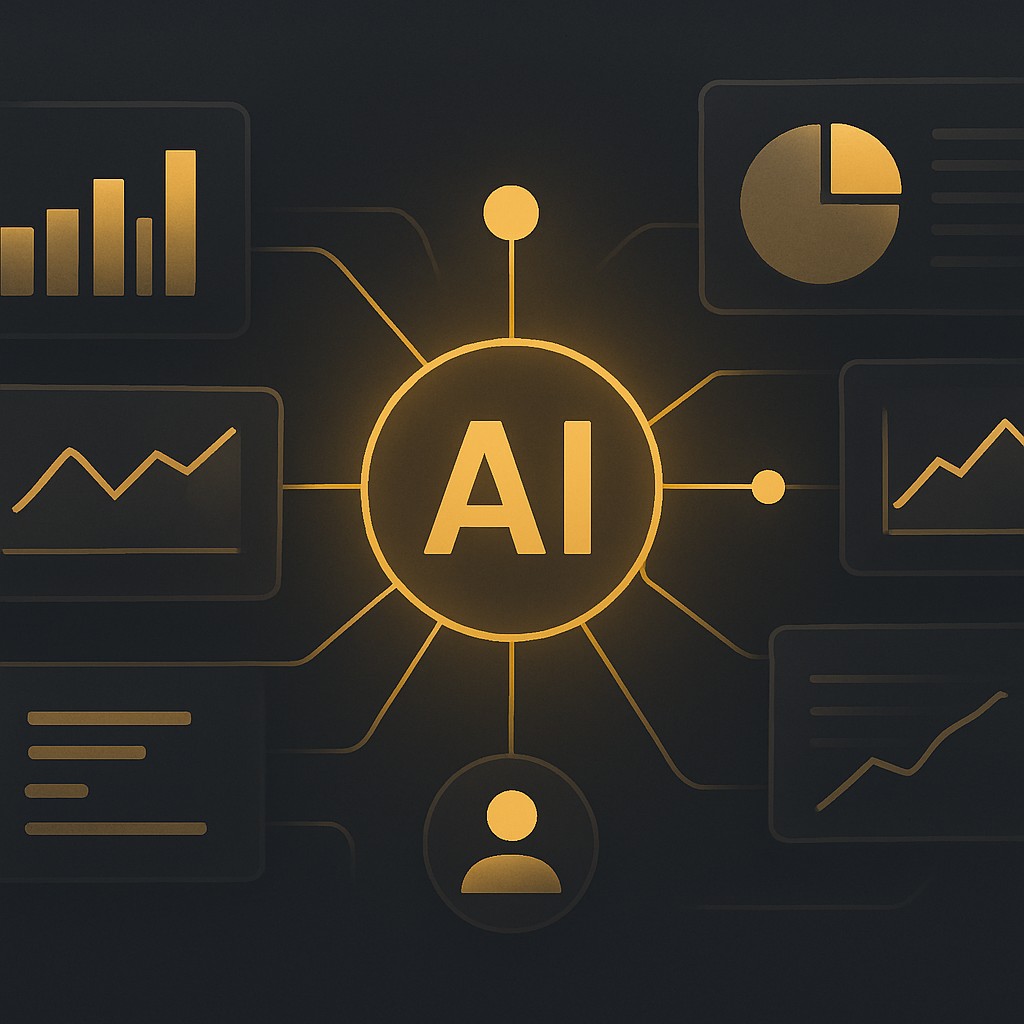
Modern marketing happens everywhere at once. A single campaign might span email, paid search, social media, display advertising, and organic content, each generating its own stream of data. Tracking performance across all of these channels manually is nearly impossible, which is why marketing teams increasingly rely on AI to unify, interpret, and act on cross-channel data. AI does not just collect numbers, it transforms scattered signals into a coherent story about what is working and why.
The challenge of cross-channel tracking is not a lack of data but an overwhelming abundance of it. Each platform reports metrics differently, attribution windows vary, and customer journeys weave across multiple touchpoints. AI helps teams cut through this complexity, revealing the connections between channels that would otherwise stay hidden.
How AAMAX.CO Strengthens Cross-Channel Measurement
Building a unified performance tracking system takes both technical setup and strategic interpretation, which is where AAMAX.CO proves invaluable. As a full-service digital marketing company serving clients worldwide, they help brands connect their channels, configure AI-driven analytics, and translate the resulting data into clear decisions. Their expertise across digital marketing ensures that performance tracking is not just accurate but tied directly to business goals. By relying on their experience, teams gain a measurement framework that scales with their campaigns and removes the guesswork from reporting.
The Problem With Siloed Channel Data
When each channel is measured in isolation, marketers get a fragmented and often misleading view of performance. Paid search might appear to drive most conversions, while the social campaign that introduced customers to the brand goes uncredited. These silos lead to poor budget decisions, with teams over-investing in last-click channels and undervaluing those that build awareness.
Siloed data also makes it hard to spot trends that span platforms. A drop in overall engagement might be invisible if no one is looking at the channels together. Unifying data is the first step toward understanding the customer journey as a whole rather than a series of disconnected events.
How AI Unifies Data From Many Sources
AI-powered analytics platforms can ingest data from dozens of sources and normalize it into a single, consistent framework. They reconcile differing metrics, align time periods, and match customer identities across channels where possible. This creates a unified dataset that reflects the true scope of marketing activity.
Once data is unified, AI can continuously monitor it, flagging anomalies and surfacing trends in real time. Instead of waiting for a weekly report, teams receive timely alerts when a campaign overperforms or a channel suddenly declines. This speed allows for faster, more confident decision-making.
Smarter Attribution With Machine Learning
One of the most valuable applications of AI in performance tracking is attribution. Traditional models like last-click or first-click oversimplify the customer journey. Machine learning enables data-driven attribution that weighs each touchpoint based on its actual contribution to conversion. This gives a fairer picture of how channels work together.
With more accurate attribution, teams can allocate budget where it genuinely drives results. They can identify which combinations of channels move customers through the funnel and double down on the most effective paths. This shifts marketing from intuition-based spending to evidence-based investment.
Turning Metrics Into Predictive Insight
AI does more than report on the past, it helps forecast the future. By analyzing historical performance, AI can predict which campaigns are likely to succeed, estimate future conversion rates, and identify the optimal timing and budget for activities. These predictions help teams plan proactively rather than reactively.
Predictive insights also support scenario planning. Teams can model what might happen if they shift budget between channels or adjust targeting, then make decisions with greater confidence. This forward-looking capability is a major advantage in fast-moving markets where conditions change quickly.
Automating Reporting and Visualization
Compiling reports across channels is tedious and error-prone when done manually. AI automates this process, generating dashboards and summaries that update in real time. Natural language generation can even produce written explanations of the data, highlighting key takeaways in plain language for stakeholders who do not want to dig through charts.
Automated reporting frees marketers to focus on strategy rather than spreadsheets. It also democratizes data, making insights accessible to team members across the organization. When everyone works from the same clear picture, alignment and collaboration improve.
Building a Continuous Optimization Loop
The ultimate goal of AI-driven performance tracking is continuous optimization. As AI surfaces insights, teams test changes, measure the results, and feed those learnings back into the system. Over time, this loop refines targeting, messaging, and budget allocation, steadily improving return on investment.
This cycle works best when humans and AI collaborate. AI handles the heavy lifting of data processing and pattern detection, while marketers apply creativity, context, and judgment. Together they create a measurement practice that is both rigorous and adaptable.
Conclusion
Tracking performance across channels has become too complex for manual methods, but AI offers a powerful solution. By unifying data, improving attribution, generating predictions, and automating reporting, AI gives marketing teams a clear and actionable view of their entire ecosystem. With the right tools and expert guidance, cross-channel performance tracking becomes a source of continuous improvement and a foundation for smarter, more profitable marketing.
Want to publish a guest post on aamconsultants.org?
Place an order for a guest post or link insertion today.