

Influencer marketing has emerged as an innovative asset in modern marketing strategies. It significantly impacts consumer purchasing decisions, making the selling process more authentic, trustworthy, socially approved, and emotionally influenced.
However, this online marketing strategy is most effective only if it is used sparingly, which includes having a proper marketing niche, segmented audience criteria, and authentic and trusted collaborators.
Influencer marketing is rapidly growing in the marketing sector. Between 2026 and 2030, the global valuation of these marketing platforms is expected to grow at a CAGR of 23.3%. The primary growth factors will be influencer and campaign management, search and discovery, and reporting and analytics.
Here, we see that influencer marketing has immense potential to continuously evolve and shape consumer behaviour as a pivotal marketing strategy.
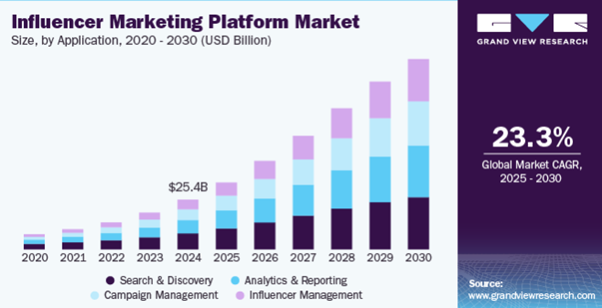
Source: Grand View Research, 2026
https://www.grandviewresearch.com/industry-analysis/influencer-marketing-platform-market
What is Influencer Marketing?
Trusted and known sources have always influenced purchase decisions. Before the rise of social media platforms, consumers relied on recommendations from friends, family, or the most admired celebrities. This restricted consumer behaviour and purchase decisions to societal influence and personal experiences.
In today’s digital era, this dynamic has shifted to social media influencers, better known as individuals who formed credible and authentic connections with their audience online. The term influencer marketing refers to the modernisation of word-of-mouth recommendations by content creators, making the brand more visible and amplifying its message on digital platforms.
The blog explores how influencer marketing impacts consumer behaviour and why it has become a powerful strategy in this online realm.
So, give this a quick read to get a clear idea.
Impact On Product Purchase Decisions with Authentic Influencer Partnerships
Influencer marketing has a profound impact on consumer behaviour, covering various aspects. Many eCommerce platforms, like Ubuy, have leveraged influencer marketing to boost brand visibility and product sales.
This influences individual behaviour, affecting how individuals discover, evaluate, and make buying decisions.
Explore some of the aspects mentioned below:
1. Trust & Credibility
No one wishes to be trapped by marketing fraud. In general, the audience searches for social media influencers with a loyal following. They consider influencers who value trust and credibility. Trusted opinions from expert influencers are highly valued, increasing brand sales and visibility.
2. Brand Awareness & Reach
Social media marketing plays an essential role in everyday life. People rely on these platforms to share personal moments or search for product reviews. This adds fuel to the influencer’s game, and then all they have to do is introduce a new product.
3. An Emotional Bond with Users
The concept is clear with influencers. Either they are working on becoming or have already become one with authentic fellowship. Better classified into nano, micro, macro, and mega ones. But how does this all happen? Simply, they make an emotional bond with their followers. All by sharing personal information in some digital media forms. Which makes them authentic and trustworthy social representatives. So, if such influencers recommend products, it is surely going to boost conversions.
4. Product Review as Social Proof
We all look for social proof when making a product purchase decision. It assures us that the product is authentic and triggers FOMO in the audience. Social media influencers create social proof by highlighting specific details about a product, which leads followers to change their lifestyles based on current trends and product adoptions.
5. The Cognitive Bias or HALO Effect
In the current times, social media is a powerful tool for influencer marketing tactics. Suppose an influencer made content for publishing a brand, and it credibly worked in a particular region or locality. This concept not only enhances the brand’s image in a specific area but also motivates other regional audiences to trust and purchase that product. And it is better denoted as cognitive biasing and the HALO effect.
6. Interactive Engagement
Every like and share on social media platforms actively contributes to the authentic influencer partnership. Influencers post content to build an interactive engagement with their followers. The counter-response amplifies the brand’s reach and makes the customer-brand relationship even stronger.
Key Working Mechanisms of Influencer Marketing
Influencer marketing is a trusted asset for brands or services to launch and market their products. Its mechanism leverages user reach, engagement, and credibility of the influencers.
● Ideal Customer Profile (ICP)
Don’t get confused. Technically, ICP represents a detailed view of the target audience. It is more likely to be detailed research of the audience. ICP helps influencers decide on social media platforms based on the brand’s requirements.
● Campaign Planning, Implementation and Management
A campaign is an essential step in successful influencer marketing. It involves a comprehensive strategy that best represents the brand’s objectives, creating content, scheduling posts, key messaging, and regularly monitoring the campaigns. In this process, influencers are required to ensure timely content delivery.
● Content Production with Influencers
Brands or services can reach social media influencers through various methods, such as sponsored marketing, affiliate marketing, and brand ambassadors. This completely differentiates the content formation process. Based on these collaboration methods, the influencer will create content that aligns with brand messaging.
● Different Platforms, Different Strategies
Responsible influencer marketing methods integrate different strategies for different platforms. For example, if you are targeting consumers on YouTube, you will need content in the form of long, descriptive videos. So, a marketing campaign needs to be prepared in the same manner.
● Managing Influencer Events
Brands organise influencer events with individuals who are popular among consumers. It requires the online marketing teams to plan the event, select influencers, conduct pre-event promotions, monitor the event, and manage post-event practices.
● Paid Media Integrations
These paid media integrations work to increase the reach of influencer content on social media platforms. Brands boost high-quality content through paid media campaigns. For example, if an influencer creates product review content, its reach can be increased through paid integrations of Instagram promotions or ads.
● Performance Monitoring and Analysis
It is important to ensure the effectiveness of your influencer marketing strategies. To achieve these objectives, you must integrate campaign performance metric tools, such as key performance indicators (KPIs), Google ads, and more.
● Compliance Standards & Regulations
Influencer marketing is all about social media platforms, so it is mandatory to align your marketing strategy with respective regulations and compliances. Which includes following the FCI guidelines, intellectual property rights, contractual obligations, and more.
● Customised Strategy & Solutions
Customisation of a marketing strategy tailors the needs and goals of a brand. Suppose the niche is about to target a particular industry. In that case, this influencer marketing strategy needs to be aligned with the same, like finding a social media influencer with valuable expertise.
Conclusion
Influencer marketing has undeniably revolutionised traditional advertising practices. In simple words, social influence establishes direct user engagement with potential consumers. The research aspect and valuable insights present the absolute impact of influencer marketing. That helps brands become more recognisable and influences confident purchase decisions.
So, influencer marketing will continue to shape consumer behaviours and preferences on a positive note as long as trust and authenticity drive product sales.
Want to publish a guest post on aamconsultants.org?
Place an order for a guest post or link insertion today.