
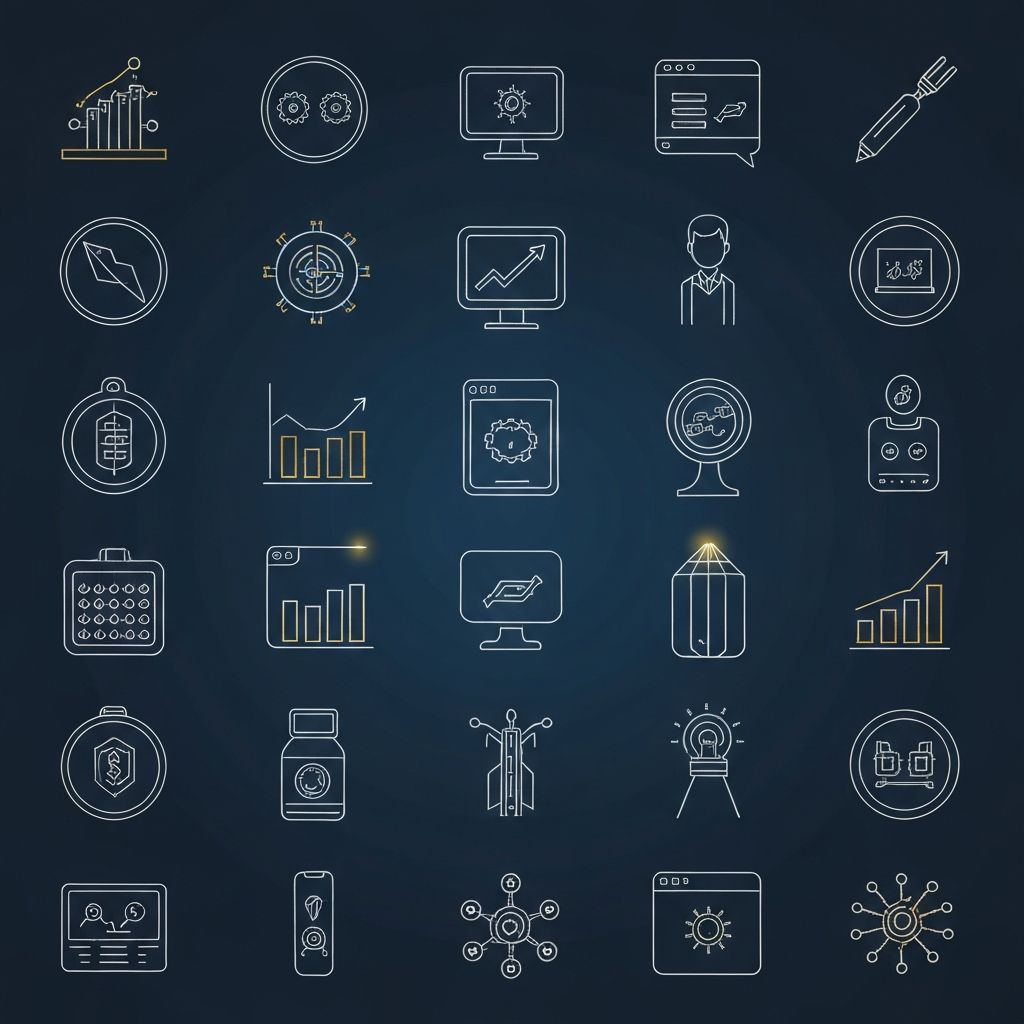
The Quiet Power of Icons in Web Design
Icons are some of the smallest elements on a webpage, yet they carry an outsized influence on usability, comprehension, and brand identity. A well-designed icon can replace a paragraph of explanation, guide a user through a complex flow, or signal a brand's personality in a single glance. A poorly designed icon, on the other hand, can confuse users, slow down decision-making, and undermine an otherwise polished design system.
As the web has matured, so has icon design. We have moved from chunky pixel icons to crisp vector glyphs, from hyper-realistic skeuomorphic illustrations to flat, minimal pictograms, and now to expressive, often animated icon sets that bring interfaces to life. The icons you choose, and how you implement them, say a great deal about your product.
Hire AAMAX.CO for Icon-Driven Web Design
You can hire AAMAX.CO to design and develop websites where every icon, illustration, and visual cue is purposefully chosen to support usability and brand expression. Their website design team treats icons as part of a unified design system rather than as decoration. They build custom icon libraries, integrate scalable vector formats, and ensure that every glyph performs flawlessly across devices, themes, and accessibility settings, making interfaces feel both consistent and distinctive.
Why Icons Matter
Icons compress meaning. A trash can means delete. A gear means settings. A magnifying glass means search. These shorthand visuals speed up scanning and decision-making, especially on mobile devices where space is limited. They also bridge language barriers, communicating function to users regardless of the words they read.
Icons reinforce hierarchy as well. A well-placed icon next to a call to action draws the eye and signals importance. Icons grouped in a feature section help users compare offerings at a glance. They are tools for both navigation and storytelling.
Choosing the Right Icon Style
Icon style should reflect brand personality. Outline icons feel light, modern, and approachable, often used by tech startups and editorial sites. Filled icons feel solid, confident, and friendly, common in consumer apps. Duotone icons add depth and visual interest, while custom illustrative icons can become signature elements of a brand. The key is consistency. Mixing styles within a single interface usually creates visual chaos.
Custom Icons vs. Icon Libraries
For most projects, established icon libraries like Lucide, Heroicons, or Feather Icons are excellent starting points. They are well-designed, free or affordable, and cover most common use cases. Custom icons make sense when a brand needs unique visual elements that no library can provide, or when specialized features require icons that simply do not exist elsewhere. Many strong design systems blend the two: a base library for common actions and a small set of custom icons for brand-specific moments.
Technical Implementation
SVG is the gold standard format for web icons. SVGs scale crisply on any screen, support theming through CSS, and are accessible to screen readers when used correctly. Icon fonts, once popular, are now mostly considered legacy because they offer worse accessibility and rendering. PNG icons should only be used as a last resort, typically for legacy email or rich media contexts.
Use SVG sprites or modern bundling techniques to keep file sizes small. Inline SVGs make icons easy to style, animate, and theme dynamically, while external sprites improve caching for sites with many repeated icons.
Accessibility Considerations
Icons must be accessible. Decorative icons should be hidden from screen readers using ARIA attributes, while meaningful icons need accessible labels. A standalone icon button without a visible label must include an aria-label or aria-labelledby attribute that describes its action clearly. Color alone should never communicate meaning, since users with color blindness may miss the cue. Pair icons with text whenever possible, especially for critical actions.
Animation and Microinteractions
Subtle icon animations can delight users and guide attention. A heart that fills when liked, a checkmark that draws itself on completion, or a menu icon that morphs into a close icon all add personality and feedback. Keep animations short, purposeful, and respectful of users who prefer reduced motion. Animation should clarify, not distract.
Building a Cohesive Icon System
The best icon implementations feel like a system, not a collection. Define rules for stroke width, corner radius, grid alignment, and visual weight. Document the system so future designers and developers can extend it consistently. Treat icons as a living component of your design system, with the same governance and care you give to typography or color.
Final Thoughts
Web design icons are tiny, but they carry enormous weight in usability and brand identity. Choosing the right style, implementing them well, and treating them as part of a cohesive system can elevate any website from forgettable to memorable. The next time you scan a beautifully crafted interface and feel that everything just makes sense, look closely. The icons probably have a lot to do with it.
Want to publish a guest post on aamconsultants.org?
Place an order for a guest post or link insertion today.