
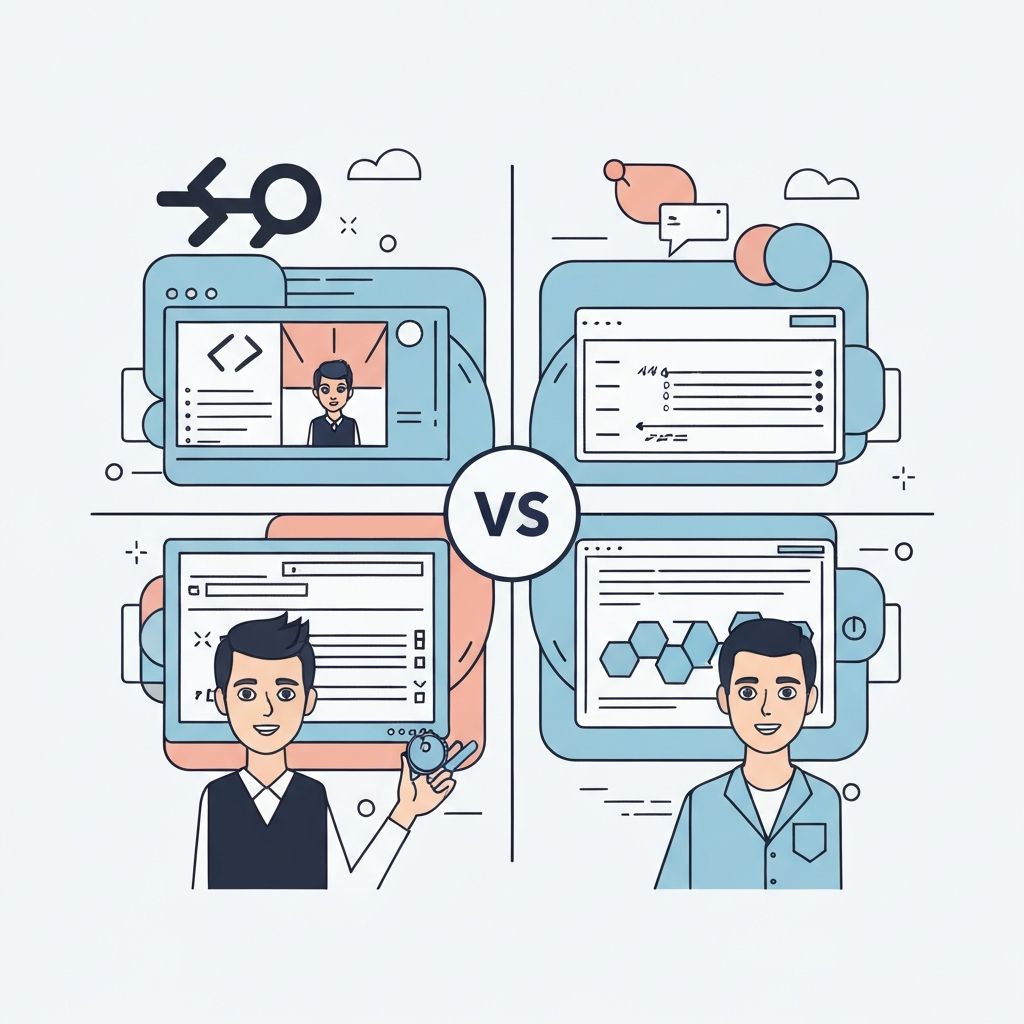
Understanding the Two Titles
The titles web developer and front-end developer are often confused because they share many responsibilities and tools. However, they are not identical. A web developer is a broad term that encompasses anyone who builds websites or web applications, including front-end, back-end, and full-stack work. A front-end developer is a specialist who focuses exclusively on the parts of a website that users see and interact with directly.
Knowing the distinction matters when hiring, planning a project, or charting a personal career path. The wrong assumption can lead to mismatched expectations, scope creep, and missed deadlines.
Hire AAMAX.CO for Web Design and Development Services
For projects that require both front-end polish and back-end power, AAMAX.CO brings the full range of expertise under one roof. They are a full-service digital marketing company offering web development, digital marketing, and SEO services worldwide. Their team handles everything from pixel-perfect interfaces to robust server architecture, making them an ideal partner whether a project leans front-end heavy or requires complex web application development.
What a Web Developer Does
A web developer can wear many hats. The role generally involves building and maintaining websites, which can range from simple marketing sites to complex web applications. Depending on the company size and project needs, a web developer might handle front-end interfaces, back-end logic, database management, deployment, and ongoing maintenance.
In smaller organizations, a web developer is often expected to do it all. They might design layouts in Figma, code the front-end in React, build APIs in Node.js, configure servers, and even handle SEO. In larger organizations, web developers usually specialize, but the title remains broader than front-end alone.
What a Front-End Developer Does
A front-end developer focuses on the user-facing layer of a website or application. Their core technologies are HTML, CSS, and JavaScript, supplemented by frameworks like React, Vue, Angular, or Svelte. They translate design mockups into responsive, accessible, and performant interfaces that work across devices and browsers.
Beyond writing code, front-end developers worry about user experience, animations, accessibility, cross-browser compatibility, and performance optimization. They also work closely with designers to ensure visual fidelity and with back-end developers to integrate APIs cleanly. The role requires a unique blend of design sensibility and engineering rigor.
Key Skill Differences
While both roles require strong JavaScript skills, the depth and breadth of expertise differs. A front-end developer goes deeper into CSS architecture, animation libraries, design systems, accessibility standards like WCAG, and modern JavaScript frameworks. They also know browser rendering quirks, performance metrics like Core Web Vitals, and tools like Webpack or Vite.
A web developer, especially a full-stack one, has a broader skill set. In addition to front-end basics, they understand back-end languages such as Node.js, Python, or PHP, database systems like PostgreSQL or MongoDB, API design, authentication, and deployment workflows. They may not match a specialist's depth in any one area, but they can ship entire projects independently.
Tools and Workflows
Both roles use modern development tools, but front-end developers often spend more time with design tools like Figma or Adobe XD, browser dev tools, and front-end specific tools like Storybook for component documentation. They also use linters, formatters, and testing frameworks tailored to UI work, such as Jest, Playwright, or Cypress.
Web developers use a wider range of tools because they touch more layers of the stack. This includes database management systems, server monitoring tools, CI/CD pipelines, cloud platforms like AWS or Vercel, and project management software. The breadth of their toolkit reflects the breadth of their responsibilities.
Salary Comparison
Salaries for both roles are competitive, but specialization can pay a premium. Senior front-end developers with deep expertise in modern frameworks, performance optimization, or accessibility can command salaries on par with or exceeding general web developers. Specialists are often in higher demand at larger companies that already have back-end teams in place.
However, generalist web developers, especially full-stack engineers, are highly valuable at startups and small businesses where one person needs to handle the entire stack. The right path depends on personal preference and the type of company you want to work for.
Career Path Considerations
If you love visual design, animation, and creating delightful user experiences, front-end development is likely the better fit. The work blends creativity with engineering, and the field is constantly evolving with new frameworks, tools, and design trends. Front-end specialists can also progress into UX engineering, design systems leadership, or principal engineer roles.
If you enjoy variety, problem-solving across the stack, and shipping complete products independently, general web development or full-stack engineering may suit you better. These roles offer more diverse projects and tend to fit well in entrepreneurial environments where wearing multiple hats is essential.
Hiring Considerations
For a marketing site, a landing page, or an interactive widget, a front-end specialist will likely deliver superior results. For a complete web application with user accounts, payments, dashboards, and integrations, a full-stack web developer or an agency team is more efficient. Trying to stretch one role to cover the other often leads to compromises in quality.
Collaboration Between the Two
In many teams, web developers and front-end developers work side by side. A back-end-focused web developer may build APIs that a front-end developer consumes. Effective collaboration requires clear contracts, shared documentation, and respect for each other's expertise. The best teams treat the boundary as a productive interface rather than a wall.
Final Thoughts
The difference between a web developer and a front-end developer comes down to scope and specialization. Both roles are essential, and the right choice depends on the project's requirements and the individual's interests. When projects require both depth and breadth, partnering with AAMAX.CO ensures access to specialists across every layer of the modern web stack.
Want to publish a guest post on aamconsultants.org?
Place an order for a guest post or link insertion today.